The Riley Institute and the Power of Leadership Intervention
Applied Public PolicyCivic ParticipationEducation Quality and AccessFurman Innovation LabLeadership Development
by Melissa Charles
Not every student experiences school in the same way, and oftentimes, public education works best when it meets students where they are. The Riley Institute for Public Policy and Civic Leadership is applying that approach through leadership education at Greenville County Schools’ High School Alternative Program (HSAP).
The partnership with HSAP began in 2024 when Ronald Heath, instructional facilitator and parent and student advisor at HSAP, approached Furman to address a need he saw in his program.
Heath’s role at HSAP is to design curriculum that prepares students to return to their home schools with stronger decision-making skills. He saw leadership development as a way to help students distinguish between positive and negative forces in their lives so they can make better decisions. More importantly, he felt learning about civic engagement specifically could help students envision a future grounded in discipline, responsibility, and purpose.
As Heath developed the class, he searched for experts in civic engagement and leadership development, which ultimately led him to Furman University and The Riley Institute.
A Pilot Changes Course
With a focus on quality education, economic opportunity, and civic participation and a deep history of running leadership development programs, The Riley Institute was a natural partner to support Heath’s program.
“This HSAP program fit perfectly, because it’s not just supporting public education, but supporting those who are struggling the most in public education,” said Brooke Culclasure, director of research and strategic learning at The Riley Institute.
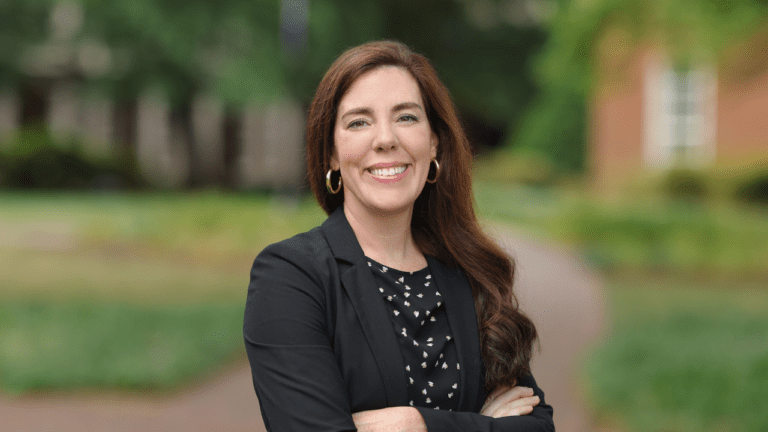
Kelly Gregory, director for public education projects and partnerships
Culclasure and Glen Halva-Neubauer, director of Furman’s Politics and International Affairs department, initially taught the pilot and quickly gained an important insight. Before students could engage meaningfully in civic life, they needed a foundation in the basics of leadership.
For the next iteration of the course, The Riley Institute shifted to focusing on leadership fundamentals. Kelly Gregory, director for public education projects and partnerships, began teaching a class once each quarter. As a former teacher, she understood how to translate complex ideas into accessible lessons for teenage students.
“We want to elevate them with some higher concepts, but in a format that they can understand,” said Heath. “Kelly’s done an amazing job at doing that.”
Developing the Right Formula
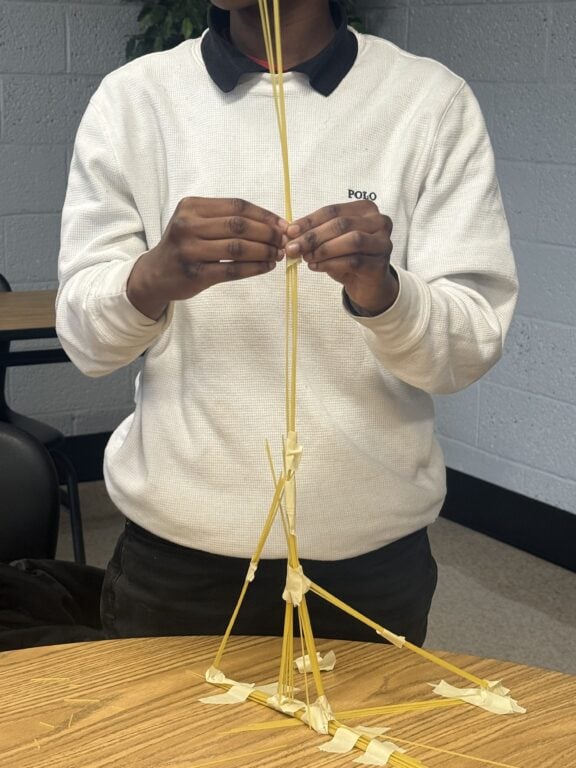
Student performs a team-building exercise in Gregory’s class.
Together, Heath and Gregory have reshaped the program and tested out new models for the program that really seem to be working. The first step is careful student selection for participation in the leadership class. Students are chosen by Heath based on several factors, including their communication skills, confidence, and willingness to work with others. Classes operate in small groups, which encourages trust and discussion.
Under Gregory’s instruction, the HSAP sessions encourage participants to explore how leaders emerge, how leadership styles differ, and how to distinguish ethical leadership from harmful actions. They examine decision making and consequences and identify qualities they want others to see in them.
Additionally, students learn that leadership is influence, whether positive or negative, and that every choice carries weight. Group activities reinforce these lessons through collaboration and time pressure to accomplish a goal.
Gregory emphasizes that the success of this program rests on meeting students where they are, with a focus on amplifying strengths and minimizing weaknesses. She notes that students have strong gifts but often lack opportunities to develop them. That strengths-based approach builds the foundation for what students carry back to their home schools.
“It’s important to help students understand that every single one of us has gifts to offer,” said Gregory. “Sometimes it just takes some encouragement to identify what those are.”
Changing Outlooks – and Outcomes
As a result, The Riley Institute is creating possibilities for students to return to their home schools with a stronger ability to recognize influence and make intentional choices. Heath hopes the class helps students feel in control of their decisions and become positive influences on others.
“If students can go back with the mindset to start doing positive things, then that whole paradigm will shift,” said Heath.
He’s already seen a positive reaction from students. He has observed increased engagement, particularly from students who previously stayed quiet during class.
Gregory, too, has received positive feedback: “When you hear a student say, ‘This is the most fun I’ve had at school in a long time’, you can’t help but feel good about what you’re doing,” she said. “Tiny shifts in perspective and self-confidence can really pay dividends over time.”
Looking ahead, Heath and Gregory hope additional resources will allow the partnership to deepen and sessions to be conducted more regularly. On average, students who are directed to the alternative program stay there for just four and a half to five weeks before returning to their home school.
More frequent sessions would allow for sustained learning, especially for students who are attending the school for a limited time. That consistency builds trust and creates space for students to open up about their experiences and, importantly, helps students get on a better track going forward.