Cathy Stevens: A Career Built on Connection
Cathy Stevens never planned to be an advocate for afterschool and summer learning. Like so many of us, she didn’t have a clear vision for what she was going to be when she grew up, but this was definitely not on her radar. What she did know was that relationships and community building mattered deeply to her—and that trait ultimately led her to spend the last 20 years at The Riley Institute advancing the afterschool field.
A native of Tennessee, Stevens first moved to South Carolina when she enrolled as an undergraduate student at Furman University. She majored in English and dabbled in economics courses, and after a few years of corporate marketing work, Stevens went back to get her master’s degree in higher education administration from Clemson University.
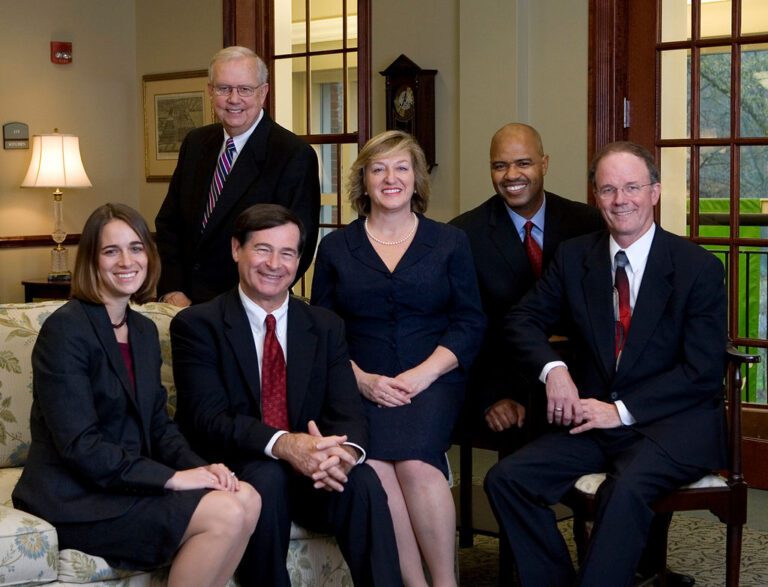
The Riley Team – Cathy Stevens, Calder Ehrmann, Don Gordon, Leigh Berman, Juan Johnson and Benny Walker – The Riley Institute at Furman University in Greenville, SC. Photo shot January 10, 2008.
“I’ve always liked the university culture, and I really like working with college students,” says Stevens. “A big part of the higher education administration degree is the philosophy and the underpinning of student development.”
Shortly after completing her degree, an opportunity at The Riley Institute at Furman University arose, and Stevens applied. While the role entailed some work with undergraduate students, the bulk of the job was working on a comprehensive statewide public education study funded by the William and Flora Hewlett Foundation.
From Statewide Listening to National Leadership
Stevens was hired for the position and quickly immersed herself in the Hewlett project. The study entailed interviewing stakeholders (school administrators, parents, students, civic leaders) from across the state on what educational excellence should look like in South Carolina. In all, Stevens helped lead 104 four-hour-long focus groups for the study.
“One of our big findings of that study was that we needed to expand learning opportunities beyond the school day,” says Stevens. “So, I began researching afterschool programs, and then I really got to know the field intimately when we wrote our first grant to the Mott Foundation.”
The grant established the White-Riley-Peterson (WRP) Policy Fellowship, a nationwide program now in its fourteenth year that works with fellows to more effectively advocate for funding and support for afterschool and summer programming within their home states.
A jack-of-all-trades, Stevens moved into the director role for the program with ease and was a quick study.
“Public policy has always been a passion. I never majored in it, but it’s always been something I’ve been very interested in,” she says. “Through directing the fellowship, I had the opportunity to work with and mentor fellows from all sorts of states and with all sorts of policy angles, so there’s been a lot of learning on the job.”
Policy Is Personal
Indeed, if you ever met Stevens, you’d quickly understand how and why she became so effective in the afterschool policy space. Being relatable is her superpower. She’s deeply interested in others’ stories and perspectives and great at finding genuine ways to connect with anyone. In a field where relationships and appealing to the concerns of those in decision-making positions are key to success, Stevens thrives.
“Policy advocacy is not a straight line. I can get my mind around the intricacies of, ‘Oh, we need to talk to this person, and then we need to talk to this person, and then we need to modify our plan,’” says Stevens.
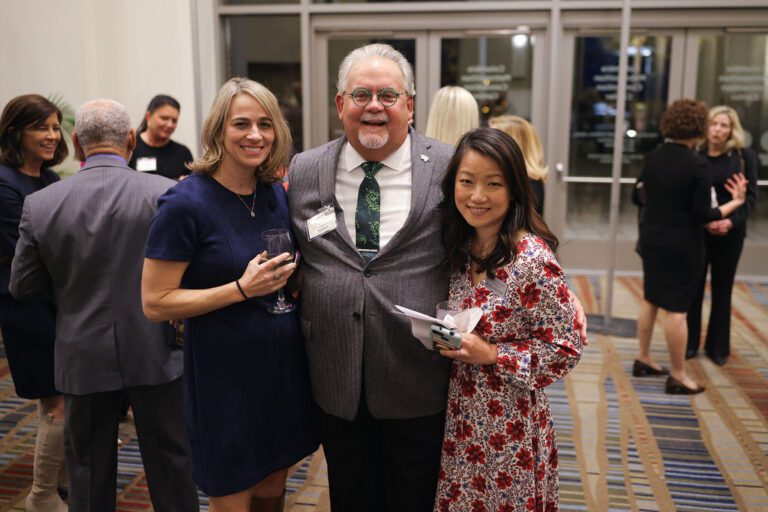
Cathy Stevens, Tom Hudson, and Megan Dodgens at the 2024 Riley-Wilkins OneSC Dinner.
“I also think when you go advocate, you need to know your audience first. What does this legislator prefer: stories or data?” she adds. “One legislator wants to know how many kids are served, how much does it cost, but then you go talk to other people, and you’re able to say, ‘This child has a mentor for the first time ever. This child just expressed that they’ve never felt safe until they were in this afterschool program,’ and for some legislators, that really moves them.”
Stevens’s work in advocacy goes beyond a talent for understanding people and forming relationships. For her, it’s also deeply personal. Stevens’s daughter Halle was born with an extremely rare mitochondrial condition, and Stevens has used her personal experience and story to advocate for better policies for the medically fragile and their families and caregivers.
“Halle made me a better advocate. I think I learned a lot of my advocacy skills not just working in afterschool, but on all the companion work I was doing on issues for her, like trying to change statewide testing mandates for kids with disabilities,” Stevens shares.
Stevens’s personal advocacy for Halle didn’t just shape her work on WRP, but also touched The Riley Institute’s Diversity Leaders Initiative. For years, Stevens shared her personal story with Riley Fellows, speaking from her perspective as a caregiver and inspiring others to consider their workplace policies concerning accessibility, hiring practices, and leave and time off for parents and caregivers.
Building a Community of Changemakers
In short, Stevens has become a powerful force in The Riley Institute’s policy work over the years, and she takes great pride in the wins.
“In Pennsylvania they now have a state line item for afterschool funding, so tons of kids are getting support because of Steven Williams’s work that was born out of the fellowship. California made this massive investment in afterschool, and we’ve had eight fellows from California, and they were all a part of that,” Stevens shares. “While we can by no means claim all the credit, I like to think that the WRP Fellowship played a role in helping fellows to move these initiatives forward.”
“I’m one of those people that always wanted to make a difference, to do something that was really deeply meaningful. And I feel like we are able to do that with our afterschool work. I feel like we’ve been able to expand opportunities for young people, not just in South Carolina, but across the country,” she adds.
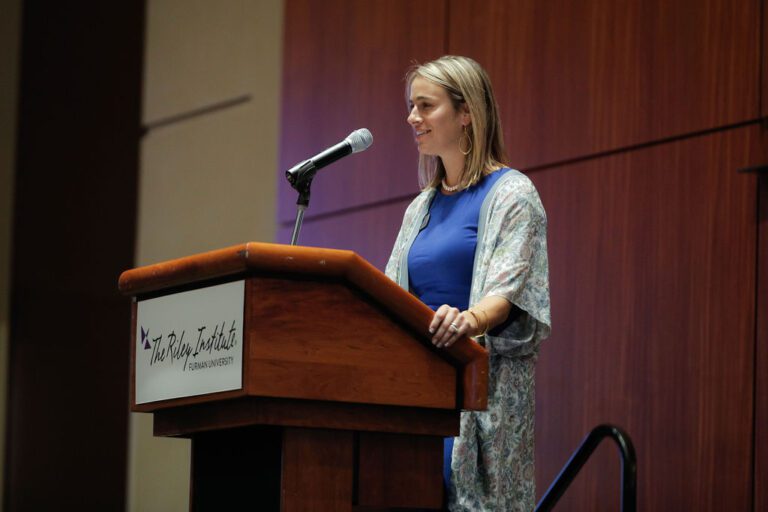
Cathy Stevens speaking at a Riley Institute event.
While the policy wins are impressive, for Stevens, the greatest reward in the work is and remains the people, connections, and the community of visionaries and advocates she’s helping build.
“What I have loved most is just seeing people come into that program and feeling very alone in the field, because a lot of times within a state there might only be two or three people working to advance that issue,” she says. “Then you come to the WRP Fellowship, and you’re with 20 other people, and you’re learning from great faculty, and you’re building a network. Seeing people have those light bulb moments of, ‘Wow, this is a movement that I can be a part of’—that’s the best part.”
Bonus Interview Highlights
What’s your favorite thing about Furman? Purple. But really, rituals like running around the lake, looking at the trees in fall. And, I love our students.
What’s your favorite Furman tradition? We have a huge tailgate at every Furman football game. That’s just a fun thing that we’ve been doing for many, many years now. Like 17 years of tailgating under the same tree.
If your work at The Riley Institute could be summed up by one Taylor Swift song, what would it be? My favorite Taylor Swift song is “Long Live” because it reminds me of Halle, but if you read the lyrics, it could apply to The Riley Institute, too. Long live all the memories we’ve made. I had the time of my life fighting dragons with you. That’s what my vanity plate on my car says, “Fighting dragons.” I don’t really like people with vanity plates, but I have one…
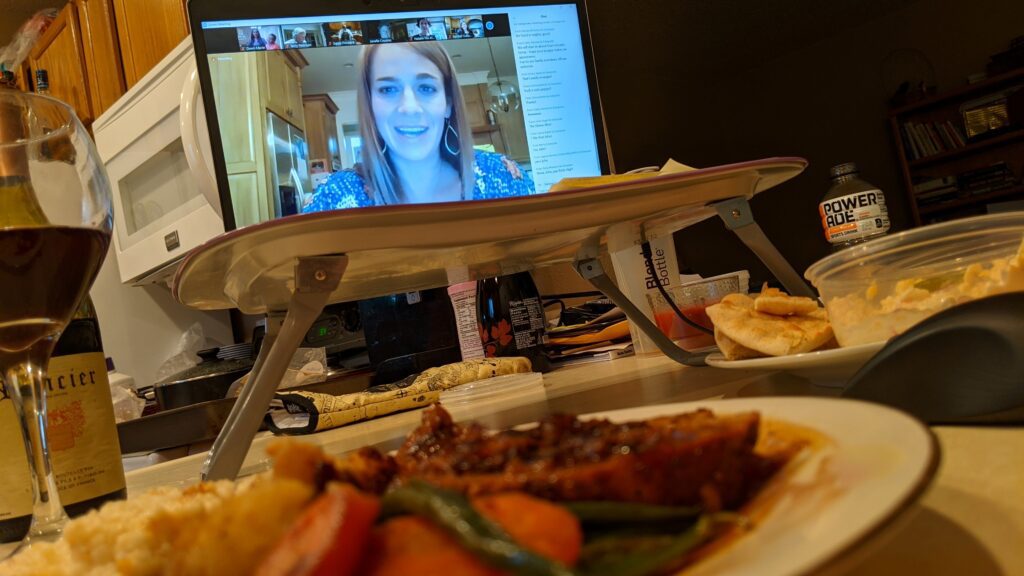
Share a favorite Riley moment. I was really proud of the work we did during COVID because we had to have two cohorts virtually. We did some fun things like worked with Table 301 to ship a fancy meal and have a cooking class online together to build camaraderie. In the dark days of the pandemic, we were all cooking steak together.