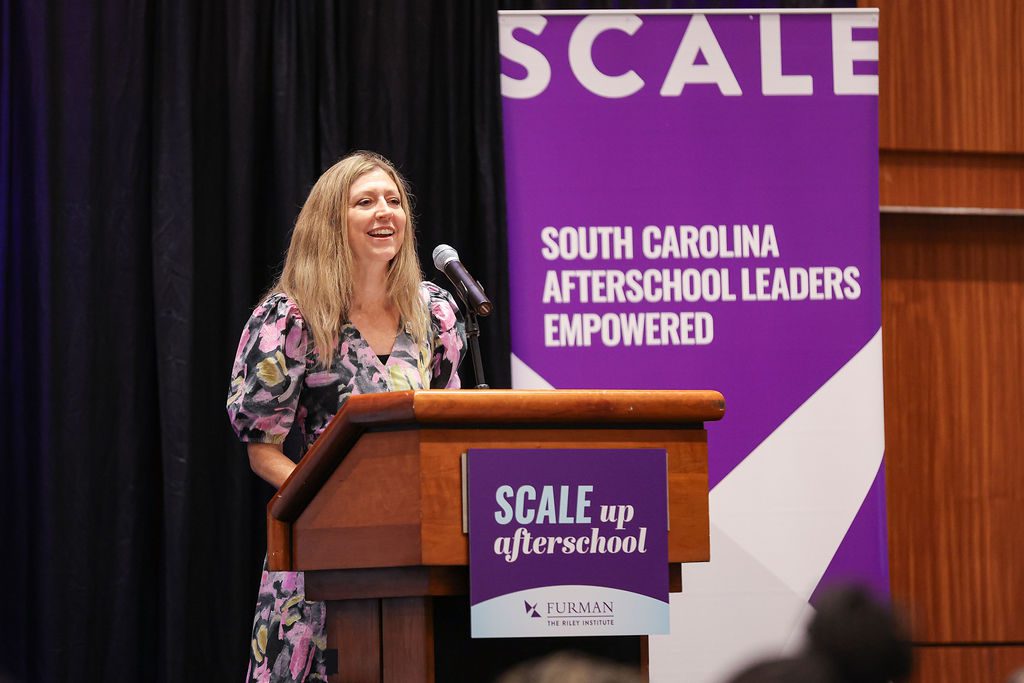
Amy Keely: Creating Lift for Communities
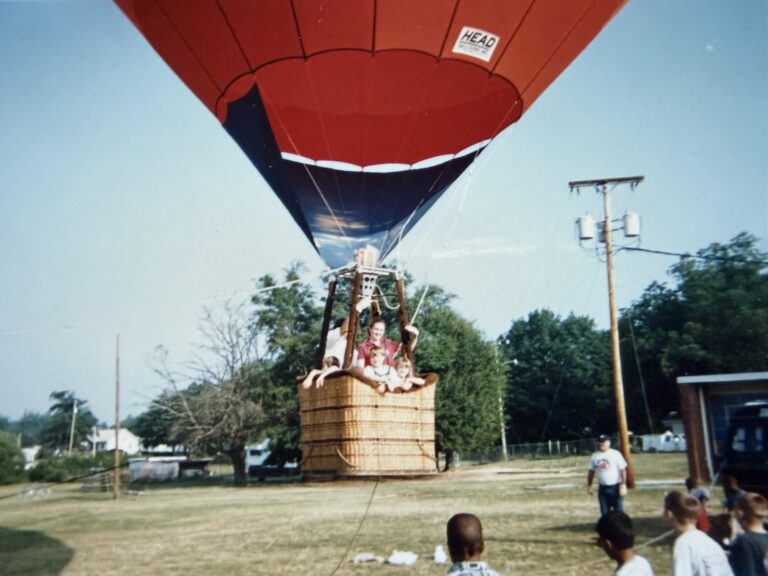
College Amy waving in the red shirt.
While she was still in college, Amy Keely was working with a summer enrichment program at a Title I school—a campus and neighborhood shaped by limited access to opportunities. That summer, she and her colleagues decided to bring something extraordinary to the school grounds: a hot air balloon. Families gathered as it slowly filled with air and lifted off above the school. For students accustomed to being defined by what their community lacked, the sight felt expansive.
For Keely, that experience changed everything.
“It wasn’t just that the kids were having fun,” she recalls. “It was seeing how opportunity changed the way the whole community saw itself.”
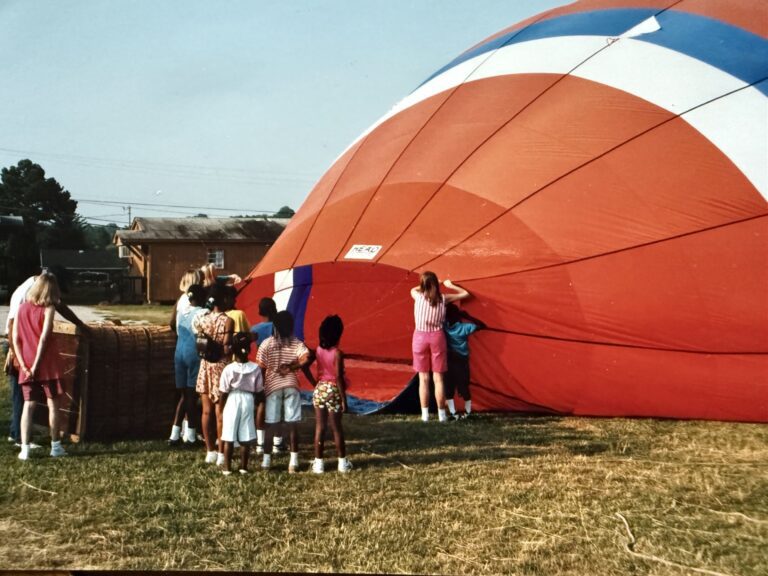
Hot air balloon inflating as kids wait in line.
At the time, Keely had planned to attend graduate school after a brief stop in nonprofit work. Instead, experiences like that one reshaped her path. She began to see education not simply as academics, but as access and exposure to new experiences and possibilities.
Rooted in Care and Possibility
Raised in the Carolinas by a substance abuse counselor and a kindergarten teacher, Keely grew up in a home grounded in care and the belief that everyone has value. “My parents modeled caring for others and the power of education,” she says. “Learning was part of everything we did; it was joyful. And people were never written off.”
After earning a psychology degree from Western Carolina University, she accepted what she expected would be a short-term position with a nonprofit working in schools. What was meant to be temporary became a career.
“I found a way to blend education and human services that felt meaningful,” she says. “And I stayed.”
Over the next two decades, Keely worked across the nonprofit sector, gradually focusing on afterschool and summer learning. She came to see that time outside the traditional school day is not peripheral to education, but essential to how students, families, and communities thrive.
“Afterschool programs are frequently misunderstood,” Keely says. “They’re seen as homework help or childcare, when there’s actually robust formal and informal learning taking place.”
Investing in Leaders
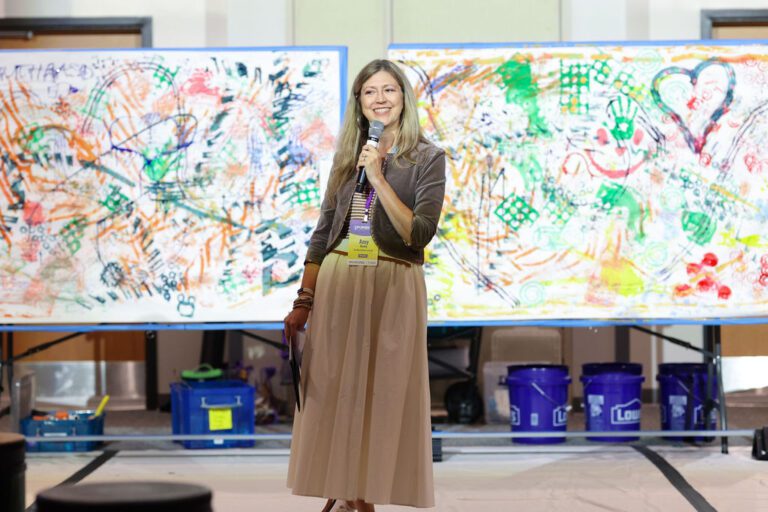
Amy Keely speaking at 2025 SCALE PowerUp!
Today, as director of the South Carolina Afterschool Leaders Empowered (SCALE) Fellowship at The Riley Institute, Keely concentrates less on programs and more on people. The year-long fellowship brings together afterschool and summer learning professionals from school districts, nonprofits, and grassroots organizations across the state. Many arrive deeply committed to their work but unsure how to connect it to research, best practices and practical strategies, or broader networks.
“When we invest in leaders and ground their work in research,” she says, “the impact doesn’t stop with programs. It transforms young people, their families, and their communities.”
That belief reflects Keely’s leadership philosophy: that sustainable change happens when people are equipped, supported, and taken seriously. She describes SCALE not as a place where fellows are told what to do, but as a space where they gain language, confidence, and perspective—tools that allow them to advocate for their work and improve it at the same time.
The Multiplier Effect

Tiffany Howard (left) and DJJ colleagues pose with SCALE Director Amy Keely (second from right).
She often describes the impact as a chain reaction: One SCALE fellow in rural Chester County partnered with a local career center to create a summer career exploration program for middle school students. The program introduced students to pre-engineering, health sciences, agriculture, and graphic design—career pathways they might not have otherwise encountered.
The result was not only increased engagement during the summer, but longer-term decision-making. Some students later adjusted their high school schedules to pursue career readiness certifications based on what they had experienced.
“That’s what happens when leaders are supported,” Keely says. “They create opportunities that change how young people see their futures.”
For Keely, stories like this illustrate why afterschool and summer learning matter beyond the hours they occupy. She is quick to point out that these programs play a role not just in student development, but in family stability and workforce participation.
“Afterschool is an academic issue, a mental health and wellness issue; but it’s also definitely a workforce issue,” she says. “It allows working parents to work and helps communities function.”
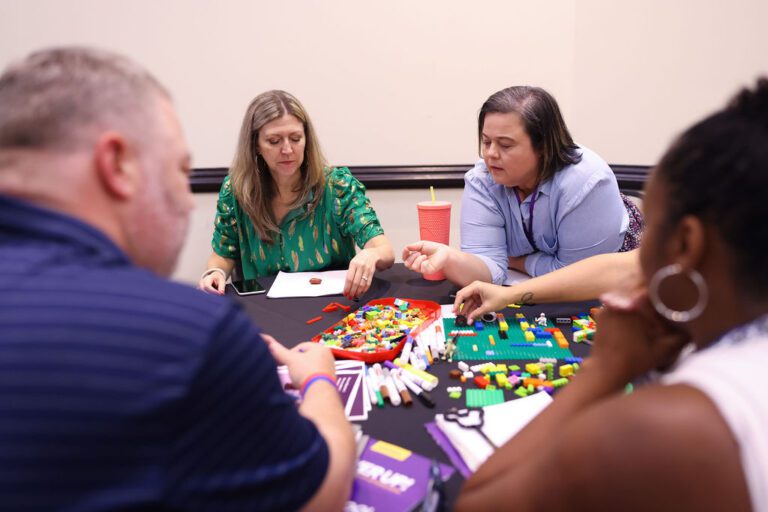
Amy Keely interacting with fellows at 2024 SCALE PowerUp!
For that reason, Keely travels across South Carolina visiting fellows in communities large and small, listening to how leadership takes shape in different contexts. While circumstances differ, she sees a common thread.
“Leadership and resources look different in different places,” she says. “But what’s consistent is the commitment people have to their communities.”
Part of her role, she believes, is elevating that commitment—helping leaders recognize that their work is part of a broader field supported by research, policy, resources, and a growing professional network. “There’s a lot of good happening in education that people don’t always hear about,” she says. “Being able to elevate that work matters.”
Sustained by Joy
A self-proclaimed “concert junkie” who has attended nearly 200 shows, she and her husband Tony also enjoy travel, good food, great books, and time with their cats. “This work can be heavy, because you’re often addressing opportunity gaps” she says. “Joy is what makes it possible to keep going.”
From that first hot air balloon to her work today, Keely’s through line remains the same: when people are given opportunity, support, and belief, they rise—and they help their communities rise with them.
Bonus | Amy's "Favorites"
Favorite thing about Furman? Every single time I drive to work, I’m reminded of what a beautiful place Furman is. I love the beauty of the gardens and fountains, the nature, and certainly the sense of purpose that we all have here.
Favorite Furman tradition? The LDOC tradition of seniors spending the day in the fountain! I can always hear the DJ and the happy voices outside of my office, and I just love that our graduating students get to celebrate in such a unique way after working so hard for four years!
Favorite concert? Drew Holcomb and the Neighbors in 2021. It was one of the first “normal” things my husband and I did after the pandemic restrictions began to loosen, and it felt like the weight of that scary time was lifting. Their music is poetic and inspiring and energizing, and we heard them in the mountains of Tennessee. I cried when the music started up because it was such a turning point in getting back to a sense of community!