Soft Skills Spartanburg
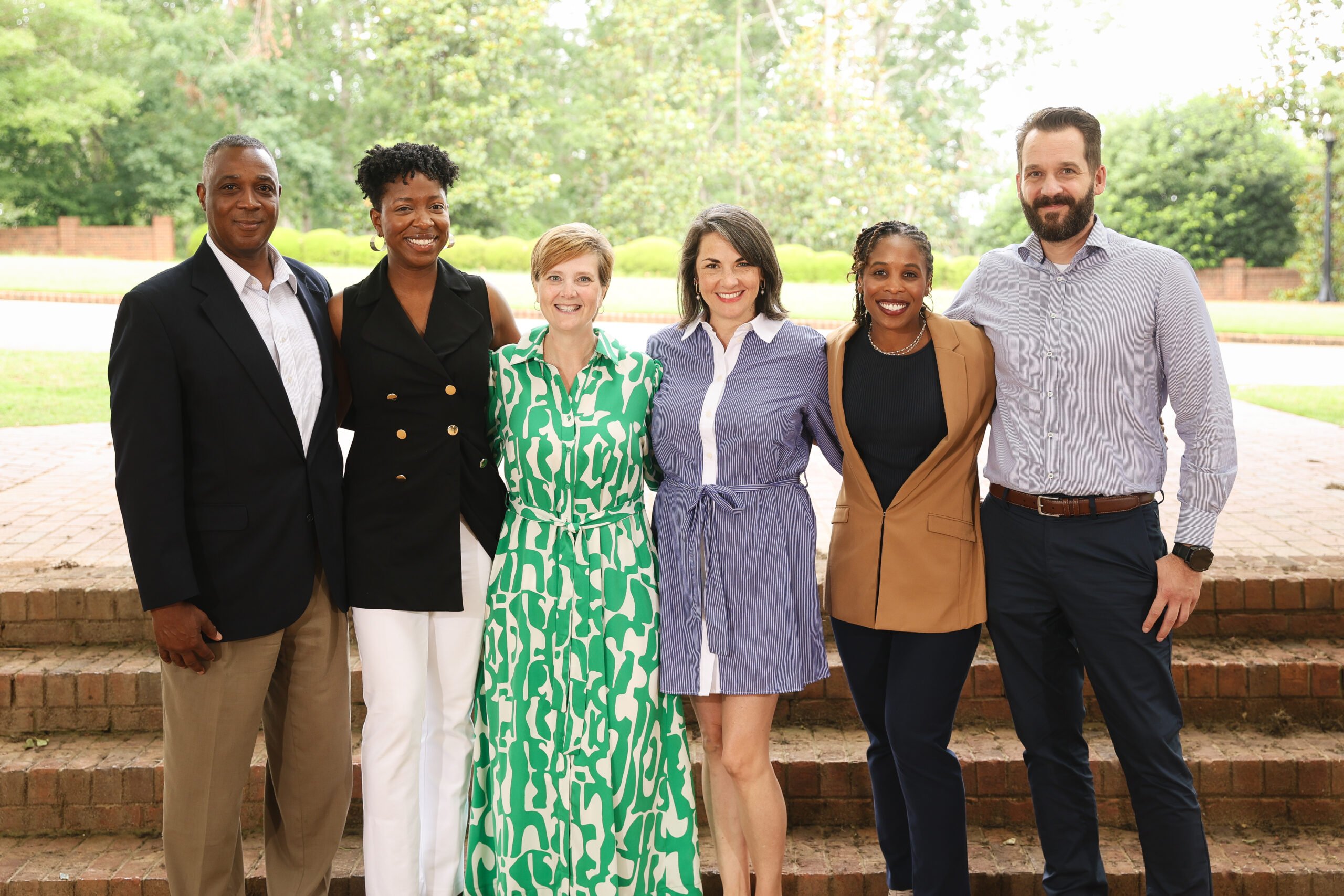
Team members: Daphnie Glenn, Stephane Knoche, Derwin Lee, Jolene Madison, Savannah Ray, Meghan Smith, Hannah Terpack, Carmeisha White
Soft Skills Spartanburg provided mentorship to ten USC Upstate upperclassmen and assisted with co-facilitation of the Soft Skills Laboratory curriculum to a group of 20 high school students from James F. Byrnes High School and the South Carolina School for the Deaf and the Blind (SCSDB). The curriculum, modeled after the Soft Skills Laboratory capstone project from Fall 2024, was modified to include modules on communication, time management, business etiquette and professionalism, and advocacy and resources in higher education.
According to Teach Students How to Learn by Saundra Yancy McGuire, “Students often learn material more effectively when they are actively engaged in explaining it to someone else, and they frequently understand and retain material better when it is explained to them by a peer.” With this information, Soft Skills Spartanburg made a significant change to the original teaching format of the Soft Skills Laboratory project, in which DLI Fellows taught the curriculum to a mixed group of college and high school students. Reflecting upon the value of professional mentorship and the importance of social capital, particularly among first-generation college students, members of Soft Skills Spartanburg connected first with 10 college students in a Career Planning course at USC Upstate through virtual meetings, reviewing, discussing, and revising the content for the college students to facilitate a peer-to-peer learning environment. Then, the college student mentees presented the Soft Skills Laboratory content to 20 high school students on the campus of USC Upstate. Additionally, DLI team members pooled their resources and provided transportation, boxed lunches, certificates of participation, professional photography, door prizes, and university-branded swag to participants.
The Soft Skills Spartanburg model fostered built-in, multi-layered mentorship and brought to light foundational soft skills and aspects of workplace professionalism that can be applied in college classrooms and beyond. In the words of one college student facilitator:
“Being able to basically teach our younger selves what life will be like as an adult is something that I wish I had when I was in high school. I loved their interest, participation, and eagerness of wanting to learn more. It also allowed me to be a leader and show my soft skills by actually working with an amazing team. It was even more amazing to see how engaged and receptive they were as we introduced to them the concepts that are essential in the real world. Teaching them how to carry themselves professionally, how to collaborate, and how to express themselves with clarity and confidence felt like planting seeds that could shape their future, and I loved every second of it because it felt like ‘giving back’. What stood out most to me was the impact we were able to make in such a short amount of time. Communication, in particular, is such a vital tool, and helping them recognize its importance early on could make all the difference in their career and personal lives. I truly feel projects like this should be required because the lessons we shared go far beyond the classroom honestly.”