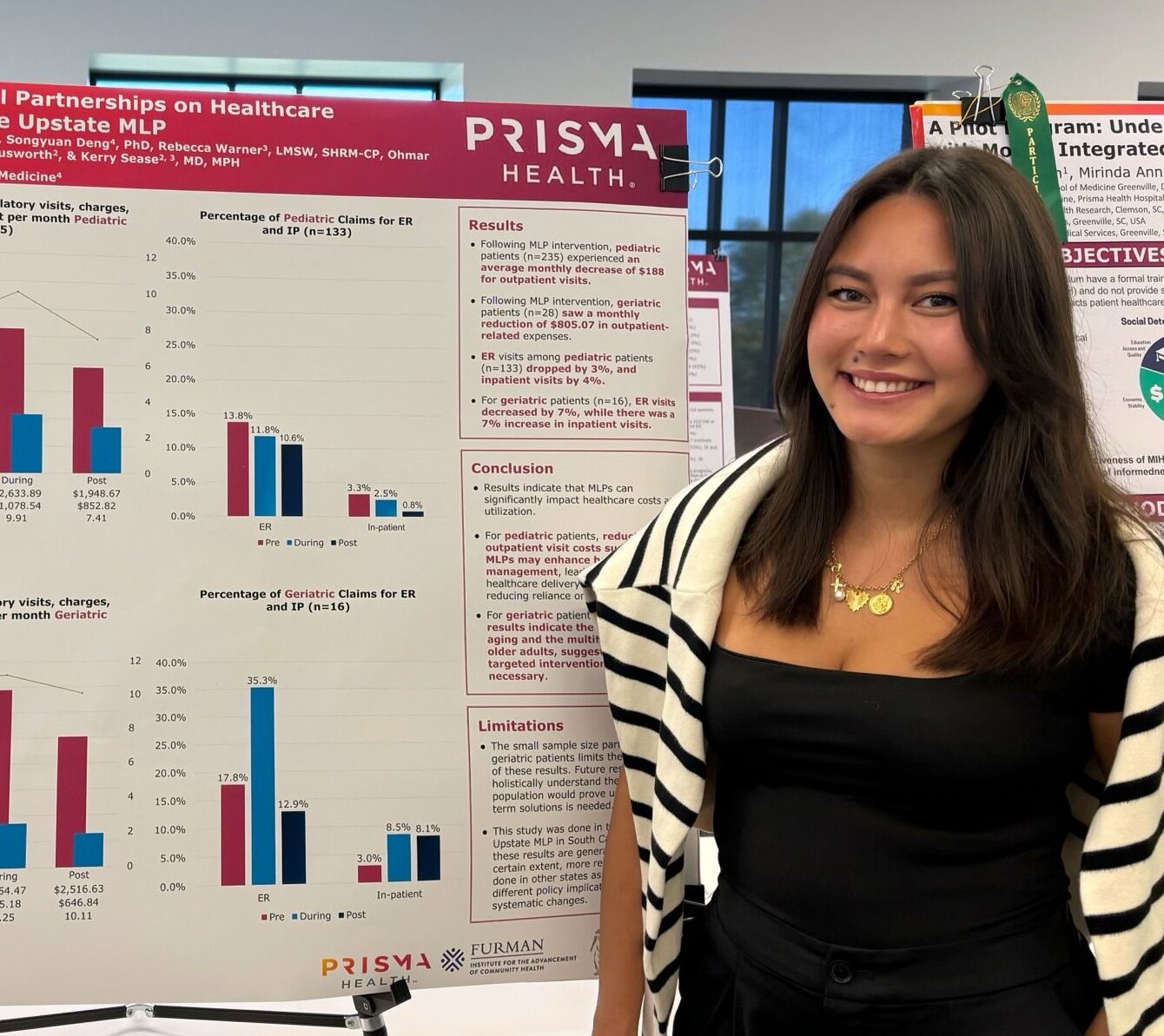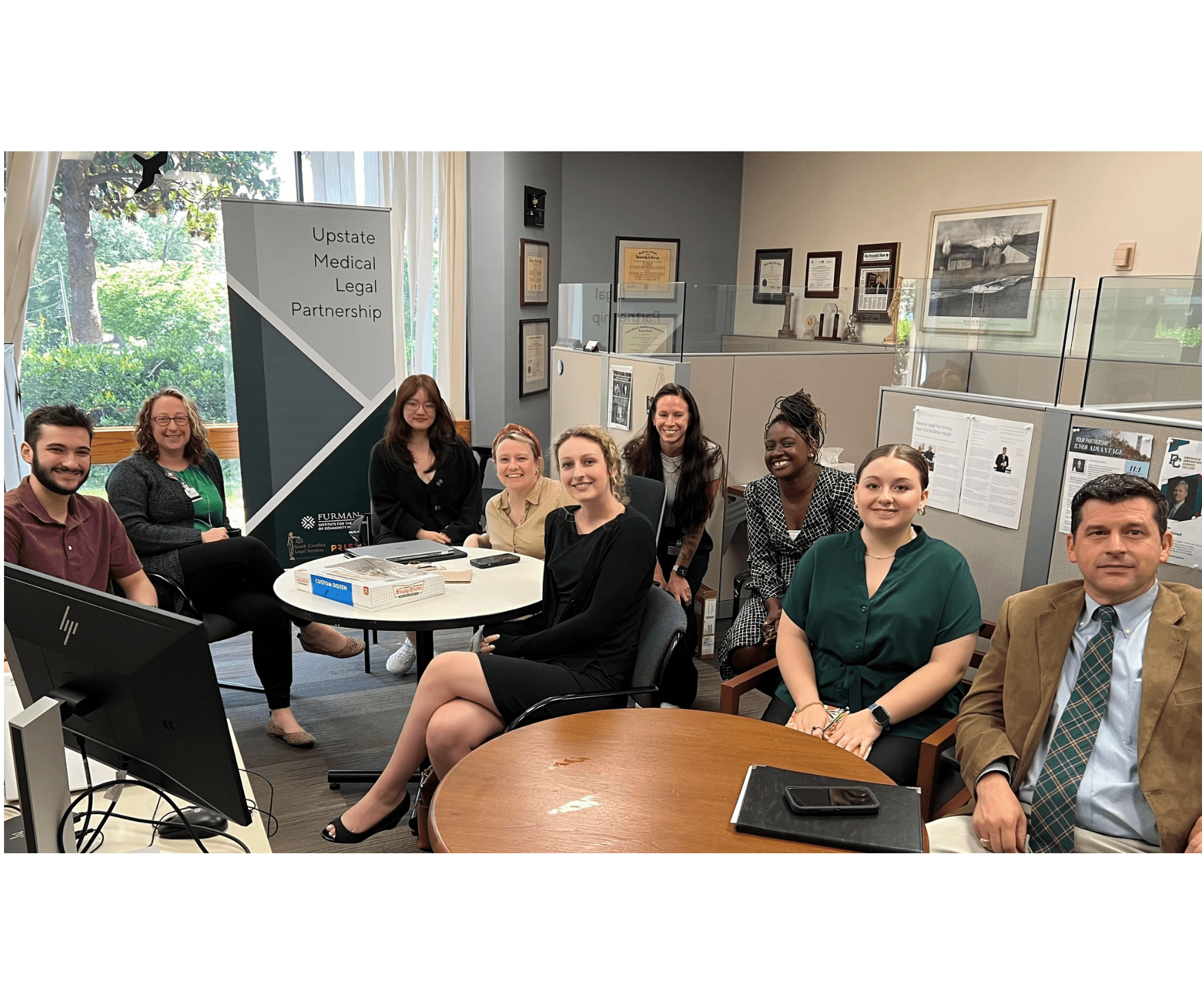
The Medical Legal Partnership (MLP) formally connects Furman University, Prisma Health Upstate, and South Carolina Legal Services in work to improve health outcomes for people throughout the Upstate, especially those living in poverty.

By leveraging the expertise of each partner, our team works to identify and address health harming civil legal barriers before they worsen a patient’s condition. This innovative program is firmly committed to achieving health equity and justice for vulnerable pediatric and geriatric populations.

The partnership—started in 2016 and the first of its kind in South Carolina—coordinates and streamlines access to non-medical assistance when a medical problem has roots in or is made worse by a social or legal problem.  Currently, the South Carolina MLP is the only one in the country—and there are nearly 300 of them, in 41 states—in which the educational institution involved is a liberal arts, undergraduate institution. The MLP works closely with the Health Sciences Center at Prisma Health, a partnership that includes Clemson University, Furman University, and University of South Carolina, to increase accessibility and affordability of healthcare services.

The MLP is committed to improving health equity and justice for all clients, promoting better health outcomes and quality of life.

Read more about the MLP in Furman magazine here!
  • 2,822
    Referrals to the MLP since inception
  • 490+
    Physicians have referred to the MLP since inception
  • 1,100+
    MLP cases accepted by SCLS since inception
swipe

By giving healthcare providers more tools to fix problems, the MLP creates better health outcomes.

Health-harming legal needs are legal conditions that can make it difficult for people to access healthcare or benefits that could help them live healthy lives. The National Center for Medical-Legal Partnership (NCMLP) developed the

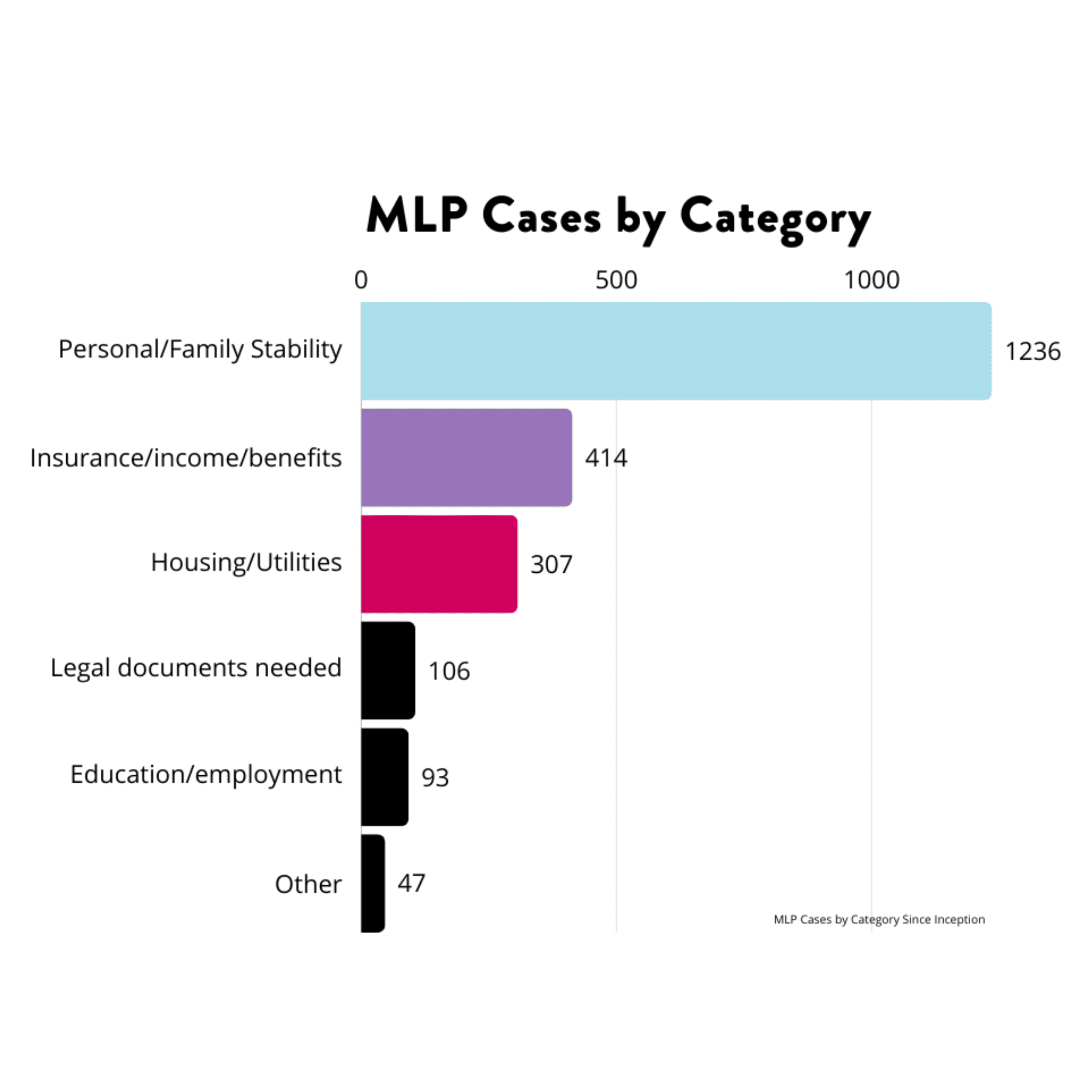
The I-HELP acronym is used to describe some common health-related legal needs:

I: Income
H: Housing and utilities
E: Education and employment
L: Legal status
P: Personal and family stability

Studies show that when legal services and expertise are used to address social needs, people are admitted to the hospital less frequently, are more likely to take their medications as prescribed, and are reporting lower levels of stress.

We’re helping to build an integrated health care system that better addresses health-harming needs by leveraging legal services and expertise to advance individual and population health.


Since 2016, more than 20 Furman University students have interned with the MLP team, providing them with transformative experiences that directly affected their educational and professional goals in medicine, law and advocacy.

On the medical side of working within the MLP, students meet with patients and their families to screen for health-harming legal problems, and on the legal side, they draft complaints, investigate claims and observe in court. The work the students observe and participate in is not only useful to the MLP but also in shaping students’ understanding of their own potential. Students have the opportunity to gain knowledge, skills and abilities as it relates to the particular casework of the MLP, as well as learn about a variety of substantive areas of the law which particularly affect the health of low-income clients. The students are able to prepare for a world in which the definition of health care is rapidly expanding.

A young adult raised by grandparents, struggling with multiple behavioral conditions, and possible unassessed autism was unable to obtain successful employment despite vocational rehabilitation to gain job skills.

Referred to the MLP by his Prisma Health pediatrician, he was assisted with an application for social security income (SSI) and continued Medicaid coverage. The MLP took over representation and filed an appeal to the administrative law judge after his SSI benefits were initially denied. The MLP team helped the family with a referral to a local psychiatrist where the claimant received a full autism diagnosis. As a result, the claimant now receives Department of Disabilities and Special Needs Services, SSI benefits and Medicaid coverage.

The administrative law judge thanked and complimented the MLP at the conclusion of the hearing for the positive impact on the handling of this challenging case.

An 88-year-old who had a bad fall was slowly working to recover full mobility. The landlord sent the client a written notice of alleged lease violations and also alleged the client was no longer eligible for ‘independent living’ since she was no longer sufficiently mobile. The landlord ordered the client to get out by the end of the month.

The MLP attorney quickly showed the alleged lease violations were invalid and not the basis for an eviction under South Carolina law. Regarding the ‘no longer eligible for Sec. 202 housing/independent living,’ the MLP attorney showed no medical assessment of any kind was made as part of the landlord’s conclusion and outlined several legal defenses and counterclaims that ultimately led the landlord to drop the eviction plan. As a result, they entered into an agreement with the client that allowed a generous time period for a legitimate medical/therapeutic assessment and a collaborative approach to locating the best housing options for the client without the hostile threat of immediate eviction.

This carousel is presenting alumnus.
Kirby Mitchell

"A practical, impactful innovation"

""Our medical legal partnership is a practical, impactful innovation addressing our community’s ‘Justice Gap’ -- the huge number of unmet civil legal needs of low-income South Carolinians, many of which directly adversely affect the health, security and safety of our most vulnerable citizens. Our Upstate MLP has proven effective at improving health while reducing costs within our ‘safety net’ healthcare system, one case at a time.”"
Kirby Mitchell