Tocqueville Fellows Blog, by Nathan Johnson: Great Men, Grand Narratives, and the Limits of Leadership: Rethinking the Great Man Theory
By Nathan Johnson
Nathan Johnson is a member of the Class of 2027 from Atlanta, Georgia, studying Politics & International Affairs and History at Furman University.
Introduction: Heroes, Villains, and the Allure of the Great Man Theory
Growing up, I was entranced by grandiose tales of great heroes and evil villains. The heroes were responsible for fending back the malevolent will of evil foes. The stakes are often high, whether it be a town, country, or the world. In empathizing with the protagonists as they struggle against these enemies, I joined in the personal distaste of these villains. I felt like they were the primary causes of the struggle. Had they not specifically been in power, their evils would not have been enacted.
From these assumptions, I was unknowingly buying into a theory called the Great Man theory. This theory posits that history is largely shaped by the actions of a few extraordinary individuals (often political leaders, military generals, inventors, or revolutionaries) whose personal traits and decisions steer the course of entire nations or even the world. This theory is often summed up by 19th-century historian Thomas Carlyle: “The history of the world is but the biography of great men.”
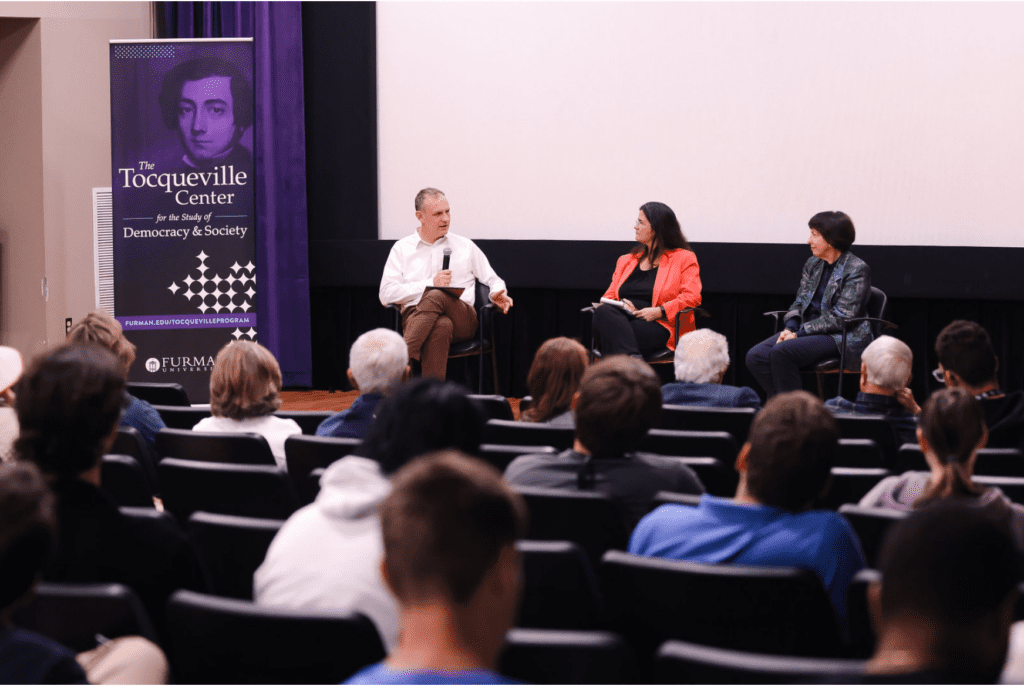
Radchenko and Shirk at Furman: Do Leaders Shape Foreign Policy?
In late March, scholars Sergey Radchenko and Susan Shirk spoke at Furman University. These Lionel Gelber Prize recipients analyzed the leaders of Communist Russia and China to ascertain the effects of personal leaders on a country’s foreign policy. They argue that individual dispositions of the heads of state shape foreign policy. Radchenko and Shirk explain that the changes in foreign policy strategy follow transitions of power in accordance with the personal dispositions of the leader.
Radchenko analyzed declassified documents to reveal Soviet leaders’ temperaments in internal memos, correspondence, and diaries. To get insight into the minds of CCP leaders, Shirk examined firsthand accounts, speeches, and party documents. From these, Radchenko and Shirk propose a set of causal frameworks that link leaders’ personalities to foreign policy.
Case Studies: Stalin, Khrushchev, Brezhnev, Gorbachev, and Xi
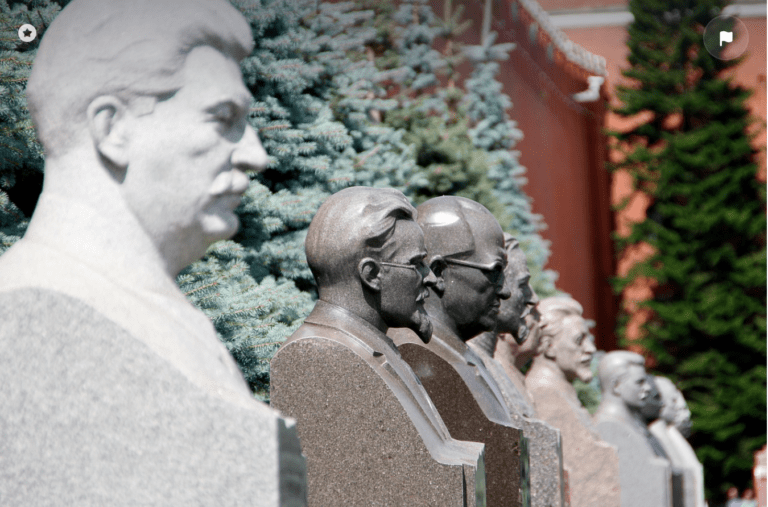
Joseph Stalin’s personal insecurity and obsession with control fueled expansionist policies after World War II. Nikita Khrushchev’s impulsive temperament and hunger for recognition drove high-stakes confrontations like the Cuban Missile Crisis. Leonid Brezhnev’s preference for stability and prestige led to sustained investments in projecting Soviet influence in the Third World. Mikhail Gorbachev’s idealism and belief in reform underpinned a dramatic shift toward openness and cooperation, culminating in the winding down of the Cold War.
In China, Xi Jinping’s personalist rule, shaped by paranoia and a desire for centralized authority, has produced a more aggressive foreign policy and a repressive domestic regime. Xi’s foreign and domestic policies starkly contrasted the progressivist devolution seen under Deng Xiaoping. Each time head power is shifted, the foreign policy adapts to match the demonstrated personality of the leader.
The Evidence: Private Memos vs. Public Speeches
With these assumptions, the argument’s strength is only as strong as the honesty of the leaders in the source material. The strength of honesty is determined by determining the incentives for being dishonest in each specific text. Because of the political incentives found in speeches and published documents, Radchenko’s use of private memos, conversations, and letters is more likely to be accurately predictive of the leaders’ personality than Shirk’s analysis.
The causal link between personality and foreign policy appears fairly legitimate, at least in Radchenko’s textual selection. From this, people claim that in a counterfactual world in which a different leader rises to power, foreign policy would have been wildly different. If someone other than Stalin had risen to power, the USSR would not have employed expansionist policies.
Counterfactuals and Cultural Memory: The “Baby Hitler” Problem
This notion is closely tied to the pop culture question that often pervades middle school circles and middle-aged men: would you kill baby Hitler?
That question humorously forces people to consider the Great Man Theory. Is Hitler’s specific psychological profile responsible for the Nazi regime? If there had been a different leader in power, would the Holocaust have occurred? Or did the circumstances of post–World War I Germany make it inevitable that only a figure with Hitlerian characteristics could rise to popularity and consolidate power amidst a hyperpolarized Bundestag? Was the scapegoat of Jewish people so deeply embedded into the psyche of Germany’s public from years of antisemitism that it would be necessarily leveraged for political control?
Structures Over Stories? An Alternative to the Great Man View
An alternative theory suggests that political figures simply reflect the circumstances they are in. For presidential democracies, presidents reflect the people who can navigate a primary in a major party and be in the major party that represents an electoral majority of the people. This process favors a specific set of personality types suited to both intra-party competition and national appeal.
In the Soviet oligarchy, Stalin’s rise was enabled by a system that rewarded loyalty, manipulation, and ideological rigidity over popular appeal. His personal insecurity and obsession with control made him especially suited to navigate the party’s secretive, competitive structure—traits that both secured his ascent and later shaped his expansionist, authoritarian rule. His successors (Khrushchev, Brezhnev, and Gorbachev) could have had their psychological differences as a result of the selection bias for the position, which is now different due to the differences in Soviet party politics or Cold War geopolitical dynamics.
Systems Select Leaders: What Personality Traits Rise Where?
The selection biases through which a leader can rise to the top of the Soviet Party changes in responses to various sociopolitical and economic factors, which could have changed since the last selection of the General Secretary. Leaders reflect the power structures that determine who can rise. Different systems reward different traits. Personality is shaped not just by the individual, but by what the system selects for.
As in Russia, during a period of external threat, a system may elevate leaders with militaristic or authoritarian tendencies. If this appears successful to the Soviet party elite, an aggressive figure like Khrushchev will rise and continue. If that does not appear to be successful (as it eventually did not), an open attitude towards reform may develop. During reform eras, it may favor technocrats or consensus-builders like Brezhnev. As it was deemed to have succeeded more than a militaristic counterfactual, one can imagine that Gorbachev’s succession was a logical next form of selection bias.
The Limits of the Social Sciences: Prediction and Simulation
Granted, a large problem to any supportive or critical proposition about the Great Man theory faces the classic difficulty with social sciences: causal predictions. Social scientists cannot run controlled, matched-pair tests with random assignment of the independent variable. They cannot observe what could have happened if certain leaders had not risen to power.
Supporters of the theory could claim that autocratic heads of state consolidate power in a way that would highlight their personal preferences beyond what a system could predict, whereas opposers of the theory would claim that this, too, is predictable with perfect information. To determine who is perfectly correct, scientists would have to be able to simulate every characteristic of the world and all of its inhabitants and then simulate anticipated changes. Sadly, such a degree of information and computational power is unattainable. As a result, we must be dubious of a claim that exclusively supports either the claim or its negation.
Why the Great Man Theory Persists in Literature
It is understandable that literature, especially children’s literature, often relies on the Great Man theory. Stories like these use the metaphors of good and bad nations or leaders to illustrate the internal struggle that every person must fight within themselves throughout life. It also allows children to think they can have significantly more impact than is likely to occur.
Even if it were a form of Noble Lie (at least not a completely certifiable truth), the idea of the Great Man theory empowers them to aim for the highest impact of the highest good in the world.