Financial Foundations at Phillis Wheatley
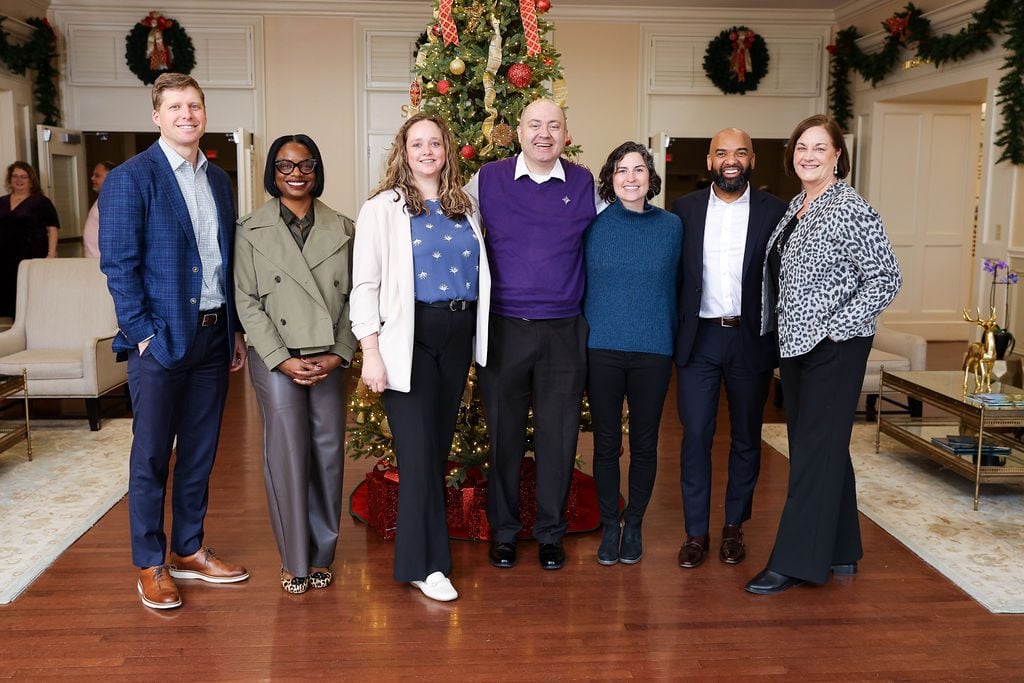
Team members: Drew Boland, Asa Briggs, Brad Harmon, Katherine Mulholland, Ginger Phillips, Frances Poe, Debra Rice, Eduardo Santillanez
Numerous studies have found that the majority of adults lack basic knowledge about personal finance, including banking, credit, debt management, and savings. A study conducted in 2004, known as the Health and Retirement Study, found that only about one half of Americans over the age of 50 knew the right answer to very basic questions about interest rates, inflation, and risk.
Lack of financial knowledge is strongly linked to negative outcomes. The 2021 National Financial Capabilities Survey, conducted by FINRA, found that respondents with low financial literacy were more likely to spend more money than they earned, less likely to set aside emergency funds, and less likely to have a retirement plan or retirement account compared to respondents with high financial literacy. The survey also revealed that people with low financial literacy were more likely to incur late payment fees, use credit cards for cash advances, exceed credit limits, and borrow money from non-banking institutions, such as pawn shops or “pay-day” loan businesses.
Formal financial education in the United States is very limited. While most states include economics in the social studies standards, many do not require an economics course to graduate. The State of South Carolina requires a graduating student to complete one combined credit in economics and personal finance. However, much more financial education is needed to successfully navigate finances in the real world.
The mission of Financial Foundations is to help individuals in an underserved community to build a firm base of financial knowledge by providing free, easy-access financial education classes to adults and youth through programs offered at Phillis Wheatley Community Center.
Phillis Wheatley Community Center primarily serves the Nicholtown Community in Greenville but is open to everyone. Its vision is “to make self-sufficiency a reality for all residents of Greenville and Upstate South Carolina.” Financial education fits well within Phillis Wheatley’s vision and its expanded mission to “collaborate with community partners to provide the tools and resources to empower all individuals, with a special focus on those from underserved communities, to achieve upward mobility and self-sufficiency.”
Initially, classes will be offered to adults in partnership with Family Trust Federal Credit Union, a not-for-profit organization with an express community outreach and education mission. Family Trust Federal Credit Union will provide training materials and teachers for the classes, poll potential attendees about preferred days and times for classes to reduce barriers to attendance, and cover specific topics requested by attendees. Attendees will not be asked to disclose personal information or to buy any service or product.
In the future, the Phillis Wheatley Center plans to expand the program to include additional youth classes and to make the program self-sustaining by training staff or securing permanent community partners. Following the first quarter of class offerings, the initial implementation will be assessed and additional adjustments will be made as necessary to ensure the program is self-sustaining.