Interview: “What’s at Stake in the 2024 Election Cycle,” with Erin Covey (The Cook Politial Report)

Erin Covey visited the Tocqueville Center on Oct. 22, 2024, to give a talk on “Who Will Win the House and Senate Races”, for our event on Parties and Elections in America.
Erin Covey analyses the U.S. House of Representatives for The Cook Political Report with Amy Walter. She is originally from San Antonio, Texas, though she grew up around the world as a member of a military family. Covey earned her BA from Liberty University, where she studied journalism and English and was a news editor at the school paper. Covey previously worked at Inside Elections, where she served as a reporter and analyst, as well as at National Journal, where she reported on campaigns and national politics as a writer and editor of Hotline’s Wake-Up Call and Latest Edition. She was also a news assistant for NPR’s Morning Edition and Weekend Edition. Erin has appeared on C-SPAN’s Washington Journal and Sirius XM, and her analysis has been featured in The Wall Street Journal, The Washington Post, Bloomberg News, and local news outlets across the country. She is a contributing author for the 2024 Almanac of American Politics and was a co-host of the Inside Elections Podcast.
Erin Covey on what is at stake this election cycle
TOCQUEVILLE CENTER: What insights came out of the discussion last night on the House and Senate races at your talk with Jessica Taylor?
ERIN COVEY:
I thought it was a good discussion because both Jessica and I are there to provide the current electoral forecast for this cycle. But we also talked a lot about the implications of that for the incoming Congress and for our democracy in general, and how political polarization has been shifted over the past several decades and how it’s on pace to continue. And I appre
ciated how forward-looking the conversation was, in talking about the stakes of this cycle.
“I appreciated how forward-looking the conversation was, in talking about the stakes of this cycle.”
TOCQUEVILLE CENTER: How important is it to understand American elections in order to understand America?
ERIN COVEY:
So our election cycles dominate our politics, to such a strong extent in comparison to most other democracies that I think if you want to understand US politics, you have to follow the elections closely and especially the down-ballot races, the House and the Senate, the governor’s races and of course the the state legislative races. The local races I don’t cover as closely, but you need to follow those as well. That’s where you can pick up on political trends and that’s where you can kind of understand the way the two parties are shaped and their coalitions. Things show up at the micro level and there first, and then they move on to the macro level.
On the nationalization of issues that matter to voters
TOCQUEVILLE CENTER: Are there any political trends showing up at the micro-levelin South Carolina?
ERIN COVEY:
That’s a great que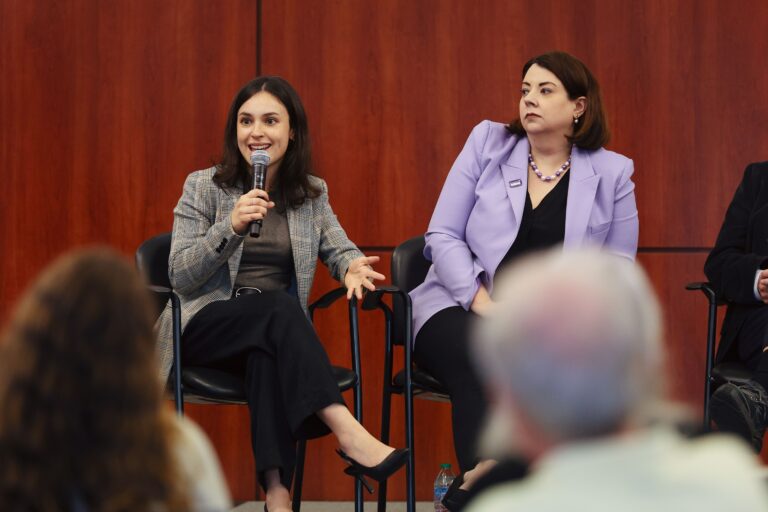 stion that you’ve picked up on. It’s tough because in all of these House races that I cover, they’ve all become so nationalized. And so the issues that are the top issues for voters in a district in South Carolina are probably the same as for voters in a district in Michigan. And in this cycle, the cost of living is above all else, even as the inflation rate has gone down and even as unemployment maybe is in a decent place, folks are still feeling the high cost of living, whether that’s housing, whether that’s their grocery bill or gas prices. Even as those fluctuate up and down, life is still a lot more expensive than it was four years ago. And so that is a driving decision for voters. And thatis an
issue where typically we still see Republicans are trusted more on their handling of economic issues than Democrats nationally.
I think Harris does better on this issuethan Biden did before they switched the top of the ticket. So it’s gotten a little more even than it was prior to that. But it’s still an issue that voters tend to favor Republicans on a little bit more than Democrats. So that plays out across every House race that I cover.
And then below that, the two other dominating issues of the election cycle are abortion and immigration. And you know, in the post-Dobbs era, abortion is an issue where voters trust Democrats more on the issue than Republicans. And even if voters might have differing views personally about how they view the issue, a majority of voters see the Republican Party’s stance on the issue as too extreme for them. And so that has been a driving issue for a lot of voters. It’s often not voters’ #1 issue, but it’s an issue that they care about.


And if they feel like a politician is out of step with their own stance on it, they’ll be less likely to vote for them. And then it’s kind of the same with immigration. On the flip side, this is an issue that voters tend to trust Republicans on a lot more. And that’s happened as the number of border crossings has increased under the Biden administration. And as post-COVID loosened up some of the border security policies as well. That has become an issue where Republicans really have a strong advantage, whi
ch is interesting because in the 2016 election, immigration was not an issue that Republicans were strong on and Trump was seen as the one who was too extreme on the issue. Now it’s the reverse. Democrats are penalized for their view and Democrats have moved to the right on this issue significantly because that’s where the the American public is largely.
“That has become an issue where Republicans really have a strong advantage, which is interesting because in the 2016 election, immigration was not an issue that Republicans were strong on and Trump was seen as the one who was too extreme on the issue. Now it’s the reverse.”

So now Democrats are talking about building the wall. And then, of course, the abortion issue post-Dobbs has shifted so much too. I think previous to that, was abortion was generally thought of as an issue that maybe motivated the base of both parties, but not something that most voters in the middle are particularly concerned about. But now that states have such differing abortion laws, it’s something that is more top of mind for more voters. They’re like, OK, have I have less strong views on the issue themselves. But, they see the consequences of it.
On the dangers of a highly-partisan era
TOCQUEVILLE CENTER: Are there any trends you perceive that you think are cause for concern?
ERIN COVEY:
I think more generally, we live in such an era of really strong partisanship, and that is concerning because, you know, we have this two party system where one party’s win is the other party’s loss. And so a lot of times voters are motivated more by just making sure the other party is not in control, and less about because they love their own party, because they hate the other party more. So that’s not healthy for our democracy and that’s concerning. And for that to change there would have to be either some pretty large scale changes in the way our electoral system is run in America, or we have to see some kind of dramatic shifts over time where one party might have a larger majority kind of coalition.
“…a lot of times voters are motivated more by just making sure the other party is not in control, and less about because they love their own party, because they hate the other party more. So that’s not healthy for our democracy and that’s concerning.”
We are so locked into this 50-50 situation where every presidential race has been really close for the past couple of election cycles. Control of Congress has vacillated back and forth between the parties for the last couple of election cycles, and neither party has had a clear majority. That makes it really difficult to govern if you’re in either party and especially if you have divided government. And that seems like a pretty likely scenario for next year. Republicans are favored to take the Senate. The House is a toss-up. The presidential race is a toss-up. So it’s pretty likely that we could end up in a scenario where we have Democrats controlling the House and Republicans destroying the Senate. And maybe Trump is in the White House, but nobody’s going to have a wide majority. 
And so we saw this past Congress was the least productive Congress in American history in terms of the amount of bills that were passed. I don’t think that the trend of this really closely divided 50-50 country is good for governing and it’s not good for turning the heat down in terms of our partisanship.
Tocqueville Center
Oct. 22, ’24