Interview: Tocqueville Biographer Olivier Zunz On Tocqueville the Democrat, the Scholar, and the Friend
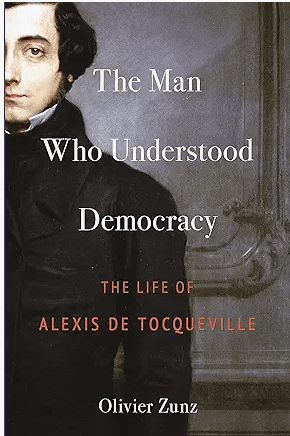
We asked Olivier Zunz, author of a new biography of de Tocqueville, The Man Who Understood Democracy: The Life of Alexis de Tocqueville, about his views on Tocqueville the democrat, the scholar, and the friend, and his study of French aristocrat Marquis de Custine’s debate with Tocqueville over the merits of Russian dictatorship versus American democracy.
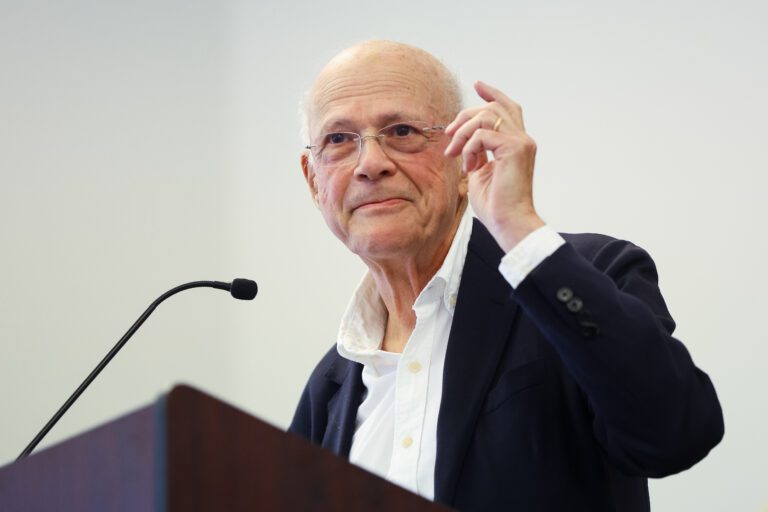
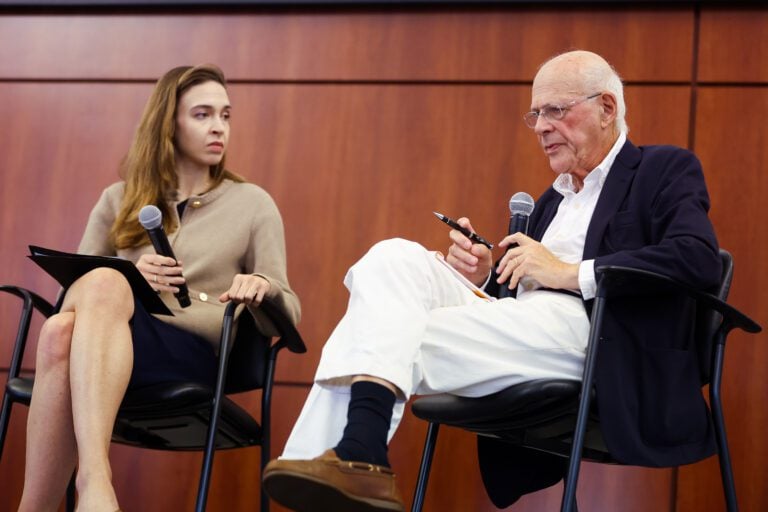
Olivier Zunz spoke at the Tocqueville Center on “The Great Debate between Alexis de Tocqueville and Astolphe de Custine on the Political Fortunes of America and Russia” earlier this fall.
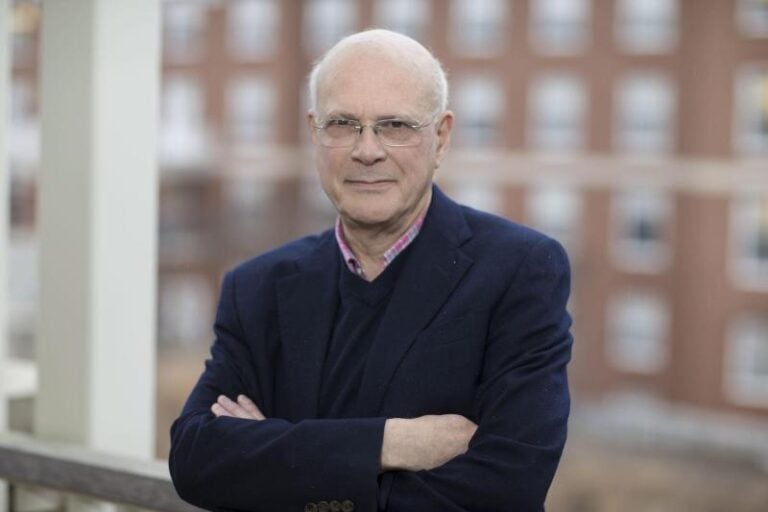 Olivier Zunz is James Madison Professor Emeritus of History at the University of Virginia. He has held visiting appointments at the Collège de France and the École des Hautes Études en Sciences Sociales, among others. Zunz earned his BA at Université de Paris X-Nanterre and his third-cycle doctorate and state doctorate from the Université de Paris I, Panthéon-Sorbonne. He has received fellowships and research grants from the Ford Foundation, Japan Foundation Center for Global Partnership, John Simon Guggenheim Memorial Foundation, National Endowment for the Humanities, and the National Science Foundation. He has authored or edited 12 books, including The Changing Face of Inequality (1982); Making America Corporate, 1870-1920 (1990); and Why the American Century? (1998). His Philanthropy in America: A History (2012) is the first book to explore in depth the 20th-century growth of this unique phenomenon. His most recent book is The Man Who Understood Democracy: The Life of Alexis de Tocqueville (2022). In 2011 Zunz was named Officier of the French Ordre National du Mérite by the French Government.
Tocqueville the Democrat: Two French Aristocrats Debate Democracy and Despotism in 19th century France
Tocqueville Center:
How did you develop this topic on de Tocqueville’s Democracy in America and Marquis de Custine’s defense of Russian dictatorship?
Olivier Zunz:
It’s somewhat by accident that I got interested in Custine’s work in his book on Russia because I happened to acquire the first edition of it through some family accident.
I’m not at all a specialist in Russian history. I’m sure that specialists in Russian history have plenty of reasons to have different views of Russia in the 19th century. But what interested me was that the book was published in 1843, and it was an instant best seller. It was translated in all of the languages, and it sold thousands and thousands of copies. And there was a ban by the czar on distribution in Russia. This is a big political statement.
When I read it closely, I realized that Custine had engaged in a kind of silent dialogue with Tocqueville in writing this book. I detected this because I know Tocqueville’s work pretty intimately. And therefore I could see where there had been an influence.
 That interested me because Custine had been one of the most vocal critics of Tocqueville before. So I then asked myself a question of how that happened. That led me to Custine’s biography and to the paper I’m giving this afternoon. So that’s the occasion. It was something that fell on my lap after I finished the Tocqueville biography. And this invitation came to speak at the Tocqueville Center and I figured, well, maybe I should do this.
Custine is writing about Russia and he’s engaged in this mental debate with what’s right: are you for democracy or are you for despotism? Here you have two aristocrats, Tocqueville and Custine, and they are at the time of the great transition from aristocracy to democracy, in the 1830s and 40’s, and the 1848 revolution, bringing in the First Republic, the Second Republic in France and and then the return of despotism, which is the Second Empire.
You have two people who live through this major battle of what is the best political form, and both of them happen to be aristocrats. Tocqueville is an aristocrat who thinks that the other side is right. That is to say, he describes himself as an aristocrat by instinct. He has the instincts of an aristocrat. He’s an elitist. He likes the words of aristocracy, but he thinks that democracy gives people more people the possibility of being themselves, of exercising their liberty. Whereas Custine is not there.
Coustine thinks that society should remain in the hands of a few who are best placed for decision making and that despotism guarantees that. And he defends that position against Tocqueville until he goes to Russia to see how one could still live as an aristocrat because it was more and more difficult to do so in France.
And he discovers, no, that is nowhere to go because it is a form of tyranny. You know, again, people who have studied Russian society will see different ways in Russia than Custine did. But that is not my problem. The problem was the argument between Tocqueville and Custine. And I thought it was really interesting to go deeper into that. So I made it the topic of this little paper.
“[Tocqueville] likes the words of aristocracy, but he thinks that democracy gives people more people the possibility of being themselves, of exercising their liberty.”
Tocqueville the Scholar: Why a New Biography of the Political Philosopher was Needed
Tocqueville Center:
Is that debate connected to why you think your most recent book, the Tocqueville biography, is among your most important publications?
Olivier Zunz:
 No. Well, let me put it this way. When I began this book on Tocqueville I think there were two major biographies already on the market. Each one of them is quite good in their own respect. The first one was published in the 1970s, I believe, and became the standard biography.
It was written by a Frenchman, André Jardin, who edited a lot of Tocqueville’s papers. He was intimately familiar with Tocqueville’s life. And he tells Tocqueville’s life very well. But he doesn’t connect it to his ideas. So it’s more of a narrative of Tocqueville’s life. You cannot really see how Tocqueville integrated his ideas.
The second biography that has been successful and widely read is by an Englishman, Hugh Brogan, which came out in the 80s. He’s a very good writer and its a good biography but his account of Tocqueville’s ideas is bad.
Brogan wants to tell you that Tocqueville remains a monarchist at heart anbd that, in effect, he never became a democrat. He was always a monarchist in disguise and I think that’s wrong, so I tried to return to what he was. That is to say, somebody who genuinely embraced democracy but was very conflicted because his childhood friends and family members were all on the other side. He was constantly surrounded by people who said he was wrong to promote democracy. So Tocqueville was himself conflicted by temperament, but I think his investment in democracy was genuine. And I was trying to say that and to explain that in my biography.
I also think that Tocqueville embraced some of the left’s ideas. We saw that with the discussion yesterday of welfare state yesterday. There was real investment in how you make society better. So I try to restore Tocqueville in his contradictions, giving him room to express himself, but also in his convictions. And I embrace some of the same convictions.
 Now, I think in this book I’ve succeeded in this. It has to do with my personal career as a historian. Erudition matters in how you write history. Cumulative knowledge also matters and I think I was able tof use a lot of things I learned over the years in writing this book.
Also, I enjoyed it personally. I kind of became friends with Tocqueville. I wished I had met him in person and we could have had conversations because I had a lot of silent conversations with him. He was a wonderful letter writer. His complete works include his many volumes of letters. I read them all. And he’s engaging in a conversation. You could defend the answers. It was an interesting thing to do. So anyway, I got the code.
“I try to restore Tocqueville in his contradictions, giving him room to express himself, but also in his convictions. And I embrace some of the same convictions.”
Tocqueville the Friend: A Gifted and Devoted Correspondent
Tocqueville Center:
So what kind of a person was Tocqueville?
Olivier Zunz:
He was very distant and could be a bit, let’s say, people didn’t relate with him easily.
And he was not a very good public speaker, especially in the days when there was no amplification. To speak in the chamber, you had to shout. Burt he’s more soft-spoken. He had respiratory issues and he couldn’t really do that. He was wonderful in conversation, but the speeches were better read than listened to. Now, he had a real sense of friendship. He had a gift for friendship. And some of his correspondents are lifetime correspondents. And this man must have spent a couple of hours of day just writing letters.
 And you really get to know him through those letters and how he understood what people thought and how he could intervene was really remarkable. And the range of correspondence was remarkable, ranging from family members to constituents, of course, since he was elected to the chamber, to some of the best intellectuals of his generation like Stuart Mill and others. You can see the range of that intellect and that played a major role in getting hooked when writing this biography.
He was very committed to maintaining friendships over long distances, spending hours a day writing letters. It takes work to maintain friendships. I mean, you have somebody who lives through one of the greatest transitions in modern history from aristocracy to democracy, even though, you know, by some strange accident of life, he was born after the French Revolution, and he died just before the US Civil War. So in some ways, you know, he missed some of the greatest events of this transition. But still you have somebody who has the brain to capture the meaning of this immense transition. Then you have somebody who writes beautifully and is himself a great political thinker, political philosopher, and ranks among the best from Aristotle to the present.
“Now, he had a real sense of friendship. He had a gift for friendship. And some of his correspondents are lifetime correspondents. And this man must have spent a couple of hours of day just writing letters.”
So you dialogue with a great mind across the ages, you know, And then you have somebody who works in the nitty gritty of Daily Politics. And it’s hard to find someone as special. The personality was just so complex and complete. The fascination is that it is very rare to find somebody with a highly analytical mind that is capable of deep interpersonal relationships, for example, he is capable of noticing the details and being sensitive to the details.
And also, you know, I was trained in France. Then I moved to America and became interested in American history and made it my specialty. And for many, many years, I didn’t want to write and to study American history from a French viewpoint. I didn’t want to come to this country and sell wine and cheese. So I got into the heart of American history, not the French-American connection.
 And my first book was on the industrialization of Detroit and the growth of the industrial city and so on, so forth. So it was completely, completely different. But then as I grew more comfortable with U.S. history, I wasn’t depending on these French-American relations, so I felt free to return to Tocqueville and stay with him.
And then the time came when I said, OK, many of my friends say, hey, you know too much about this guy. You want to write this biography. So I decided, OK, if I’m going to do it, I better do it now when I still have the energy and the time to do it.
“You can see the range of that intellect and that played a major role in getting hooked when writing this biography.”
Olivier Zunz’s responses have been edited for length and clarity.