News from campus and beyond
Trial advocacy MayX spurs confidence in the courtroom
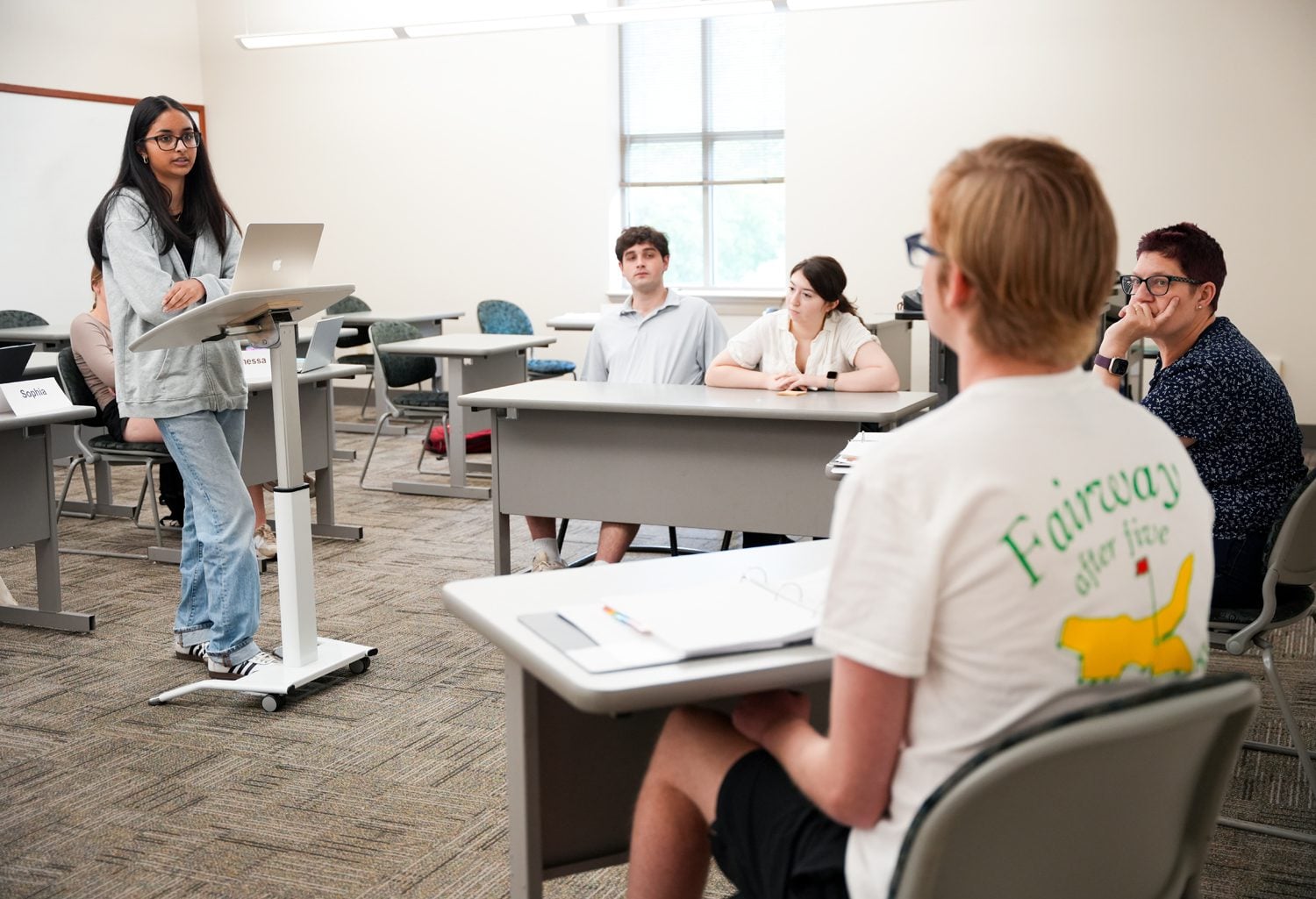
Tiya Desai ’27, left, practices direct and cross examinations with other students in the Trial Advocacy MayX class on May 20.
Eight Furman University students confidently sauntered into an empty federal courtroom just two weeks after their first forays into building a legal argument. Court was in session.
The “Trial Advocacy” MayX class “feels like law school in three weeks,” said instructor and business and accounting coordinator and advisor Anna Notation-Rhoades. Students of any major can join, though Notation-Rhoades said many join this class to see if the pre-law track is right for them – it can serve as a student’s first step toward joining Furman’s 100% placement for law schools.
Students in this class learn the mechanics of a trial, how to analyze evidence, examine witnesses and build opening and closing arguments. At first, they might feel overwhelmed by the binders stuffed with affidavits and legal records. But throughout the course they read, re-read and analyze the case until – ready or not – it’s time for their day in court. On June 3 they held a mock trial in a real courtroom at the Carroll A. Campbell Jr. U.S. Courthouse in Greenville, South Carolina.
“A huge part of the class is developing the confidence to take a position and explain it; to use the facts and law to persuade others of your position,” Notation-Rhoades said. “And then magic suddenly happens – they build their case in earnest, re-examine the evidence and decide what to highlight if it helps their side and minimize if it doesn’t.”
Trial Advocacy – from Classroom to Courtroom
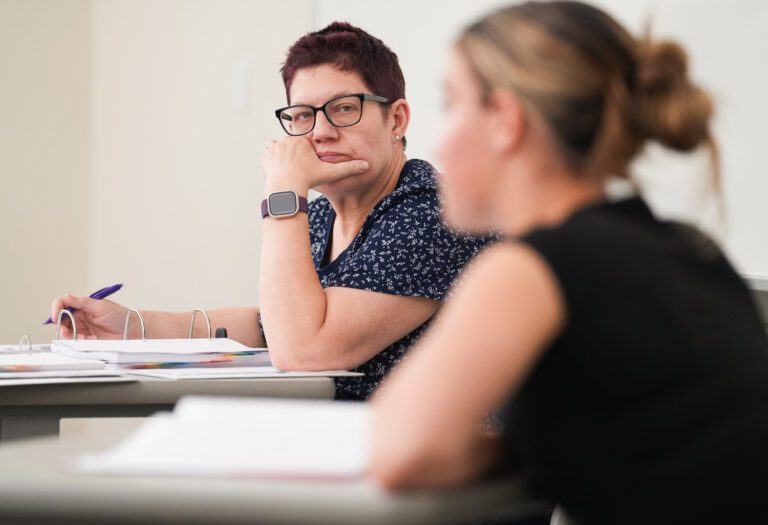
Anna Notation-Rhoades, left, instructor of the Trial Advocacy MayX class, observes Sophia Sherwood ’28 practicing being a witness in direct and cross examinations as part of the Trial Advocacy MayX class on May 20.
From behind a lectern in a casual classroom setting, French major Sophia Sherwood ’28 grilled her witness, David Renard ’26, a politics and international affairs major. On May 20 the class practiced its first-ever witness examinations, peppering each other with questions to try and elicit details about a hypothetical attempt to summit Mount Everest that ended with the death of one climber. The attorneys’ positions: Did he die because of the expedition company’s negligence, or was he an ambitious climber who withheld information about his wellbeing to pursue his dream?
Notation-Rhoades coached her students as they took turns asking pointed questions. Their legal acumen didn’t matter as much as their ability to think critically about their case briefing and adapt to the witnesses’ answers.
“I was nervous, but getting to practice and get this feedback encouraged me to get up and try,” said politics and international affairs major Samuella Kabila ’27.
Over the next two weeks the students picked apart their case files as they learned whether they would be on the team representing the plaintiff or defendant. By the time they stood in the federal courtroom reserved for their mock trial, they were familiar with every page tucked within their briefcases.
Before the trial began, they had free rein to explore the courtroom. Raya Almahameed ’28, undeclared major, took the rare opportunity to step behind the judge’s bench.
“It’s such a high honor, I wanted to see what it felt like. It was a bit of a rush,” she said.
Notation-Rhoades and Dana Professor and Chair of Politics and International Affairs Glen Halva-Neubauer watched the students catch their stride from their post in the jury box. The students’ voices grew more confident, and they stood taller as the trial progressed.
The first call of “Objection!” by mock-attorney Will Mitchell ’26, a politics and international affairs major, during a witness examination opened the door for his peers to challenge one another’s lines of questioning.
Through more than an hour of legal sparring, the teams put their weeks of dedicated study to bear for their fictional clients and found themselves invested in the arguments they crafted together. They had gained a taste for the thrill of advocating for their clients in court.
“It’s crazy how passionate you get about these things with all the work you’ve put into it,” Sherwood said. “I had no idea what to expect, but you get into character as you go on, and having a team to build these arguments with was so exciting.”