News from campus and beyond
Neuroscience majors win awards for opioid and PTSD research at regional conferences
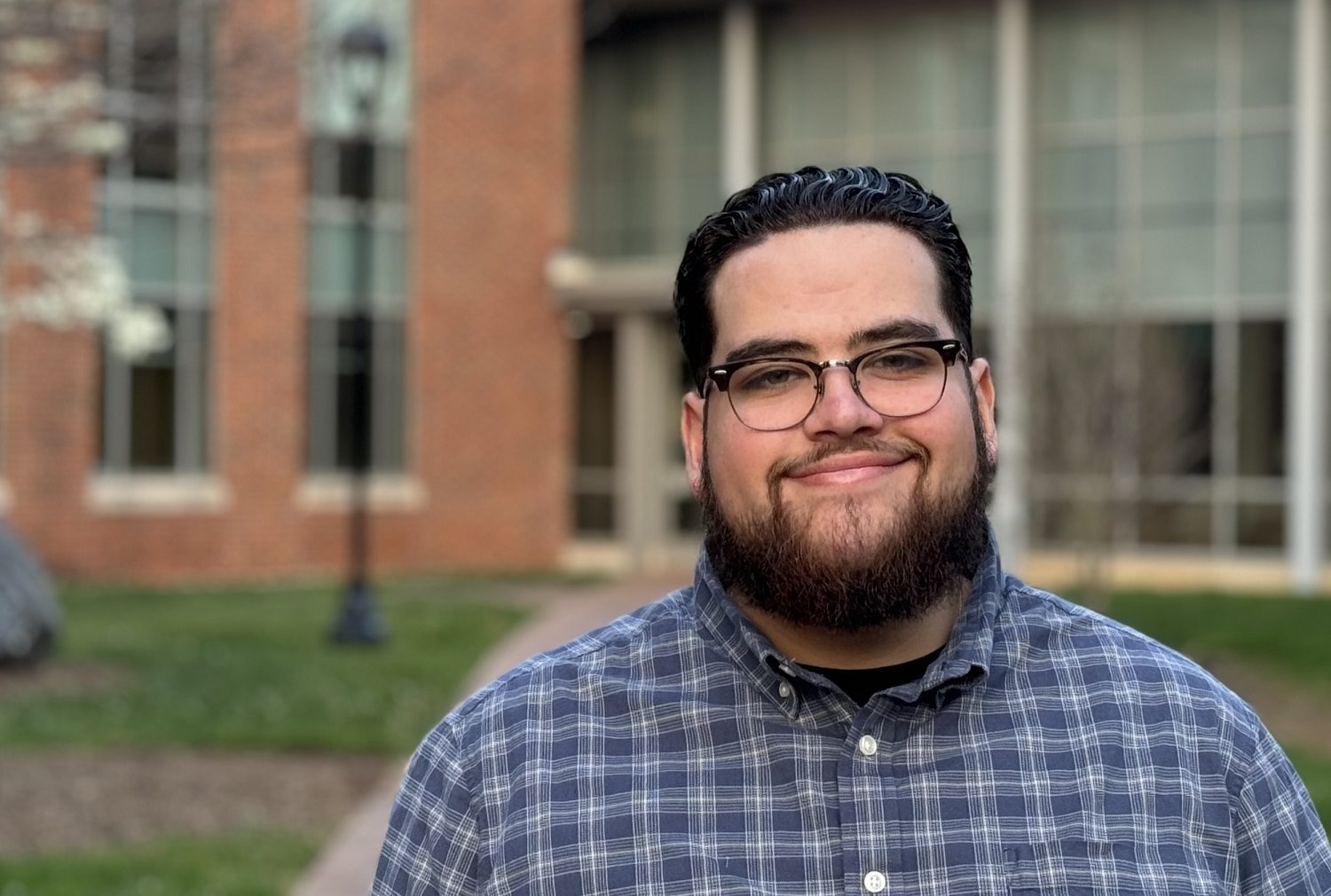
James Riley-Enriquez ’26. Photo by Sarah Black
Two Furman University neuroscience majors were recognized for their research at regional conferences held in February this year.
Liyah Reed ’25 from Sumter, South Carolina, won best undergraduate research paper at the E.E. Just Scientific Symposium, which was hosted by the Medical University of South Carolina. James Riley-Enriquez ’26 received the best poster award in the neuroscience category at the 2025 SC INBRE Science Symposium in Columbia.
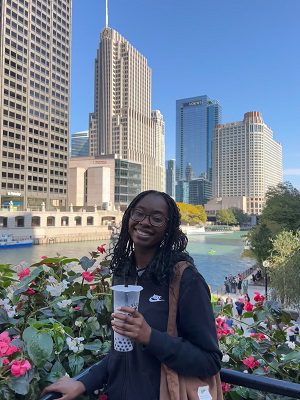
Liyah Reed ’25. Photo provided
Reed, who worked in chemistry Professor George Shields’ computational chemistry lab, studied the opioid fentanyl and its analogs in work first led by undergraduate researchers and published last fall.
Reed is building on that research, further investigating fentanyl and its 33 derivatives in solution.
“Fentanyl has a fast onset and adverse effects such as addiction and respiratory depression,” she said. “We believe the opioid’s high flexibility plays a role in its ability to bind to the mu opioid receptor – the signaling protein on nerve cells responsible for pain-relief and other effects.
She is “homing in on the idea that each fentanyl derivative differs structurally,” and “could have unique ways of signaling these pathways in the body.”
“Ultimately, we hope understanding the drug behavior of the fentanyl derivatives will contribute to overall drug design and optimization,” said Reed, who gave a 10-minute presentation of her findings at the symposium before about 200 attendees.
Reed’s win represents the second time in three years that a Furman student has won best undergraduate paper, said John Wheeler, associate provost for integrative science and professor of chemistry. Abby Stapleton ’24, received the award in 2023.
For as long as he can remember, Riley-Enriquez, originally from the Detroit area, has held a passion for neuroscience, and the presence of a robust program at Furman was one of the reasons he chose the university.
At the SC INBRE Science Symposium, Riley-Enriquez presented his research on the connection between post-traumatic stress disorder (PTSD) and alcohol use disorder (AUD) in the lab of Onarae Rice, professor of psychology and neuroscience and chair of the neuroscience program.
Riley-Enriquez investigated “the strong relationship between AUD and PTSD with a specific focus on trying to develop therapeutics for it. We are testing a particular drug in the lab that acts on one specific circuit in the brain. So, our research has the potential to treat both PTSD and AUD when they occur together.”
Riley-Enriquez, one of 16 Furman students to attend the NIH-sanctioned meeting, said he was “surprised” and “deeply honored” to receive the best poster award in his category.
The symposium drew 240 participants from 14 South Carolina colleges and universities, and included faculty presentations, student flash talks and more than 100 student posters.
“It was really exciting for me to talk to somebody who had no prior understanding of the study and have them grasp it and enjoy what I was able to present,” he said.
High-impact learning experiences such as attending conferences, presenting research, networking with peers and professors from other universities and hearing about different avenues of research are part of The Furman Advantage.
Furman students often perform well at SC INBRE, winning honors in neuroscience in 2023 and earning the top prize in three categories in 2024.
Wheeler said Reed’s and Riley-Enriquez’ successes reflect the undergraduates’ hard work as well as the collegial partnerships forged between Furman faculty and students.
Reed is preparing to publish her findings. After graduation, she’ll take a couple of gap years to gain clinical experience before going on to med school to specialize in neuropediatrics.
“Dr. Shields has been a wonderful advisor and mentor through my entire time working with him, especially during the summer when I took on the opioid project,” she said. “He has been patient, encouraging and super supportive.”
Rice has served as principal investigator, academic advisor and professor for Riley-Enriquez, who also has his sights set on med school to study neuropsychiatric conditions.
“Dr. Rice has been there as a mentor for me,” he said. “From the time I first got here, he has been present in every way – helping me develop into a scientist.”