News from campus and beyond
Faculty offer expertise, perspectives after Election Day
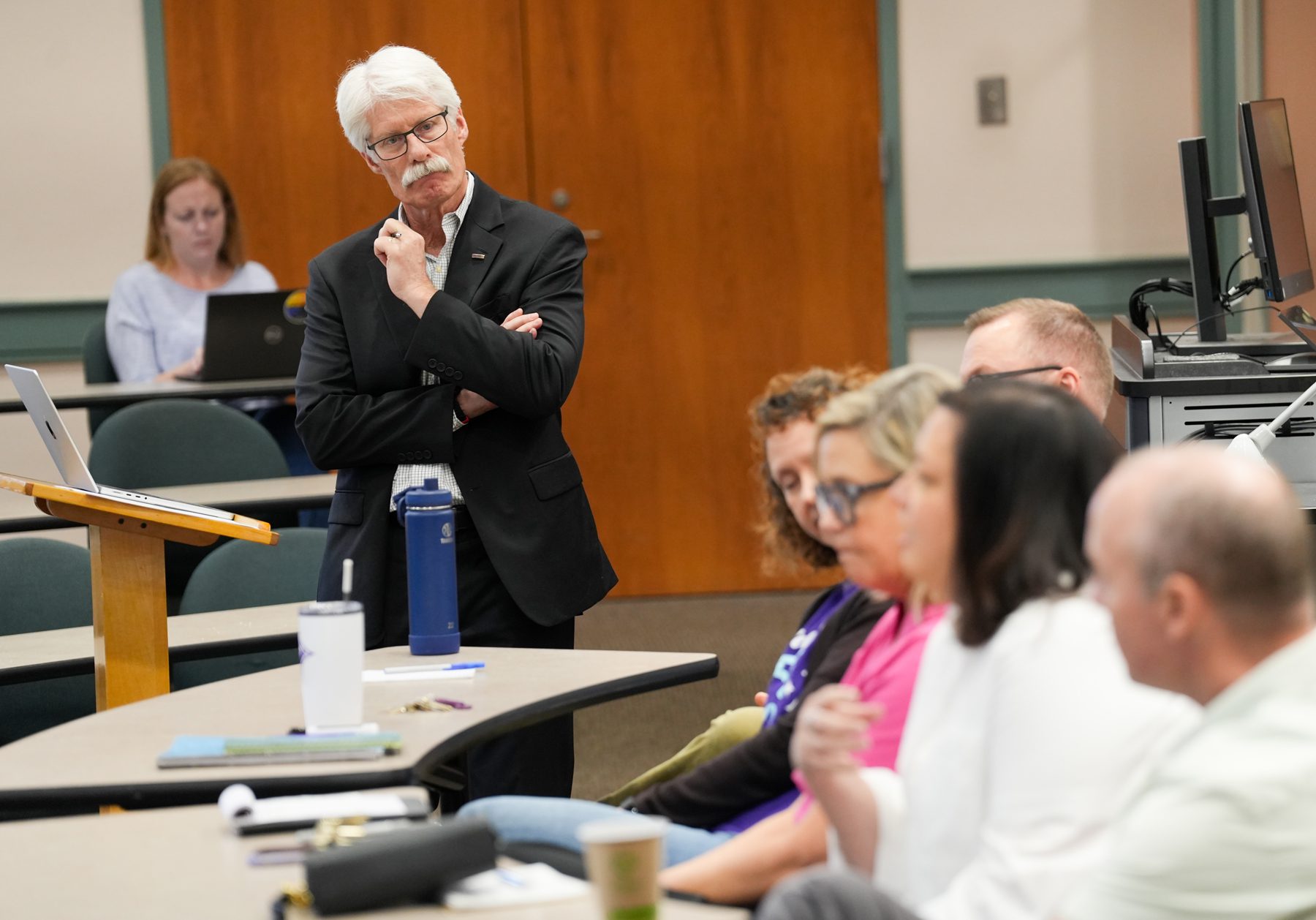
Brent Nelsen, professor of Politics and International Affairs, moderates an “Election Dissection” event between faculty and students held in Johns Hall 101 on Friday, November 8, 2024. Photo by Nathan Gray, Furman University.
No matter the result, Election Day always leaves people asking the same question: What’s next?
Last week as students, faculty and staff processed the outcome of Tuesday’s election, a panel of Furman University professors brought their expertise to answer questions and offer perspectives on the election and its policy implications. With a combined nearly 125 years of academic work at Furman in political science, sociology and economics, the panelists gathered at 12:30 p.m. Nov. 8, in Johns Hall for the discussion.
The panelists were David Fleming, professor of politics and international affairs; Jessica Hennessey, John D. Hollingsworth professor of economics and interim economics department chair; Ken Kolb, professor of sociology and chair of the department; Elizabeth Smith, professor of politics and international affairs; Danielle Vinson, professor of politics and international affairs; and moderator Brent Nelsen, Jane Fishburne Hipp Professor of Politics and International Affairs.
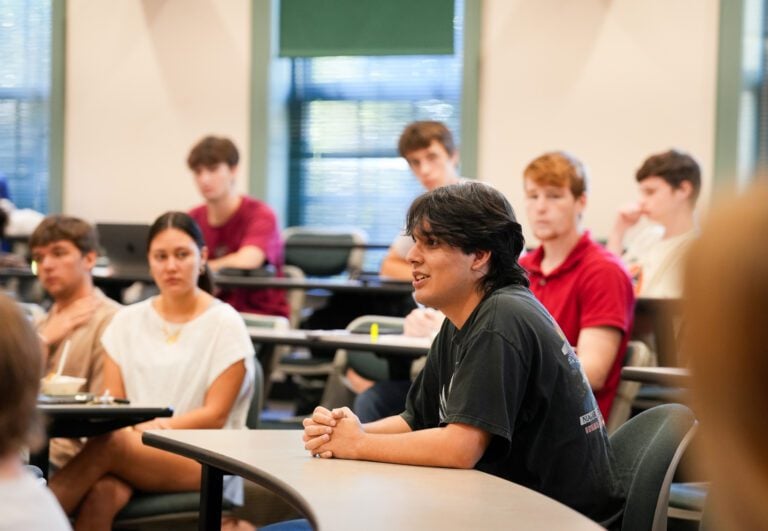
An “Election Dissection” event between faculty and students held in Johns Hall 101 on Friday, November 8, 2024. Photo by Nathan Gray, Furman University.
This “Election Dissection” event was part of the On Discourse Initiative; an effort to facilitate constructive conversations among people who have opposing views. On Discourse events are part of The Furman Advantage, equipping students with the social skills to engage in healthy communication on challenging and divisive issues.
That’s what Edwar Munoz Ventura ’27 has appreciated about navigating the election while on campus. A native of Peru, Ventura is an international student majoring in politics and international affairs. Even before Friday’s panel discussion, he said he’d been involved in his department, discussing politics with professors and students while attending “Pizza and Politics” events and this semester’s CLPs.
“There has been a good level of civic discourse, and I have enjoyed taking in every different perspective,” Ventura said.
He shared concerns with the panel about how the Latino population in the United States is being seen and treated by other citizens, as well as worries about how possible policy changes might affect international students. Nelsen explained that no policy exists in a vacuum and shared insights into how other factors like corporate influence could affect policy decisions.
Fleming said increased polarization in public opinion has created situations where voters are less likely to shift from supporting one political party to another.
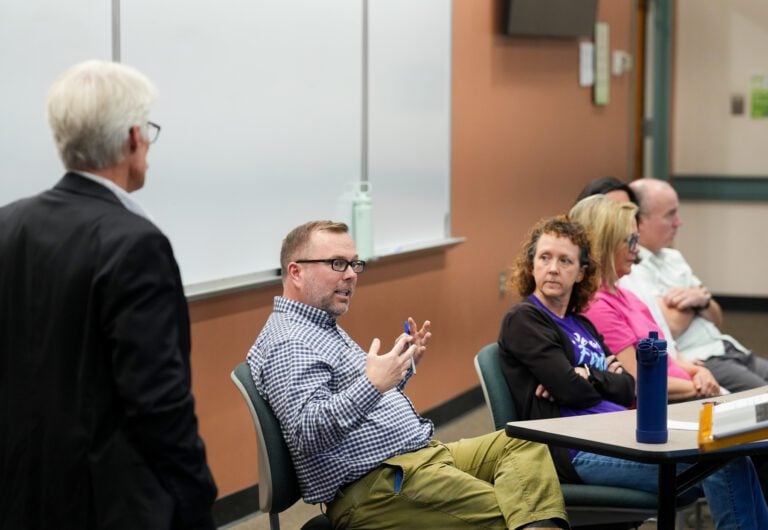
An “Election Dissection” event between faculty and students held in Johns Hall 101 on Friday, November 8, 2024. Photo by Nathan Gray, Furman University.
“Even in this election that was called before I woke up Wednesday, 125,000 votes in some places and the election would have gone differently,” he said.
The two-year cycle of political pendulum swings has shown that one party’s victories usually result in a wave of support for the opposing party during the next election, Vinson said to the discussion’s attendees. Some citizens withheld their votes over specific issues, and she said with how close some congressional races were these uncast votes could have made a difference.
“It doesn’t take many people in swing states and swing districts deciding ‘I’m not going to vote this time,’ or ‘I’m voting third party,’” Vinson said.
Hennessey and Kolb answered a question about how economists are interpreting President-Elect Donald Trump’s economic policies. Most economists agree his proposed tariffs aren’t likely to improve the economy, Hennessey said, but his campaign has offered a narrative that tariffs are a road to a better economic situation than what people are currently facing. Kolb added that tariffs alone can’t bring back an age of industrial prosperity enjoyed by previous generations.
“Even if tariffs were to work and we decided America is going to make its own steel again, there’s no way we can employ the number of people needed to create this steel industry that we imagine our grandfathers being a part of,” Kolb said. “The technology has changed to the point where we don’t need as many humans in the process now.”
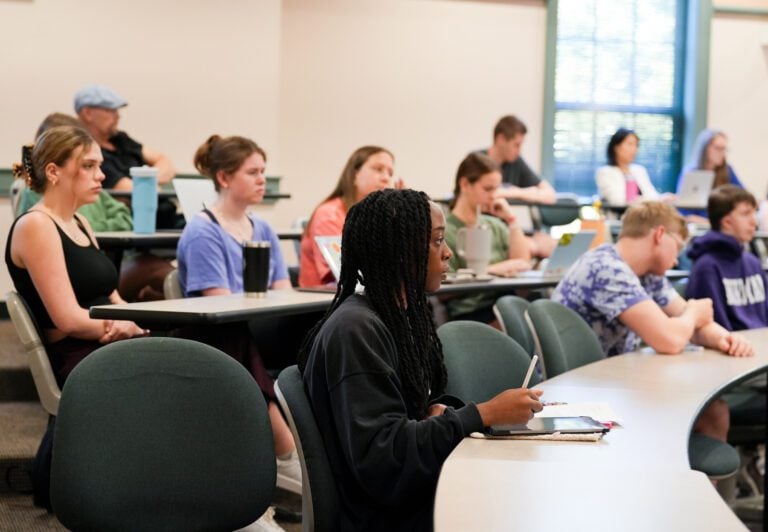
An “Election Dissection” event between faculty and students held in Johns Hall 101 on Friday, November 8, 2024. Photo by Nathan Gray, Furman University.
Some students asked the panel for clarity on social issues. Alex Aradas ’26 shared that her best friend is a transgender woman, and Aradas has felt unsafe and afraid as a queer woman amid anti-LGBTQIA+ rhetoric in the general public. For T.J. Robertson ’25, living as a queer man in the South has him fearing social tensions over marginalized groups. Smith explained to attendees that in a federal system where states have their own laws and political cultures, moving to a state with greater protections for marginalized people is a practical consideration, if possible.
“The bottom line at the end of the day is everybody should feel safe,” Smith said.
Enabling safe conversations is what On Discourse is for, and Smith said she hopes the panel discussion helps spur students on with curiosity when engaging with others about politics. Nelsen said he wants to see people connect with the concerns and opinions of the working class, and that students should be involved in their communities, mixing with a diversity of people from various backgrounds.
“I think action is always the best way to deal with stress,” Smith said. “Talk to people, get to know people that are different from you, and try to bridge the information and perception gaps that we know exist.”
If you or someone you know needs personal assistance, contact the Office for Spiritual Life at [email protected] or 864-294-2133 or the Trone Center for Mental Fitness at 864-294-3031.