News from campus and beyond
Bugging out: MayX course has students inspecting world’s most populous land animals
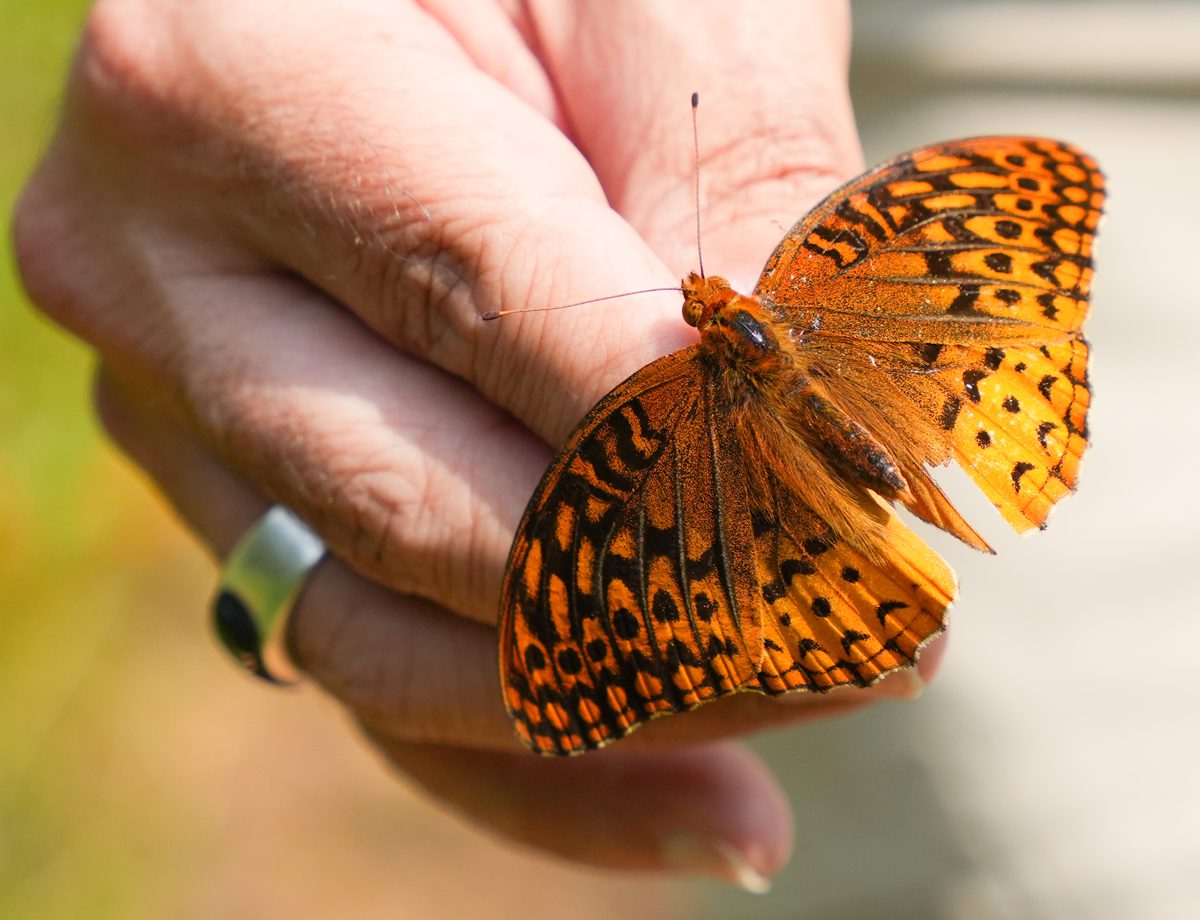
Wade Worthen, professor of biology, holds a great spangled fritillary butterfly he caught at the Blue Wall Preserve during the Insect Diversity MayX on June 3. Photo by Nathan Gray, Furman University.
Students donned waders and boots, slung nets over their shoulders and hauled whatever they’d need to pluck their tiny marks from waist-high grasses and muddy riverbanks. They turned each day of Wade Worthen’s Insect Diversity MayX class into a small safari.
“It’s just a question of being a little more attentive and looking at a smaller scale than we’re used to. I find their little lives fascinating,” said Worthen, the Rose J. Forgione professor of biology at Furman University. Making up about half of the identified species on the planet, insects are critical to the environment and economy, whether as pollinators or pests.
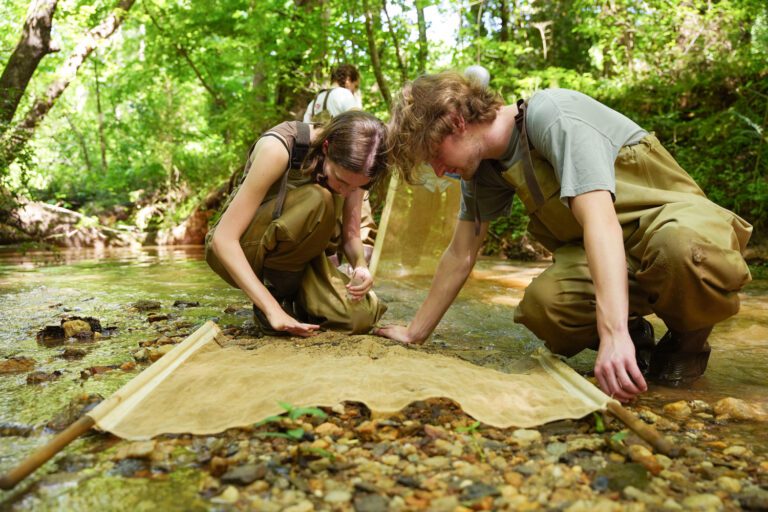
Riley Powell ’26 and Will James ’26, catch insect larvae in a seine during an outing to Little Creek on Furman’s campus as part of the Insect Diversity MayX class on May 15. Photo by Nathan Gray, Furman University.
In the Upstate of South Carolina, insects are most active in May, making the timing of the three-week summer May Experience term perfect. And MayX courses are often a students’ only academic responsibility at the time, Worthen said, offering a chance to dive deeply into a specific topic or experiential learning opportunity.
During lectures, students built a mental library of identifiable insect features and an understanding of the differences of taxonomic orders, families and species. But in the field, students collected 100 insect species, identified them and traded specimens among themselves to complete their collections.
Whether it’s the slender, iridescent body of a damselfly nymph near a creek or the hard carapace of a large Dynastes beetle, insects are common, but distinct. Finding and identifying them takes patience, sharp observational skills and a little luck.
“Insects are naturally trying to get away from you, so when someone makes a good catch with a net or spots something unusual it’s common for the students to show it off and celebrate,” Worthen said.
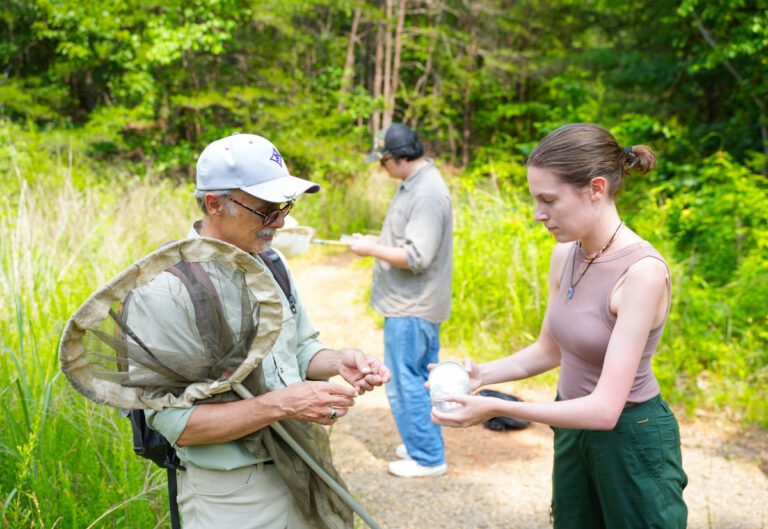
Wade Worthen, professor of biology, left, helps Riley Powell ’26, right, and Thomas Buxton ’27, middle, collect insects at the Blue Wall Preserve during the Insect Diversity MayX on June 3. Photo by Nathan Gray, Furman University
Students sifted through silt at Little Creek in search of insect larvae and snatched flying and crawling insects with nets and collection jars at the Blue Wall Preserve, protected land in the Blue Ridge Mountains less than an hour from campus. They set up black light bulbs to attract nocturnal insects after dark. Even at this small scale, there’s a thrill to the chase.
“It gives them the opportunity to be inventive and resourceful. It’s neat seeing them so interested and working together in the lab to get familiar with these little lives,” Worthen said.