All Blog Posts
Theater as a Tool for Change: How Miriam Ragland Found Her Voice in Advocacy
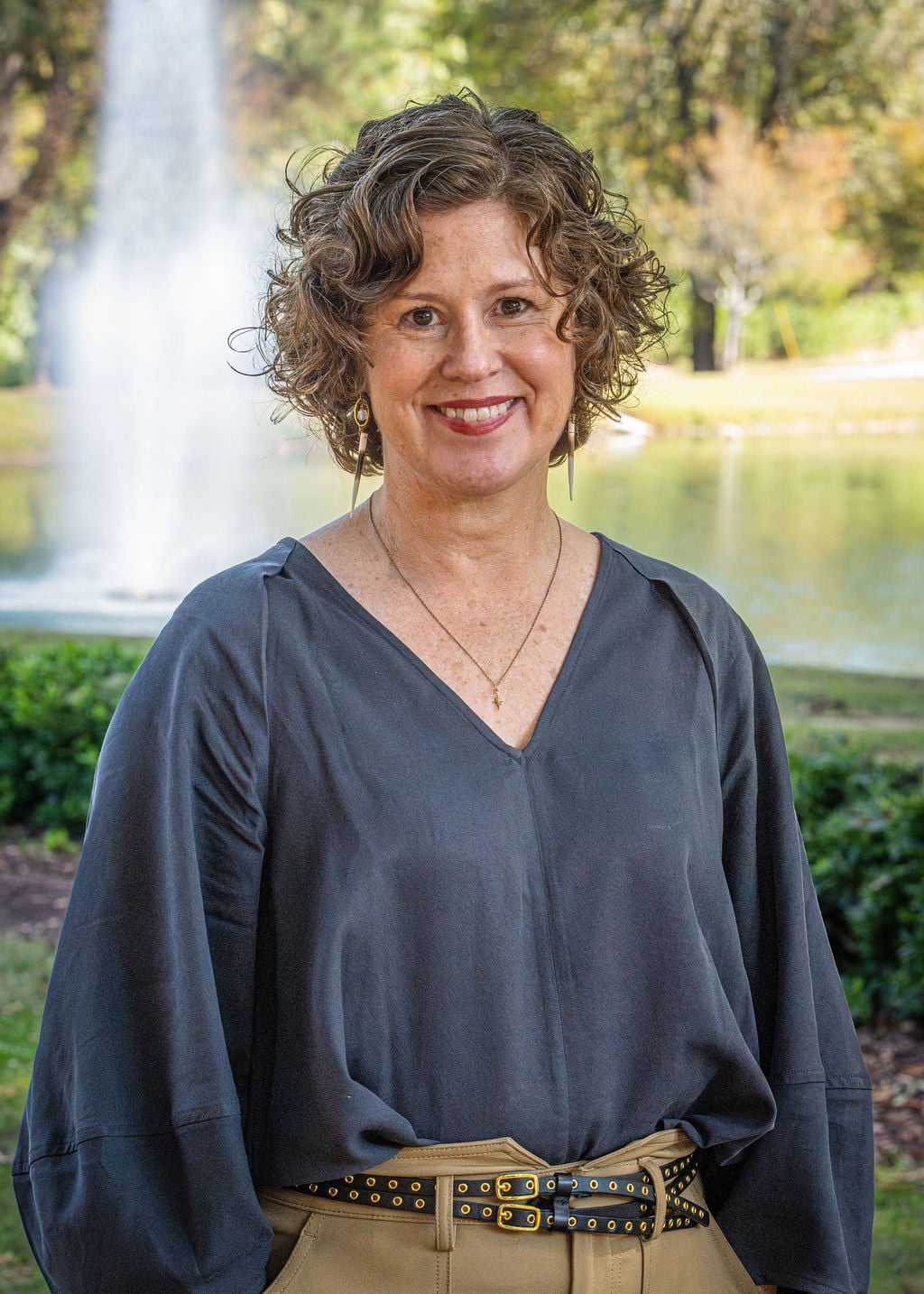 Theater has always asked its audiences to see the world through someone else’s eyes. For Miriam Ragland, M’25, it became a vehicle for something more: real social change. After 25 years teaching theater at Presbyterian College (PC), she pursued Furman’s Master of Arts in Advocacy and Social Policy (MAP) to transform not only her practice, but also her campus community.
When she was first introduced to the MAP program, she immediately saw how it complemented her interest in socially conscious theater. She wanted to move beyond classical theater performances toward theater for social change, a practice that uses interactive performances to engage audiences in dialogue, using theater as a form of advocacy. Additionally, her interest in community, justice and well-being aligned with the MAP program. She enrolled as a member of the inaugural cohort, and what she gained went far beyond the stage.
Building a New Kind of Classroom
The MAP program gave Miriam practical tools to revamp how she teaches. She learned to create a less hierarchical classroom, one where students and instructors learn from each other. She gained new perspectives from her professors, strengthened her listening skills, and developed abilities that made her a more effective professor in the classroom. These were tangible skills that she brought into her work at PC.
Discovering Intergroup Dialogue
A course with Professor Jocelyn Boulware Bruce introduced Miriam to intergroup dialogue (IGD), a practice that brings people from different backgrounds and walks of life together to build genuine connection across differences. As a theater and communications professional, IGD felt both natural and insightful to Miriam. She learned a range of techniques, workshops and exercises designed to foster dialogue, which she hoped to use in her own classroom and curriculum to create spaces where people can communicate despite differing perspectives.
Miriam did not just study IGD. She practiced it. She taught IGD workshops to Furman undergraduate students and participated in DINS Dialogue, Jocelyn’s program where students develop peer facilitation skills. Each experience deepened her understanding of how people can talk, and more importantly, listen, to those with contrasting viewpoints.
Putting it into Practice
Miriam’s practicum became an opportunity to put MAP learning into action. She designed and launched a course titled Theater for Social Change, integrating IGD techniques throughout the curriculum. Her MAP professors helped as she planned the course, and she recently taught it for the first time at PC. It was a clear example of her ability to apply her knowledge from the MAP program into a professional outcome.
Expanding the Work at PC
Miriam had the tools. Now she needed to put them to work. For the past year, Miriam has been building an IGD program at PC to expand civil conversations across the college community.
“We wanted to intentionally bring in different voices and points of view,” Miriam said. “Intergroup dialogue is a way to start doing that, to start teaching people the skills to listen so you’re not just listening to shut someone down but listening to try to understand where they’re coming from and their point of view.”
Her efforts have already been effective. There have been civil conversation meetings, including a civil conversations dinner, which generated successful discussions on various topics. Miriam is now expanding the work so that IGD will be more integrated into curriculums across campus. She is training faculty to facilitate IGD conversations and hopes to train students as well.
She is exploring ways to introduce IGD into students’ orientation, with the goal of embedding it from the very beginning of their campus experience. Ultimately, she hopes to build a sustainable network of student ambassadors and faculty facilitators who can carry these conversations forward long-term, while also expanding IGD’s presence across more classrooms.
A Transformation That Lasts
The MAP program set Miriam on the path that she had been seeking, equipping her with skills she continues to apply in her life, in the classroom and on the stage.
“It’s a transformational program,” she said. “It was transformational for me personally through the eye-opening readings and all of the different professors I was exposed to.”
One insight from her professor, Franklin Ellis, has stayed with her: you may not change how people think or what people do, but you can offer them a new perspective.
That idea has become her compass. Today, Miriam is not just offering new perspectives. She is helping others to do the same.