Teaching Tips – The Dialogic Classroom
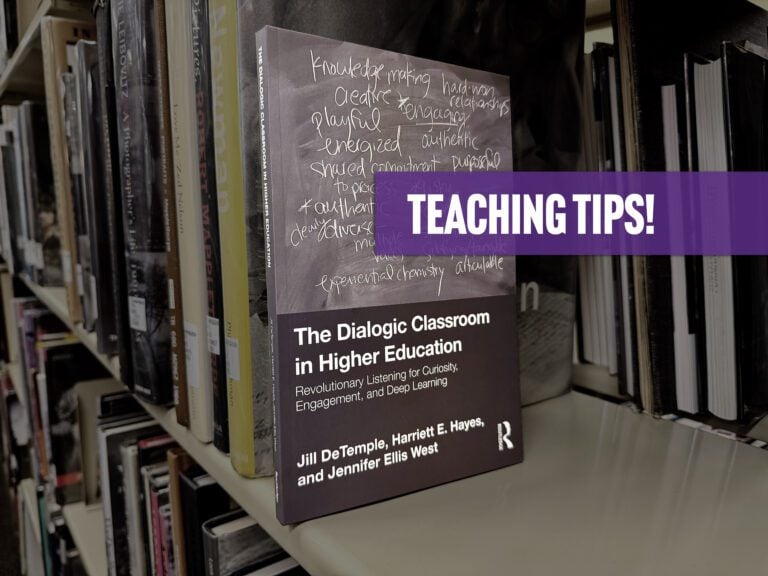 The Intergroup Dialogue Group and Faculty Development Center held our first two reading circle sessions this month to explore The Dialogic Classroom in Higher Education by DeTemple, Hayes, and Ellis West. The book focuses on “designing for listening.” The key idea: listening isn’t just a skill some students have, it’s something we can intentionally build into our courses. When we change how classroom conversations happen, we change the learning relationship itself. This shift can reduce student isolation, build community, and create more engaging learning environments.
Our group discussion surfaced real challenges many of us face: working against students’ expectations of the “game of school,” finding time for meaningful dialogue, and figuring out how to give feedback without dominating the conversation. We’ll continue to explore these challenges and other lingering questions, such as how to build trust, design good prompting questions, and apply dialogic theory across disciplines.
Teaching Tip: A practical tip to lean into dialogue might be starting class by writing 3-5 open-ended questions related to your course topic on the board. Then, let students choose which question the class discusses first. Here, instead of starting with lecture, you put students at the center of the conversation and give ownership over the direction of learning (at least for 10-15 minutes). Ready to level up? Arrange the class into a circle so you are sitting with students rather than standing at authority in front of them. This physical change can signal to students that you’re listening for inquiry and exploration rather than policing correctness.
Many more teaching tips came from our reading circle participants. For example:
- Use Slido.com for real-time up-voting and down-voting to spark discussion
- Have students draw a card with an inanimate object and tell a story about the object’s “life”
- After a partner exercise, use the prompt: “Tell us something interesting you heard or observed about your peer.”
Invitation for Reflection: As we continue reading, participants are trying a “listening lens” exercise: noticing moments in their own teaching where listening is structured, assumed, or where small design choices either help or hinder dialogue. We invite you to join the reflective practice! We’ll be transitioning these reading circle insights into two workshops later this semester that you can register for in advance.
- Reflective Structured Dialogue Workshop, February 20th at 2:30pm in LIB 043
- Dialogic Moments Workshop, February 27th at 2:30pm in LIB 043