Tocqueville Fellows Blog, Featuring Sim Colson: “Critical Patriotism and a Confrontation of National Memory ”
Sim Colson, a Tocqueville Fellow from Jacksonville, FL (class of ‘26), provides insightful commentary on the relation between how a nation tells the story of its past and its self-understanding of patriotism and national identity in the present.
Sim’s comments were inspired by the Tocqueville Center’s two-part event, “The Black Experience in America,” and “American Patriotism. Discuss.” The Tocqueville Center co-hosted the event on patriotism with Furman’s On Discourse Initiative, which gave attendees the opportunity to discuss the diverse views of patriotism presented by the speakers in small, randomly assigned groups.

Tocqueville Fellow Sim Colson, Class of ’26
Sim is a Junior at Furman double-majoring in Politics & International Affairs and History, with a minor in Middle East and Islamic Studies.
The example of post-WWII France: Redefining national identity while erasing national memory
In 1978, French author Patrick Modiano published his novel Rue des Boutiques Obscures, or Missing Person in its English translation. The brief story follows private investigator Guy Roland through 1950s Paris in search of his own lost identity, seemingly forgotten a decade prior in an accident that robbed him of his memories. As Roland makes his way through the shadowy and solemn streets of Fourth Republic Paris, a series of whispered conversations and elusive pieces of the past paints a somber portrait of an individual’s loss and search for identity. Until he reclaims his memory, Roland finds himself meaningless, “nothing but a pale shape,” unable to face the future without a past, be it righteous or sinister. [i]

Within his unique film noir style, Modiano seizes the opportunity to search the soul of his country, post-war France, a people intent on looking forward and redefining its identity free from a tumultuous past. Modiano explores the national desire to “forget” the Nazi occupation and the German-backed Vichy Government, an era in which many French civilians willingly collaborated with the Nazi regime and sympathized with its ideology, actively facilitating the genocide against France’s Jewish community and countless others.
Following the war, rather than confront the guilt tied to this “inconvenient history,” the Fourth Republic refashioned its own national identity into one of victimhood and resistance to the oppressor, omitting and suppressing the memories of collaboration that would taint its past. Modiano uses his work to confront this corrupted national memory and its manipulation through willful erasure, an intolerable aspect of a French narrative he deems ignorantly enthralled with national honor.[ii]
Following the war, rather than confront the guilt tied to this “inconvenient history,” the Fourth Republic refashioned its own national identity into one of victimhood and resistance to the oppressor, omitting and suppressing the memories of collaboration that would taint its past.
The role of narrative construction in defining patriotism and national identity
This relationship between national memory and the formation of a narrative is not merely confined to the aftermath of world wars but is a central aspect of everynation-state’s perpetuated identity. What a nation includes in its history and how it chooses to remember its past inevitably shapes the stories we tell about a people’s present and future purpose.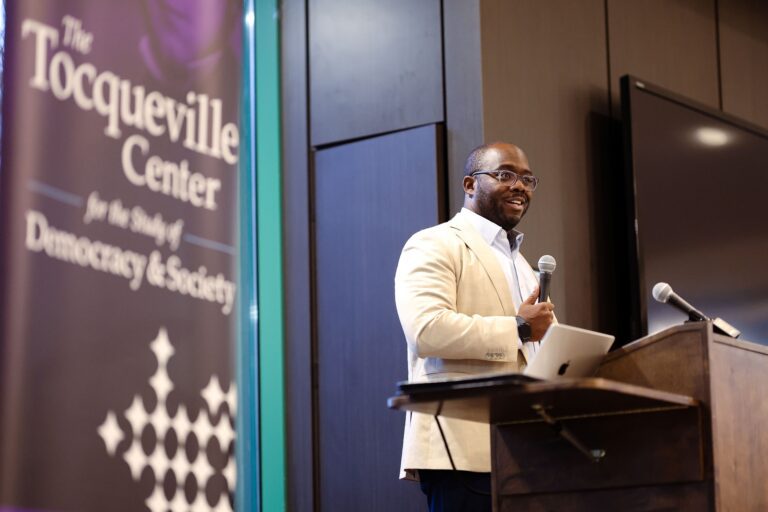
Several weeks ago, I had the privilege to attend two nights of lectures hosted by the Tocqueville Center at Furman University. During the second night of events, the center gathered a panel of three scholars for a discussion of patriotism in the United States. While each scholar represented a distinct view of patriotism and vision for its role in America, all three perspectives subtly addressed national memory, a bedrock for narratives about American history, and its central part in shaping our sense of American pride and purpose.
Following the panel, the event turned to the attendees by asking them to define their own views of patriotism and share in round-table discussions. Every person in the room was now not simply challenged to confer over an ambiguous political term, but to confront our own narrative about the United States and the selective national memory that shapes it.
What a nation includes in its history and how it chooses to remember its past inevitably shapes the stories we tell about a people’s present and future purpose.

Patriotism in the United States: Selective national memory and competing narratives
But how does one tackle such a subtly consequential question? I found my own sense of patriotism suddenly muddled by a complex range of emotions. On one hand, I could not help but feel proud of my country, believing in its value of freedom, the unique opportunities to thrive for many who had arrived and planted roots here, and a deep commitment to democratic principles.
My own family benefitted from this American freedom. Originally Scotch-Irish immigrants and devout Presbyterians, my ancestors fled their homelands due to economic hardship and religious persecution and, like many others, found refuge in the toleration and economic opportunity of the North American colonies. After briefly residing in Pennsylvania, they migrated to what would become Mecklenburg County, North Carolina, a later central part of the city of Charlotte, and were among the leading families in establishing Sugar Creek Presbyterian Church, where many of them are buried today.

Over the coming generations in their new home, my family prospered and cultivated a rich tradition encouraging personal education, religious devotion, and contribution to their community, traditions I am privileged to inherit today. Stories like this elicit deep pride in my nation, one that fostered the pursuit of freedom and simultaneously preserved legacy.
Yet on the other side of such a gilded “American Dream” is our own inconvenient history, a shameful past I, as a university student, have grown increasingly aware of. Rather than paint a rosy picture of liberty, equality, and prosperity, this history exposes a parallel reality of oppression, discrimination, and vast inequality.
The memory of Native Americans forcibly expelled from their homes, slavery and the culminating Civil War, Jim Crow era segregation and national legacies of systematic racism, and colonial-style efforts from the Philippines to the Middle East all weigh heavy on the American story. Rooted in our nation’s past are these dual realities; where the American flag has flown and symbolized freedom for so many, it also has borne a parallel reality of injustice for many others.
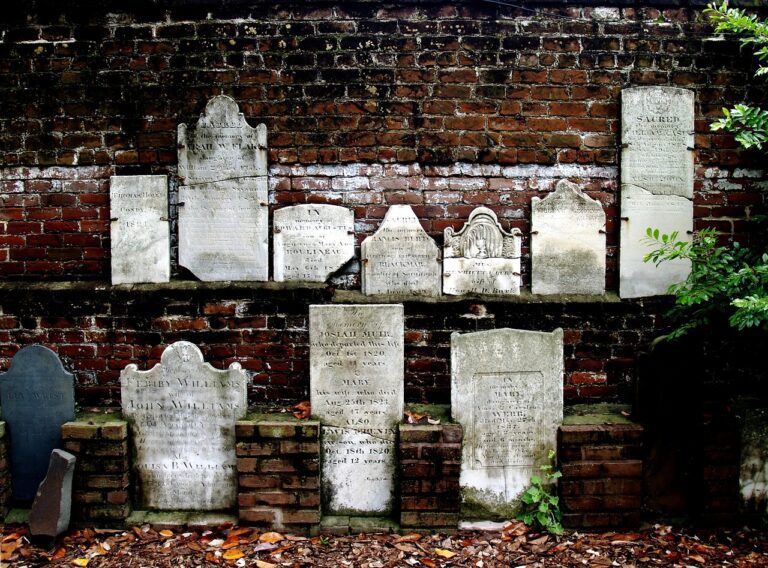
Civil War era tombstones
A rise in extreme narratives as a response to conflicted national memory
Responses to this conflicted national memory, and thus a notion of patriotism, too often gravitate to the extremes. Americans may be inclined to whitewash its history, adopting an American exceptionalism that minimizes our errors and zealously highlights the American tradition and core values as unique, and historically exemplary for both us and others. Fearful of undermining a sense of pride in this tradition, it’s easier for this response to acknowledge our “slip-ups” or “flaws” merely as resolved issues, denying their role in actively shaping our nation’s past and present reality.
On the other side of responses is an emphasis purely on America’s deep failures, implicitly judging our shameful past from a lofty place of “ultimate moral truth.”[iii] American pride, as explained by Philosopher Richard Rorty, seemingly becomes an “endorsement of atrocities” throughout our past, harshly identifying it with a deep “hypocrisy and self-deception” at the core of our country.[iv] Thus the symbols and leaders of this corrupted past must be destroyed, removed to their rightful place on the ash heap so that our nation, “conceived in sin,” might achieve a truly just society.

An American slave cabin
Each of these common extremes in pursuit of an American narrative proves problematic because both engage in the erasure of our past, altering national memory to suit their purposes. An American exceptionalist view omits and reduces an undeniable truth of oppression, discrimination, and systematic violence; the sins of our nation, and their active role in shaping the present, are erased. Its not only an irresponsible enterprise, but a dishonest manipulation of history.
And yet do we respond by tarnishing our nation and its achievements altogether? No, for we fall prey to the same errors, erasing the contributions of past actors and the virtues they strove for in a democratic experiment that we continue to build on today. Patriotism coupled with erasure does not facilitate an American identity but undermines it with selectivity.
Building a conception of American patriotic identity for the future, without erasing its conflicted history
America’s winding memory and narratives do not fit within our neat notions of patriotism. Esau McCaulley, a guest scholar on the Tocqueville Center panel, insightfully explains that feelings of “love, pride and regret can reside in the same heart,” that it is a critical patriotism that exhibits a deeper love of country.[v] Holding our nation in pride while embracing its shame means unabashedly confronting our national memory for all it holds, refraining from the instincts for erasure embedded in the quest for national identity.
Like Modiano’s Guy Roland wandering in the streets of Paris, we must charge head-on into our past, reclaiming all parts of our memory and thus a purpose for the future. If not, we will find our identity adrift in a meaningless existence, reduced to “nothing but a pale shape.”
Holding our nation in pride while embracing its shame means unabashedly confronting our national memory for all it holds, refraining from the instincts for erasure embedded in the quest for national identity.
By Sim Colson, Dec. 6, 2024
Tocqueville Fellows are a select group of Furman undergraduates interested in cultivating the philosophic perspective on politics exemplified by Alexis de Tocqueville. Tocqueville, a 19th-century Frenchman, was one of the first to witness the momentous new force of modern democracy, and his observations on the far-reaching changes that democracy would bring are still hailed as prophetic today. Tocqueville’s perspective was informed by a thorough understanding of the political alternatives articulated by the philosophic tradition, and characterized by the conviction that a wise appreciation of the goods of an irrevocable past can guide our attempts to navigate an unprecedented future.
The Tocqueville Center strives to form democratic citizens who are capable of seeing, as Tocqueville did, the variety of issues facing the modern democratic soul.
You can learn more about Sim Colson and our other Tocqueville Fellows by clicking here!
Notes:

[i] Patrick Modiano, Missing Person, Penguin Classics, 1978, p. 1.
[ii] James McAuley, “The Mystery of Patrick Modiano,” New Republic, August 27, 2015, https://newrepublic.com/article/122631/mystery-patrick-modiano.
[iii] Wilfred M. McClay, “The Claims of Memory,” First Things, January 2022, https://www.firstthings.com/article/2022/01/the-claims-of-memory.
[iv] Richard Rorty, “American National Pride,” in Achieving our Country: Leftist Thought in 20th Century America, Harvard University Press, 1999, pp. 3-7.
[v] Esau McCaulley, “Patriotism is Telling the Truth about our Past,” New York Times, July 4, 2024, p. A23.