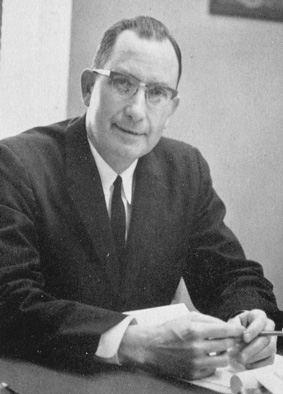
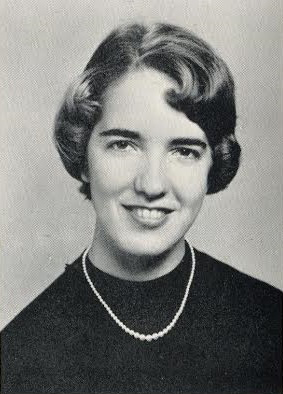
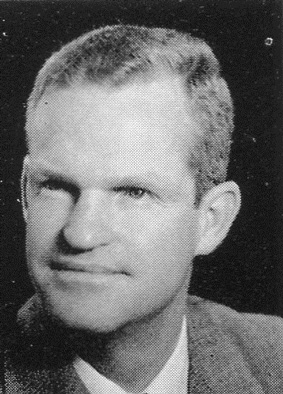
Alfred Sandlin Reid was born in Orlando, Florida, on October 26, 1924. He planned to follow his father into the ministry, but in college, he began to reevaluate his fundamentalist beliefs. He left college in June 1944 to serve in World War II, and over the next year, he fought in France, Germany, and Czechoslovakia. He later credited his military service with teaching him that “people are people—not derisive stereotypes,” and after the war he began attending an integrated church.
Reid earned a Ph.D. in English literature from the University of Florida in 1952 and taught in Connecticut and at The Citadel before coming to Furman in 1955. Throughout the civil rights movement, he remained deeply committed to racial justice. Southern resistance to Brown v. Board of Education filled him with “embarrassment and shame,” and he used his poetry to express “the guilt of being a Southerner.” In class discussions and academic publications, he rationally insisted that desegregation was a legal, moral, and social necessity. He wrote letters of protest against Greenville’s Jim Crow laws, served on an integrated Human Relations Council, and took part in a drive to increase black voter registration.
In 1963, Reid wrote a resolution calling for the desegregation of Furman, insisting that segregation was “incompatible with basic Christian principle.” The faculty adopted the resolution unanimously on September 7, 1963. In the late 1960s, Reid added works by Martin Luther King and Malcolm X to his curricula, and in 1972, he began teaching a course on black literature. He sponsored the liberal Southern Student Organizing Committee (SSOC), which fought for civil and student rights, and when the SSOC took on controversial issues, Reid defended it from attacks from President Blackwell and the trustees. Reid became chair of the English department in 1972 and earned the Meritorious Teaching Award in 1973. Throughout his life, he published two volumes of poetry, three prose works, and a “definitive” history of Furman University. He died in Greenville on March 7, 1976.