Blog
The Life Cycle of the Furman Farm
Pictured above: Corn approaching harvest; Frederick is 6ft tall for reference.
A few weeks at the Furman Farm breeze by for anyone who works there, but all the stages of life are present throughout. My name is Frederick Dunning, and I’m the Student Assistant Farm Manager at the Furman Farm. Through this fellowship I get access to a new branch of knowledge about sustainability and farming I never would have seen otherwise. While my stay at the Furman Farm only started three weeks ago, I’ve already seen drastic changes to all our plant life. Harvesting crops and planting new ones is a daily occurrence. Seeing the rise and fall of a crop is a great way to find out how your food finds your table and learn about the labor that goes into growing it.
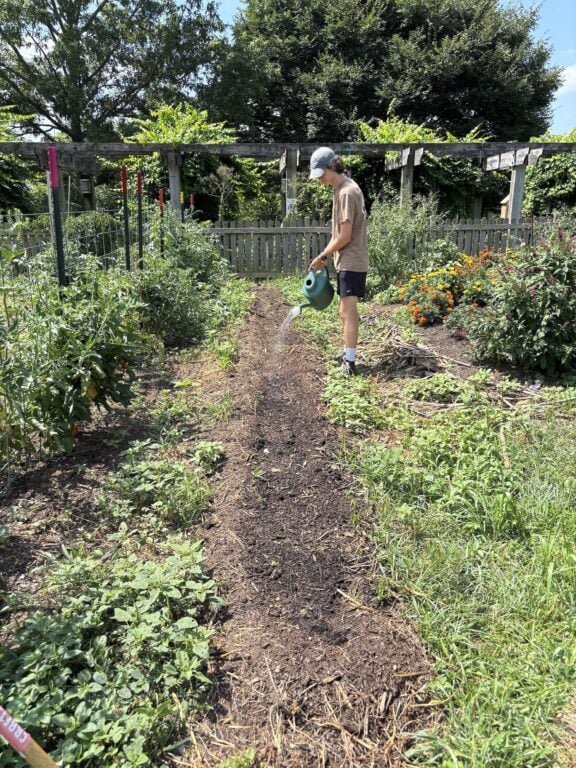
Watering newly planted watermelon
When crops are first planted, they get tons of water every day, to ensure proper germination and a healthy sprout. As time passes, some seeds will grow and others will never even break the soil. Wherever seeds fail to sprout we replace them, hoping the new ones will take root. As the sprouts mature, we start to give them nourishing compost tea instead of water, check out the Shi Institute Instagram to learn more about compost tea. With proper watering and a dose of the South Carolina sun, our plants grow quickly and healthily.
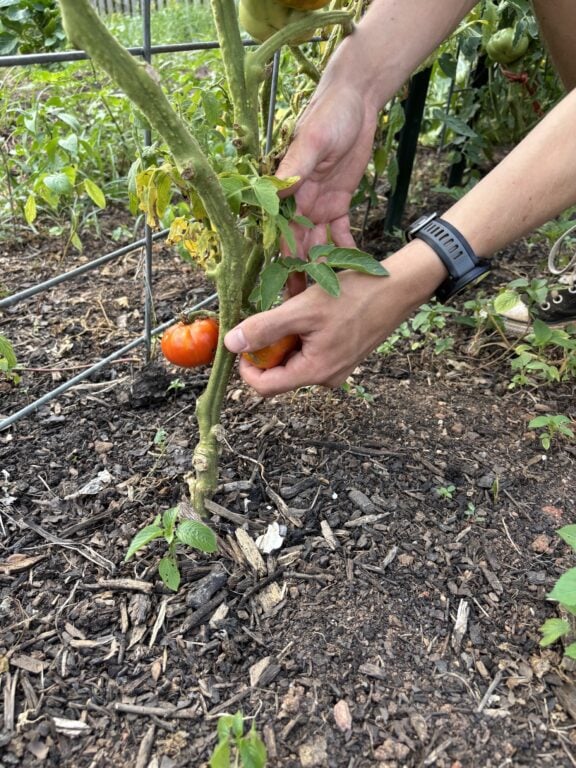
Harvesting ripe tomatoes
As our crops grow older, they enter the harvesting stage of life, and we continue to watch over them every day. When our crops reach maturity, we typically harvest them twice a week, with a revolving selection of plants to choose from. Our squash, zucchini, and green beans are in full swing, producing three to four hundred pounds of produce per week. Right now, our corn is entering this production stage, developing corn silk and preparing to give us some delicious cobs. While these plants produce for us, they are more self-sustaining and require less water to grow strong. The harvest cycle of a plant can range from as short as a day to as long as six weeks.
As our crops reach the end of their life, we still care for them as best as we can. If we think a plant can survive longer, we give it compost tea and extra attention until it is healthy again. To promote sustainability and reduce waste we find use for these plants at the end of their lives as well. When a plant dies, we compost it or use it to brew a nitrogen rich tea for our sprouts. Keeping our dead plants and weeds at the farm means less going to landfills. Finally, in the place where these crops are removed new life takes root, and the cycle of plant life starts again.
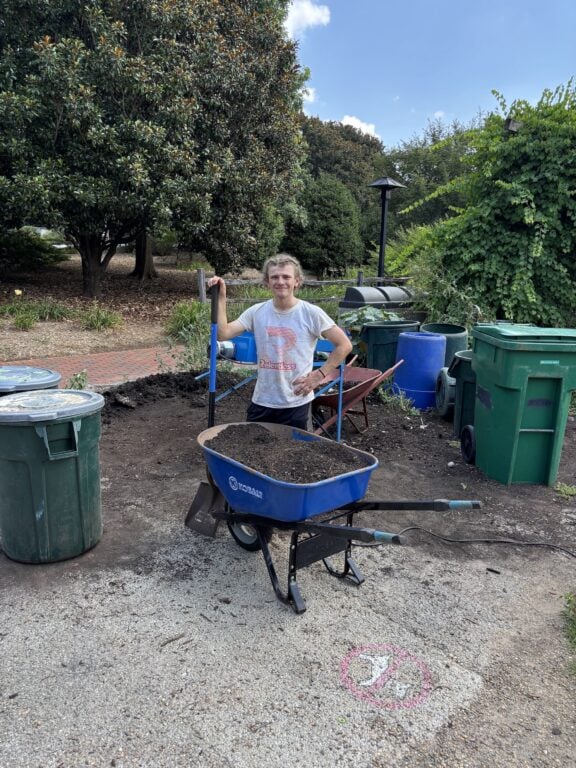
A glimpse at our compost system
If you want to experience the harvest for yourself, we welcome volunteers every Thursday from 8:30 am until 10:30 am.