Blog
Spearheading Organic Viticulture and Defying Agricultural Norms at Paris Mt. Vineyard
When other viticulturists told the owners of Paris Mountain Vineyard and I that it would be impossible to grow grapes one hundred percent organically, we took ‘impossible’ as a challenge to prove them wrong.
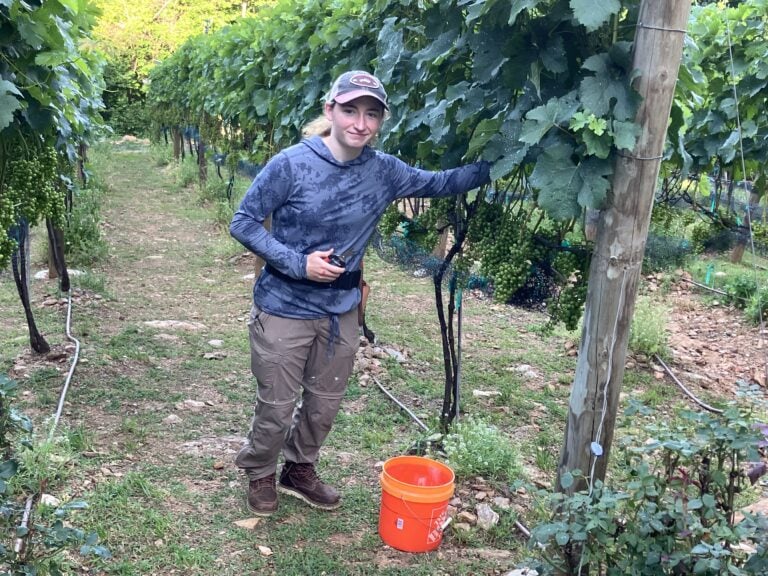
Pruning in the vineyard
I’m Jay Dilger, and I am the Assistant Viticulturist Fellow this year with the Shi Institute. This summer, I am partnering with David and Laura Taylor with Paris Mountain Vineyard to assist with developing, refining, and sharing a method for growing grapes completely organically, using biodynamic farming techniques. Additionally, I spend most of my days during this growing season helping out with the maintenance and care of the vines. As an Environmental Science major with a focus on agriculture and ecology, this fellowship is not only important for me to get hands-on experience in my potential career field, but it allows me to work towards positive change in the real world, with goals that align with my values as a steward of the planet.
My days working at Paris Mountain Vineyard mainly consist of patrolling the vineyard, pruning the vines, removing bad grapes from the clusters, and monitoring for fungal, pest, or bacterial attacks. While organic cultivation is important and necessary, it’s certainly not easy to balance defending the vineyard from disease and pests with being completely organic. This is part of why the other viticulturists and wine makers insisted that successfully growing grapes one hundred percent organically would be impossible. In the past, the vineyard has suffered with bad cases of black rot and downy mildew attacking the vines, and while we now have fungal and pest activity well under control, we are still combating these issues constantly at the vineyard.
Despite the odds being stacked against us, David Taylor believes he has developed a couple of reliable formulas for certified organic fungicides and pesticides to keep the various pests and diseases at bay. One of these fungicides is a JMS organic white mineral Stylet oil and water solution that we spray on the grapes to combat fungus, and to kill pest invertebrates. Not only does the oil eliminate fungi by smothering the fungi mycelia upon contact, but it neutralizes pest insects like white flies, mealybugs and aphids by clogging their respiratory systems upon contact, killing them immediately. Additionally, it has long lasting effects due to the oil sticking to the grape pods and beading off water, rather than being washed away.
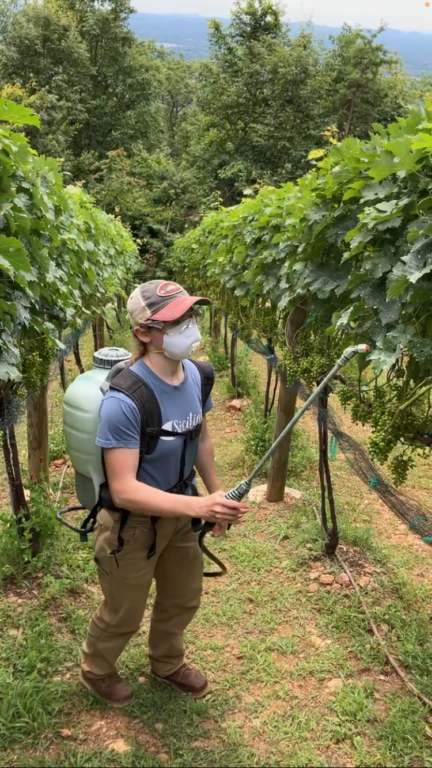
Spraying the Kocide 3000 and
hydrated lime solution on the vines.
The other fungicide and bactericide that we spray is a solution of Kocide 3000, hydrated lime, and water. The active ingredient in the Kocide is copper hydroxide, which reacts with water to create biologically active copper ions. When bacteria and fungi make contact with the spray, their cells absorb the copper ions, which then destroy the cells from the inside out by denaturing proteins and enzymes. Since the copper ions target multiple cell functions at once, it’s hard for bacteria and fungi to develop a resistance. The hydrated lime kills bacteria, and it also benefits the soil in various ways, such as raising soil pH, which manages many soil-borne diseases, while also increasing nutrient availability.
While the organic fungicide and pesticide solutions are proving to be highly effective, they are safe for humans and animals, and can be applied safely with minimal respiratory protection. These organic fungicides are so safe, that we even have several bird families nesting within the vines!
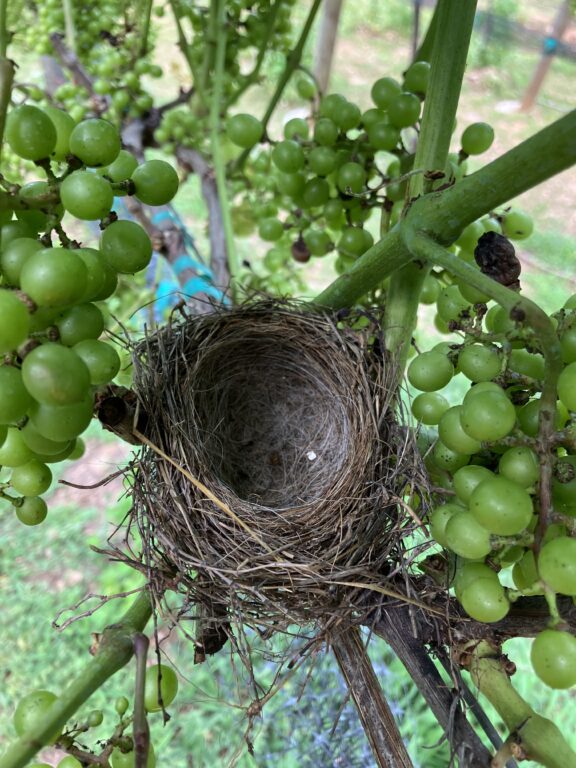
One of the three bird nests that were found throughout the vineyard,
a testament to the success of the biodynamic farming techniques,
and efforts to prioritize the wellbeing of the local ecosystem.
I believe that Paris Mountain Vineyard has the potential to be a leader of innovation within the local grape growing community when it comes to fully organic biodynamic farming practices, and I am proud to be a part of their cause.
If you would like to support Paris Mt Vineyard’s sustainability goals, or stay tuned in to what they are doing, feel free to follow them at Paris Mt Vineyard Facebook Page.