Blog
What is the most effective way to solve the climate crisis?
 Companies are disproportionately responsible for the climate crisis. According to the international nonprofit InfluenceMap, from 2016 to 2022, 80% of global carbon dioxide emissions were produced by just 57 companies. I first learned about this when I was around 14, and I was scared, but I also saw an opportunity.
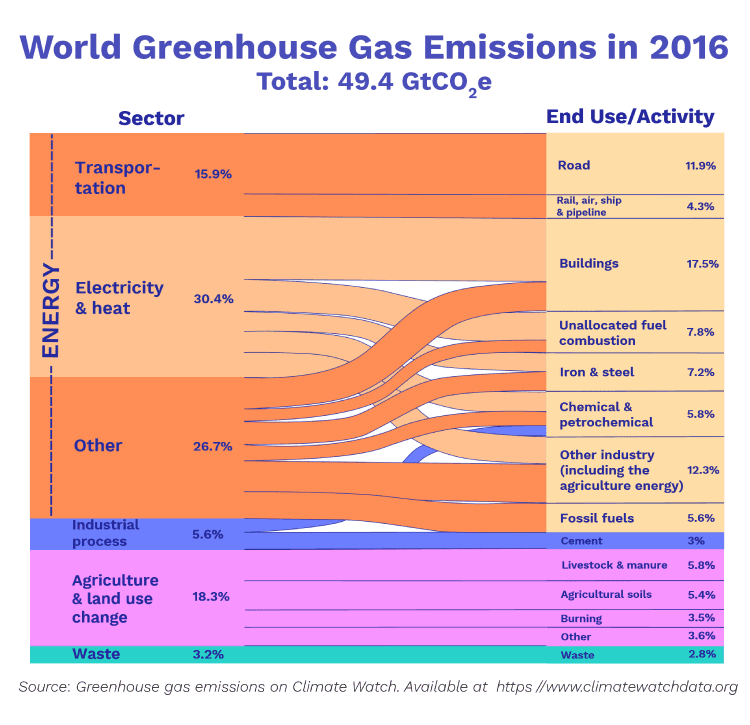
Graph describing where Greenhouse Gas emissions come from.
My name is Nabila Wilson, and I am a rising Junior Sustainability Science major and Data Analytics minor. Like many young climate activists, I’d begun with very personal actions to reduce my effects on the environment. I went vegetarian. Bought a reusable straw. Took the ClimateScience courses so I could learn more about what was happening and how I could even begin to tackle it. I began to volunteer for ClimateScience, spreading climate education in my school and the surrounding communities.
ClimateScience taught me that people didn’t really know what most affected their personal emissions but also how much more the actions of companies affected climate change than anything I could do as an individual.
I became discouraged. Did the little things I was doing now really have any impact if the companies responsible refused to listen to scientists and change?
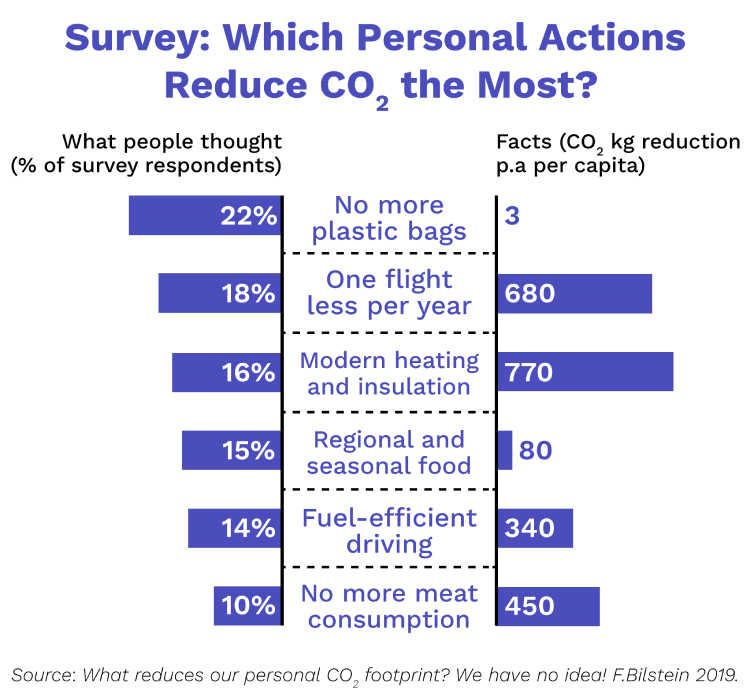
How respondents’ perception of what causes GHG emissions differs from reality.
And the answer I came to was… kind of. Education, especially, is vitally important. Inspiring others to join the fight and do this work.
But this period of self-reflection, along with lots and lots of asking every single working adult in my life about what they knew about companies and the environment, led me to a new possible career field: Environmental Social Governance (ESG) or corporate sustainability. I realized maybe there was a way for me to influence companies while also getting paid. Sounded like a win-win for me.
Fast-forward to earlier this year, when I learned that I had received the Industry Greenhouse Gas fellowship through the Shi Internship this summer, I was very excited. It was directly related to a possible career field, and I would get to use what I’d been learning at university.
It is now almost the end of the summer, and I’ve been interning for Chomarat North America for almost two months, and I have learned so much. The main project I’ve been working on has been compiling the Greenhouse Gas (GHG) emissions of Chomarat. This turned out to be a lot more complicated than I initially thought. Almost everything produces GHG emissions (either in its creation or in its use), but not everything is tracked. I had to make a lot of educated guesses and work with averages.
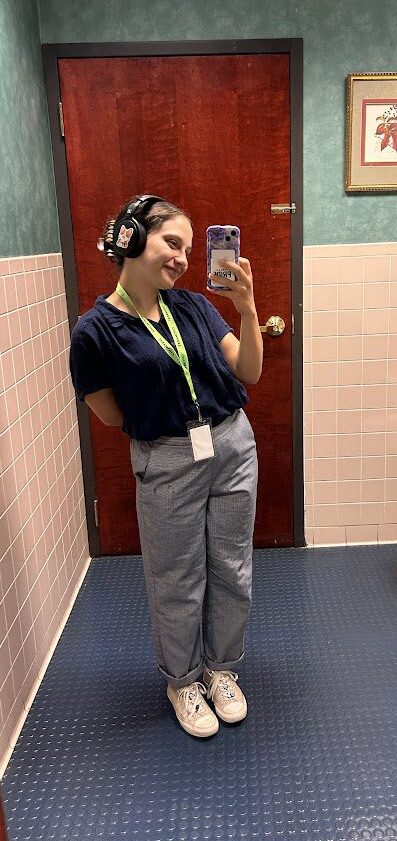
Nabila at New Pond Chomarat location in Anderson, SC.
I also got to work on two smaller projects regarding waste reduction. I calculated the environmental and economic effects of:
– Reusing wood pallets instead of buying new ones
– Reducing the waste from the production of one of Chomarat’s products
Although I’m a data analytics minor, math is not my strong suit, and these projects did include some calculations. However, with the help of my trusty whiteboard and my supervisor, I was able to come up with approximate numbers to show how efficient and effective both of these waste reduction proposals were.
I enjoyed these two smaller projects the most because it was like a puzzle: thinking about what data I needed and then, once I’d gotten the answer, how to best present the data to show others the potential savings. It didn’t come without struggle, of course. Emissions from certain materials and products can fluctuate based on who you ask or where you are in the world. Then you have to think about, do I want the emissions from the creation of the product, or what’s actually in the product itself? Greenhouse gas and corporate sustainability work is relatively new, and there are still so many uncertainties and grey areas, especially in the U.S., where we don’t have a lot of federal regulations that might standardize things. Again, my supervisors at Chomarat and the wonderful people at Shi helped me a lot in navigating these uncertainties.
Now for the big question everyone in my family can’t seem to stop asking me: have I finally figured out what I want to do for a career?
First of all, Mom, you can slow down a second, I’ve still got two years to figure that out, but also yes, I am one step closer to figuring out where I might fit in the sustainability world. I’ve learned about what it might mean to work for a corporation, the importance of data organization, how to communicate with one’s boss, the complexity of GHG accounting, and how to navigate a workplace.
The biggest thing I’ve learned though is that there is no one “most effective way to solve the climate crisis.” Climate change is the most complicated problem humanity has ever faced, and it will take all of us, using our own skills and working in different sectors, to help save our home.