Blog
The Beauty of Chaotic Nature
 Have you ever seen fields and fields of the same crop planted for miles on end? If not, check out some pictures, but seriously, while it may produce a lot of food, it doesn’t do much to help the soil quality or biodiversity. This type of planting is called monocropping, or singular planting. Due to planting crops with only one variety, chemical pesticides and fertilizers are necessary to ensure that the crops don’t die before harvesting. This led me to wonder how planting diverse crops works. Also, what are the alternatives to chemical pesticides and fertilizers? I have learned the answers to these questions and more through my fellowship as the Student Assistant Farm Manager. My role is varied but centers around one goal: helping to maintain this beautiful chaos called farming at Furman.
My name is Kaity Anne Sadler and I am a rising senior from Seattle, Washington. I am a double major in Sustainability Science and Classics. Throughout the summer, my responsibilities as the Student Assistant Farm Manager include tasks such as weeding, planting, watering, harvesting, and leading educational workshops.
The farm has two main components in its operation. We have the business side where we sell most of our produce to Bon Appétit – Furman’s dining services provider – to help them achieve their sustainability goal of acquiring 20% of their food from local areas. We also have the educational side, where we hold educational workshops for the community as well as the students on campus. It is through the educational side that I have been able to find answers.
There are many ways to start either a farm or a garden, but when it comes to planting, you will need to know which plants work best with each other. Having this knowledge allows the plants to have a symbiotic relationship. This can easily be seen in what is known as the three sisters. The three sisters are corn, beans, and squash. Corn, if you didn’t know, strips the soil of its nitrogen. To combat this, planting beans next to the corn will help bring nitrogen from the air back into the soil. The corn also acts like a trellis for the beans, making it so there is no need to add fertilizers to help the corn grow or to add any structures to support the beans. The final sister, squash, helps keep the bottom portion of the corn stalk and beans shaded from the sun. It also helps stop weeds from growing. This helps negate the need for chemical pesticides to kill weeds. To help with any insect issues, there are organic ways to get rid of them without the aid of chemicals. Here at the Furman Farm, we use a mixture of Dawn dish soap, oil, and hot water to help get rid of any pests. The three sisters is an indigenous growing method is many years old and still being used on the Furman Farm today.
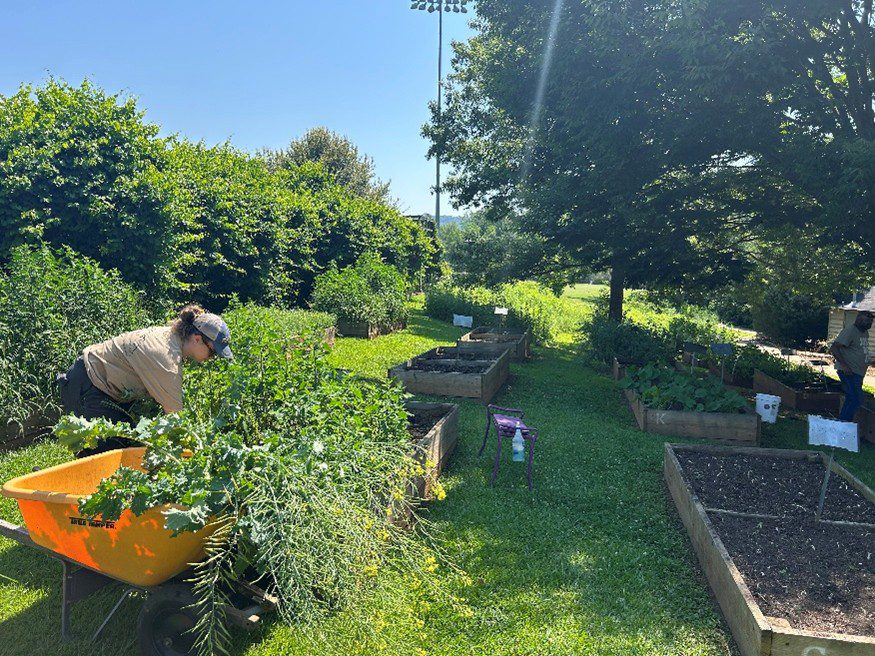
Left: Maddie Krachon ‘27, Assistant Compost Manager, weeds the box beds before planting seeds. Right: Bruce Adams, Farm Manager.
I chose this fellowship to explore my interest in regenerative agriculture and determine if this type of experience aligns with my interests after graduating from Furman. Throughout this experience, I have gained knowledge in the methods of organic farming. I have also gained experience in a different set of skills.
My role here at the farm helped develop my leadership skills, problem-solving skills, adaptability, organization, and team management. This fellowship would not have been the same without Bruce Adams, the Farm Manager, helping to make the fellowship an engaging experience.
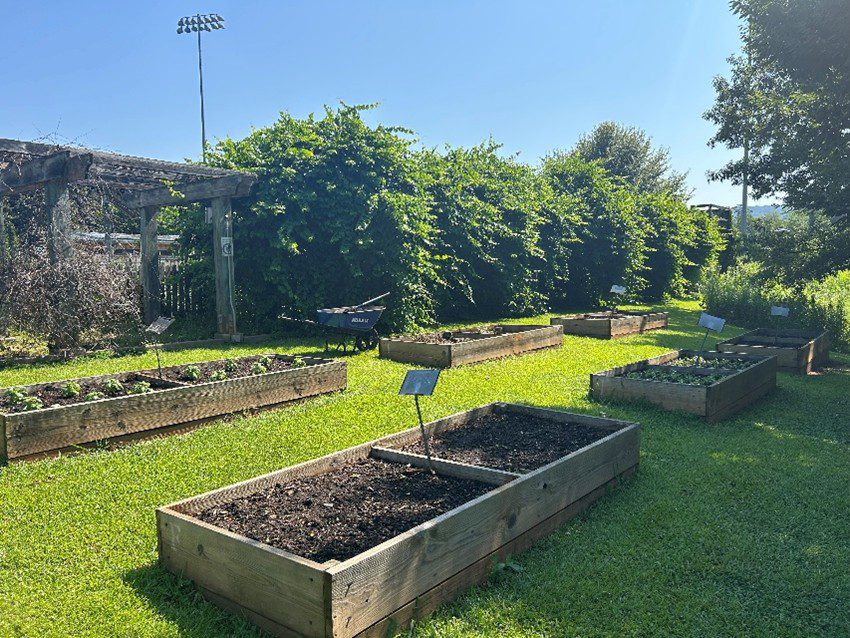
Weeded box beds planted with basil and beets.