News from campus and beyond
Recent awards highlight Pathways Program’s successes

Pathways Peer Mentor Grace Prince ’25 leads a Pathways Program class in the Lay Physical Activities Center on Wednesday, September 11, 2024.
Furman University recently received several awards for innovation in advising and mentoring.
Student Grace Prince ’25 is one of five students nationally to receive the Jordan Smith Undergraduate Student Fellowship from the National Resource Center for The First-Year Experience and Students in Transition. Prince, a sociology major from New Jersey, is a peer mentor in Furman’s two-year required Pathways Program.
The Pathways Program also won the 2024 Advising Innovation Award from NACADA, a global community for academic advising in higher education, recognizes the impact on students through The Pathways Program, a required two-year integrated advising program.
The Pathways Program provides a weekly 50-minute class where first-year and sophomore students meet with an advisor and in the first year with peer mentors. The program helps students transition to college by learning time management, study skills, self-care and reflection on their own values and interests.
In their second year, the course guides students through linking their career goals with their academics and engaged learning experiences. Afterward, students continue reflecting on how their experiences in and out of the classroom are preparing them for their career goals through programming offered by academic departments, which tailor these experiences to the needs of specific majors.
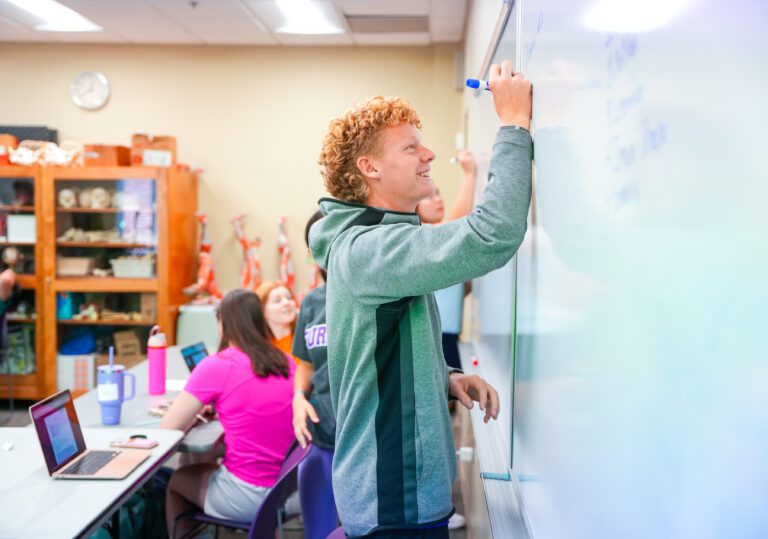
Freshmen students in a Pathways class write their values on whiteboards during a classroom exercise on Wednesday, September 11, 2024.
Furman also received the 2024 John N. Gardner Institutional Excellence for Students in Transition award from the National Resource Center for the First-Year Experience and Students in Transition. This award recognizes The Pathway Program and its extension, the Purposeful Pathways Program, which follows students into their final two years.
Prince’s participation as a peer mentor fits into a “campus culture of advisors and mentors you’re connecting with along the way,” said Brad Harmon, assistant dean for the first-year and second-year experience.
Juniors and seniors can apply for a job as a peer mentor, where they hone their leadership skills by helping facilitate first- and second-year students’ transitions into the university. Peer mentors and the Pathways advisors are consistently ranked as the top feature of the program by nearly all students, Harmon said.
Prince, president of the First Generation Student Alliance and a Hearst Fellow, worked as an orientation leader guiding first-year students, and her Hearst Fellows mentor encouraged her to take on a larger role in the Pathways Program as a peer mentor.
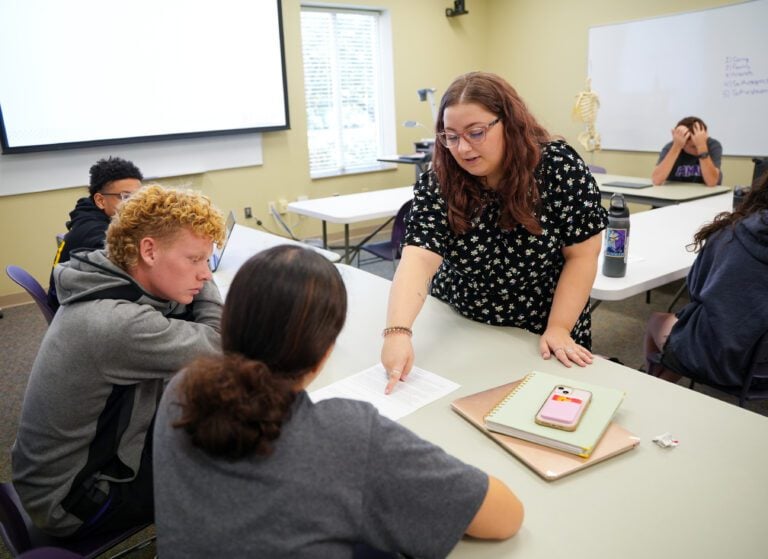
Pathways Peer Mentor Grace Prince ’25 works with freshmen students in a Pathways class in the Lay Physical Activities Center on Wednesday, September 11, 2024.
Prince said that as a peer mentor she has noticed aspects of Pathways that would have helped her in her first year. She had the opportunity to learn about the Pathways program alongside her students and wanted to try and save them from some of the struggles she went through.
When her students felt homesick or out of place on campus, Prince said she shared her experiences as a first-generation student from Toms River, New Jersey. She worked to destigmatize some of the feelings new students had, and to normalize seeking help when they were struggling. This is Harmon’s goal in developing effective peer mentors, he said – their leadership experiences influence and inspire the first-year students they serve.
Harmon said Prince has a lot of heart. She’s very selfless and cares a lot about her fellow student – her fellow person.
Prince will speak alongside Harmon at a national conference in February in New Orleans. There, she’ll have the chance to network with other student leaders who also mentored first-year students.
“It’s exciting, getting to connect with a diverse group of people who all care about helping students transition to college,” she said.
While Pathways students build a one-on-one relationship with their advisors, peer mentors play a role in and out of the Pathways class, said Michelle Horhota, associate dean for mentoring and advising. Peer mentors are part of the award-winning formula.
“We realized early on that if we could have a student co-facilitating the class, it could help reinforce the messages being taught,” she said. “It was important to have the peer mentors in class alongside faculty, because it’s an opportunity for them to learn how you teach and effectively engage a classroom.”