For alumni and friends
of the university
of the university
Q&A with Nick Theodore ‘52
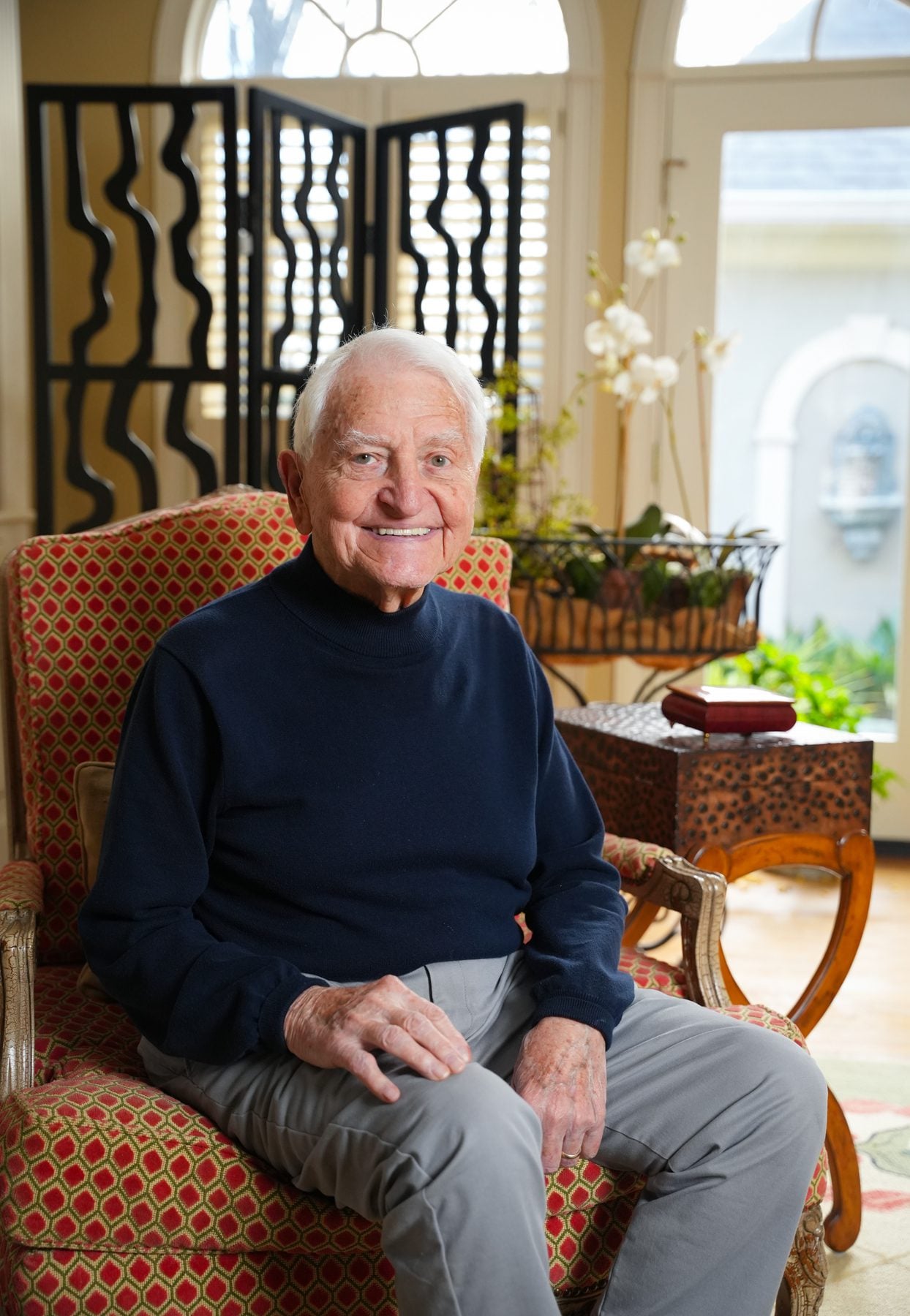
Nick Theodore ’52 picture at his home in Greenville, SC on December 10, 2025. Photo by Nathan Gray, Furman University.
Nick Theodore ’52 and his commitment to education, the Greenville community and Furman University is well-known. As we celebrate the 200th anniversary of the start of Furman, we asked Theodore to reflect on his memories of the university from its days in downtown Greenville to the move to a new campus and everything that he has seen since graduating.
Theodore spoke with sophomore business administration and communications studies double major Mary Sheehan ’28. Sheehan visited Theodore at his home in November bringing together a young Furman student and one of its oldest living alumni.
MARY SHEEHAN: How would you describe the traditions and atmosphere of the old Furman University campus when you were in attendance?
NICK THEODORE: Well, the traditions of Furman were very deep at that time and they have continued to grow. It was a small university, much smaller than it is today, and we were at the old location right off of Augusta Street in Greenville, South Carolina. The tradition of Furman was great, and Greenville was always proud to have a university in the heart of downtown.
MS: What was it like when Furman went from a men’s-only campus to a coed campus?
NT: For a good while it was a men’s campus, but not very far from Furman was what they called the GWC, the Greenville Woman’s College. They ultimately merged together into Furman, so we had women in the student body. The women’s college was a beautiful campus that was just a bit smaller, and it turned out to be a wonderful merger. It provided the male part of Furman with an opportunity to go over there up until closing time each day and visit with the other parts of a coed university. It turned out to be a huge advantage for Furman to have coed higher education.
MS: Why did you choose to attend a smaller university like Furman?
NT: Well, Furman could have grown a lot faster, but the faculty and the board of Furman decided to maintain the growth in a very organized fashion without becoming too large of a campus and losing the feel of a small liberal arts school. At the time Greenville was considered a textile town, so Furman itself was a strong element of moving the Upstate of South Carolina into cultural growth with the rest of the nation.
MS: What was the football team like when you attended Furman?
NT: Well, there was an era back when Furman University was up to par with Clemson and the University of South Carolina, and all the other larger universities in the Southeast. We would have schedules that included West Point, Alabama and the University of Georgia on a regular basis. I think that changed after World War II, when we decided to remain a smaller size with better control of our future rather than grow quickly in order to compete with those universities in athletics. We understood that we had two different roads to follow. One of the super major athletic programs, which is very expensive, and the one that we chose in electing to concentrate on the scholastic parts of higher education.
MS: What were clubs and Greek life like when you attended Furman?
NT: I was not a member of a fraternity, but I was very close to all of the fraternities and sororities. And once we got past the fact that the institutions were a little reluctant to have dances and things of a social nature, the student life at Furman greatly improved. In fact, the Poinsett Hotel, which just celebrated its 100th anniversary, was one of the places we were always looking forward to having a dance or something special.
MS: Do you have many fond memories of living in Greenville while you attended Furman?
NT: I’ve lived in Greenville my whole short life, and that’s a real pun being 97 years old. I’ve seen Furman grow in a way of quality education and I’ve been proud of what’s occurred. Before I attended Furman, I was always respectful of the university but once I became a student, I found a fondness and appreciation for the education facilities of our university. There were so many things to be proud of, and I jokingly say that our favorite pastime was probably the pinball machine that was in the Lucky Strike Shop [Lucky Strike Cafe and Bowling Alley] on Augusta Street, which was just a few steps off of the campus.
MS: Do you still have many close friendships from your time at Furman?
NT: Well, many have gone on to another form in the sky, but the few of us that are left today, especially the ones in South Carolina, we get together and talk about Furman and the advancement of the programs and how much it has meant to us. In fact, I had lunch today with four individuals and three out of the four were Furman graduates.
MS: What would be the piece of advice you would tell all Furman students if you could?
NT: I would die happy knowing that the students of Furman will continue to elevate their goals for humanity and continue making contributions to a better America, a stronger state and help continue to support the school financially to create a stronger Furman University.