For alumni and friends
of the university
of the university
A Perfect Circle

The Furman Farm serves as a hub for the university’s closed-loop food system where crops are grown and harvested for the Dining Hall. Then food waste from the Dining Hall is brought back to be composted at the farm. Archived photo
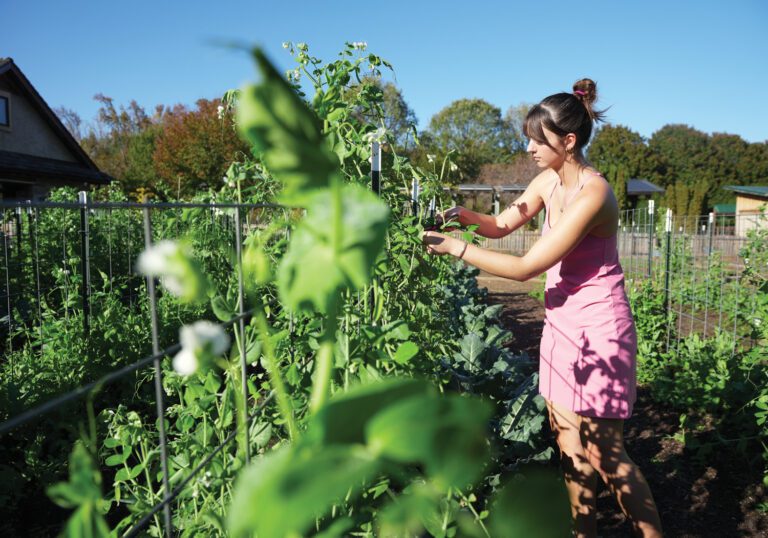
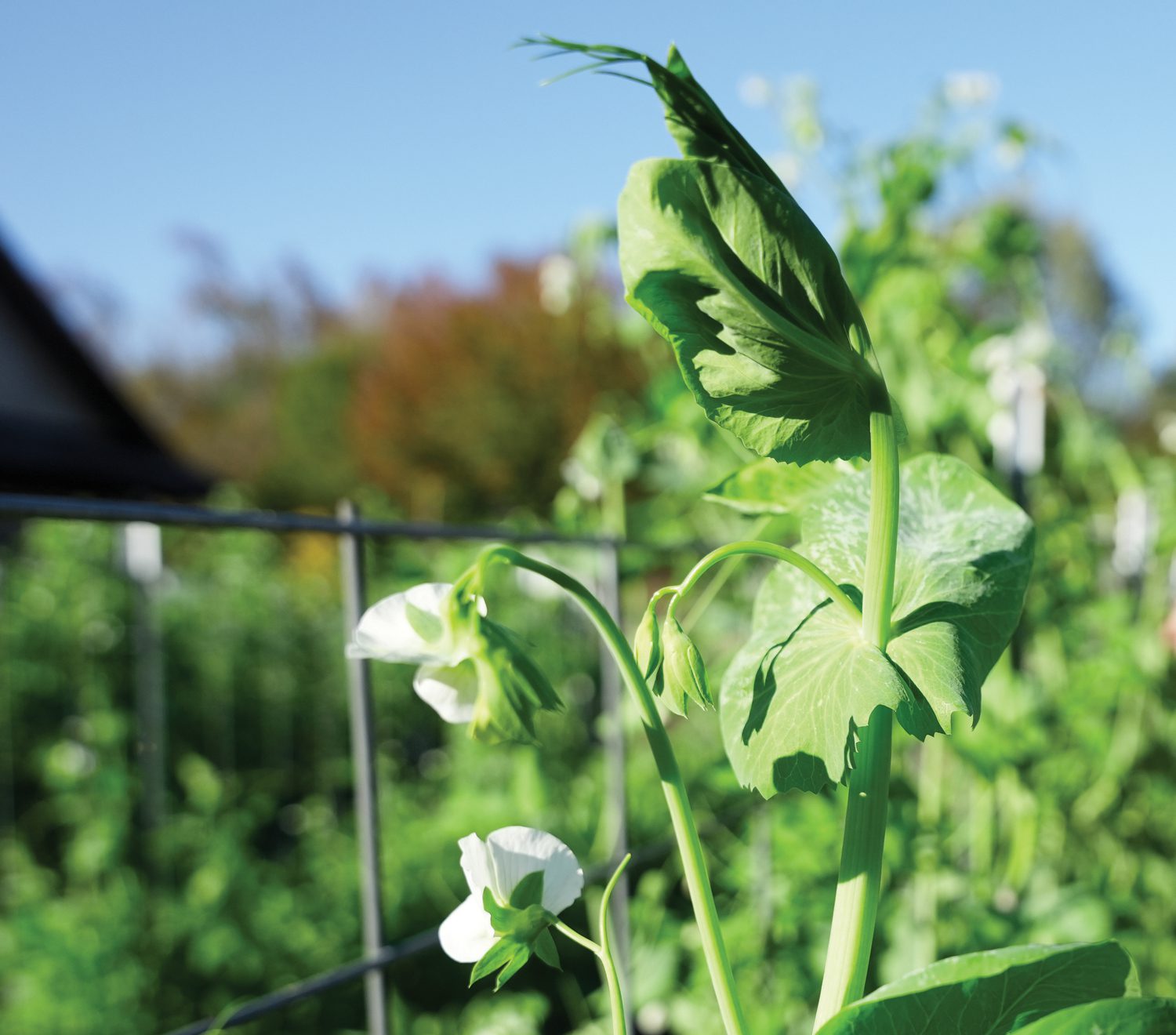
Summer Marsden cuts peas from a trellis at the Furman Farm on November 11, 2024. Photo by Nathan Gray, Furman University
The hardy leaves of a kale plant break off with a satisfying snap in the hands of a worker at the Furman University Farm.
Notes of rich soil and verdant crops linger in the air around the farm, located behind The Shi Institute for Sustainable Communities. Here, a raised planter of kale or a row of broccoli are triumphs – evidence of the hard work and care that goes into growing food. But the story of each vegetable and herb plucked from these grounds doesn’t end there; the farm’s produce is used in meals at the Daniel Dining Hall, and whatever food winds up in the garbage is recycled into compost that nurtures the soil it originally came from.
“The Furman Farm is a tangible model for sustainability on campus, because you can walk through it and see firsthand our closed-loop food system,” says Summer Marsden ’25, the student assistant farm manager. “Having the opportunity to play such an intimate role in that brings me so much joy.”
DIRTY HANDS, CLEAN FOOD
It starts with the students.
Furman Farm Manager Bruce Adams is a fourth-generation farmer, and the students that come to him are brilliant and talented. But his first step with student farm workers is to get them to forget everything they know about farming.
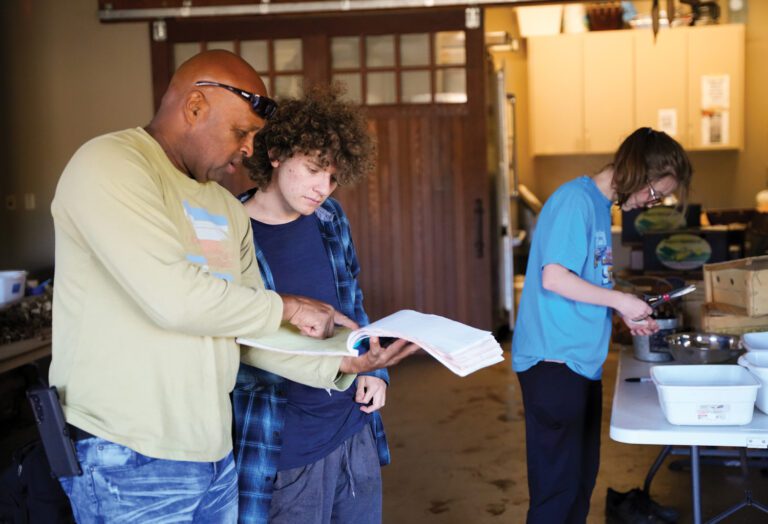
Bruce Adams, left, manager of the Furman Farm at the Shi Institute for Sustainable Communities, helps Kevin Amon ’26 create an invoice for the dining hall staff before dropping off crops on November 15, 2024. Photo by Nathan Gray, Furman University
“We have to work from the beginning to gain their trust and form a relationship where I can share with them these sustainable practices and organic food systems,” he says. “It doesn’t take synthetic fertilizers and harmful sprays to get good, solid food.”
The student farm workers take plants cultivated in Furman’s greenhouse or heirloom seeds sourced from local vendors to grow the Furman Farm’s produce. Adams says this is a lesson he learned from former Furman President and The Shi Institute namesake David Shi – keeping sustainable practices connected to the local economy.
“There’s a big picture unfolding here when we get students to grow these vegetables,” Adams says. “They learn how to nurture those vegetables and put integrated pest management systems in place. When we’re doing composting and growing it’s a closed-loop food system – the food we grow gets used in the Dining Hall, and the waste we collect there is made into compost.”
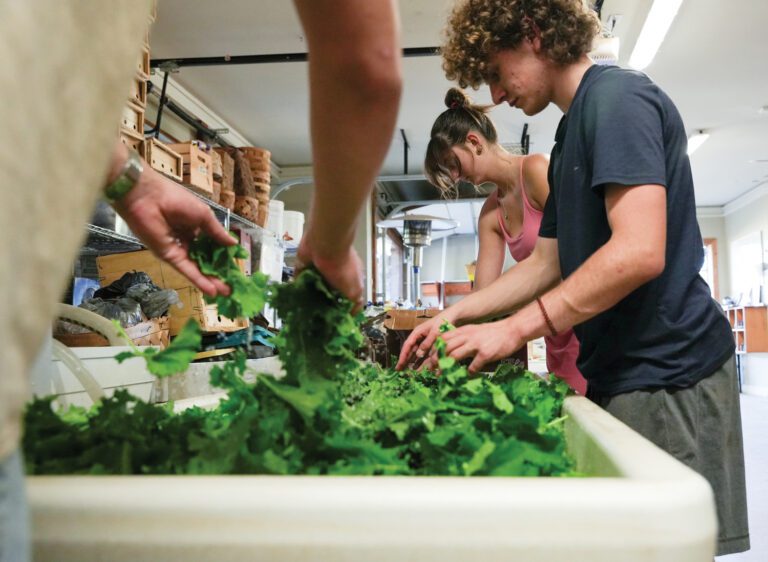
From left Stefan Yazijan ’27, Kevin Amon ’26 and Summer Marsden ’25 wash and sort kale that was harvested from the Furman Farm on November 11, 2024. Photo by Nathan Gray, Furman University
Before Marsden became Adams’ student assistant farm manager, she was no stranger to sustainable practices. As a sustainability science major, she’d been interested in environmentally friendly practices since high school. But getting her hands in the dirt at the Furman Farm was a new experience.
People often underestimate the thought, effort and coordination that goes into running the farm, let alone the months of work that go into growing any given crop. A single section of green beans takes a specific skillset to grow and can take a person 40 minutes of intense effort to harvest a bushel carefully, so as not to damage the produce.
“The food we grow feeds students, but some of it gets donated to food banks and soup kitchens,” she says. “This food system gives me hope for the amount of impact I can make.”
This hard work grew $16,000 worth of produce in 2023 out of a quarter-acre farm, says The Shi Institute Executive Director Andrew Predmore. But it’s turning the vegetables into food, then compost that demonstrates the value of the closed-loop food system.
“The farm is one example where we excel in helping Furman operate more sustainably,” Predmore says. “It’s emblematic of a practice that works and gives students the experience of working in that system.”
CHOW TIME
A deft hand brings a chef knife down on bundles of kale leaves, fresh spinach and herbs daily in the Dining Hall. The Bon Appétit staff there prepare fresh meals daily to fuel students’ bodies and minds, and about 5% of the vegetables served in the Dining Hall come from the Furman Farm.
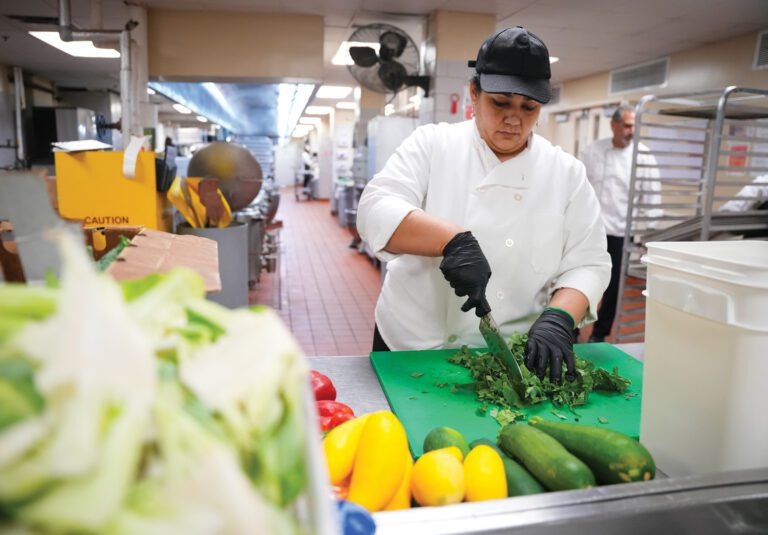
Nadiezka Carvajal, a cook for Bon Appetit, uses kale from the Furman Farm to make a vegetable casserole on November 18, 2024. Photo by Nathan Gray, Furman University
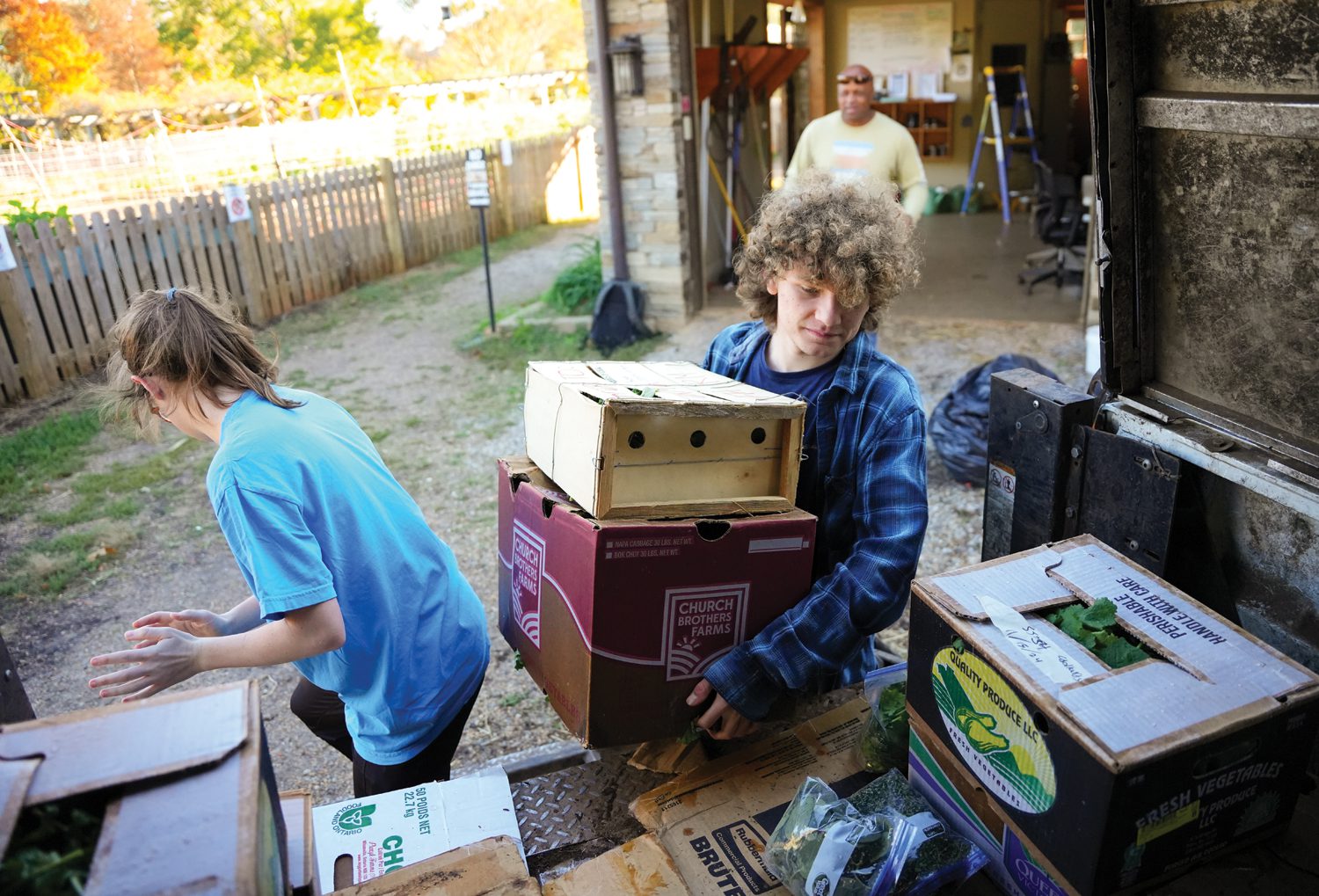
After cleaning and inspection to ensure the farm’s produce meets Department of Health and Environmental Control and U.S. Department of Agriculture guidelines, students personally deliver each harvest to the Dining Hall themselves. These handoffs serve an essential purpose in the food system, Predmore says. When students and staff connect this way, everyone learns valuable lessons. Staff see the dedication of Furman’s students, and their mutual commitment to providing sustainable food inspires everyone involved.
“It’s clear that there’s real grassroots, student-driven effort around sustainability on campus, in addition to what we’re doing at an institutional level,” says Chef and Dining Hall General Manager Derek Morgan.
Bon Appétit has implemented sustainable practices for decades, including supporting local agriculture, reducing antibiotic use in farm animals, sourcing eggs from cage-free hens and maintaining a Low Carbon Diet program. The company committed to sourcing 20% of its ingredients from small, local farmers.
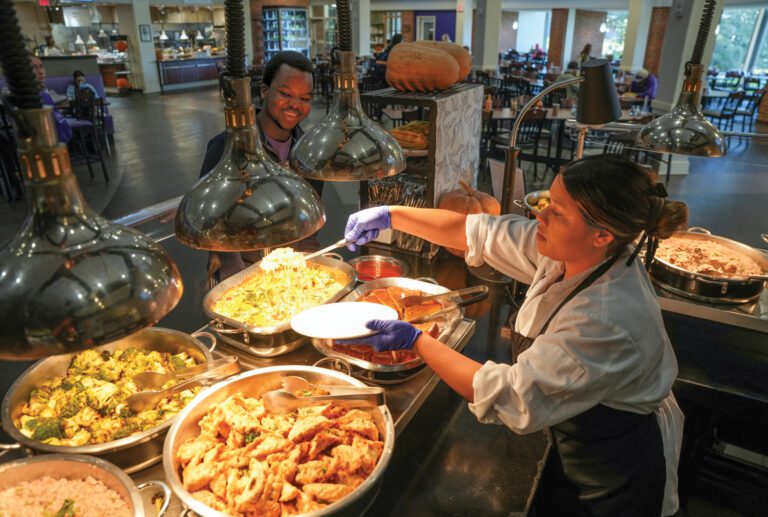
Brian Mapakamise ’25 gets a vegetable casserole using kale and garlic chives from the Furman Farm at the dining hall on November 19, 2024. Photo by Nathan Gray, Furman University
“These policies are built into our daily operation,” Morgan says. “We cook from scratch and don’t use corporate recipe or cycle menus, so we’re well positioned to incorporate local farmers’ seasonal produce into menus we develop each week.”
Furman’s commitment to providing the space and resources to grow produce, cook with it and then capture the Dining Hall’s food waste to process it into compost is a model for other colleges and universities, Morgan says.
“The students and Farmer Bruce picking up that food waste and taking it back to the farm completes the loop,” he says.
ONE MAN’S TRASH…
Composting is a dirty job, but students are happy to do it.
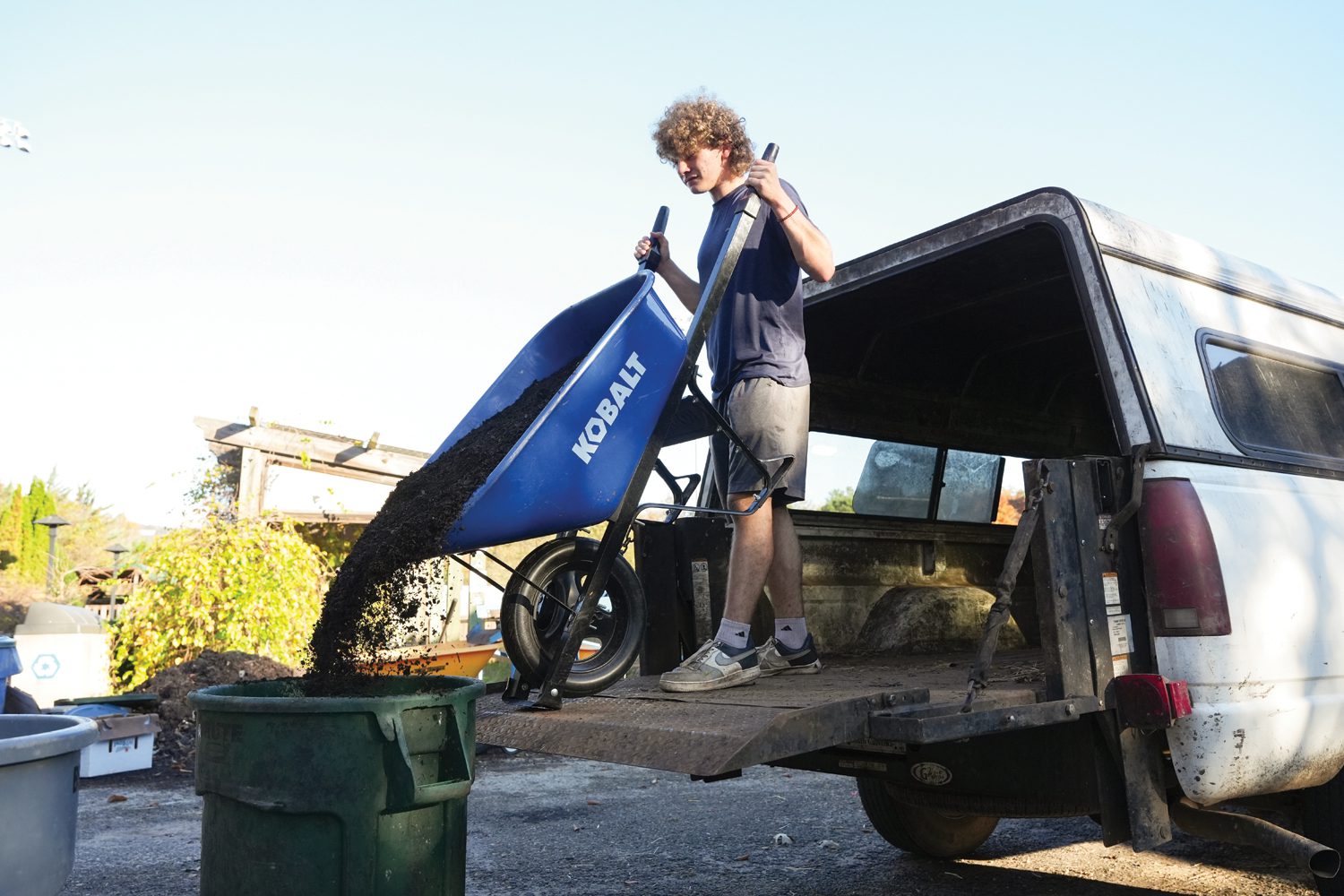
Leftover food on any of the plates placed on the revolving dish return at the Dining Hall is separated into bins specifically meant to hold food waste. Students or Adams collect these garbage bins two to three times a day, diverting food from the landfill to Furman’s composting field.
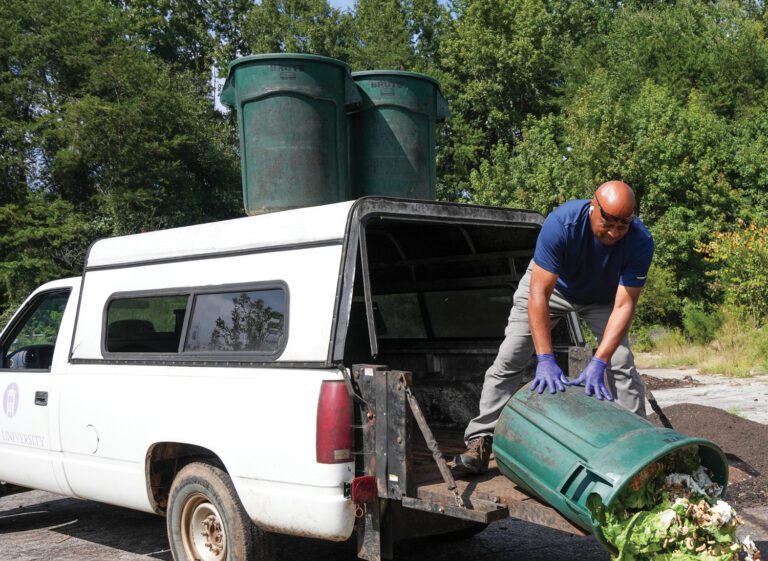
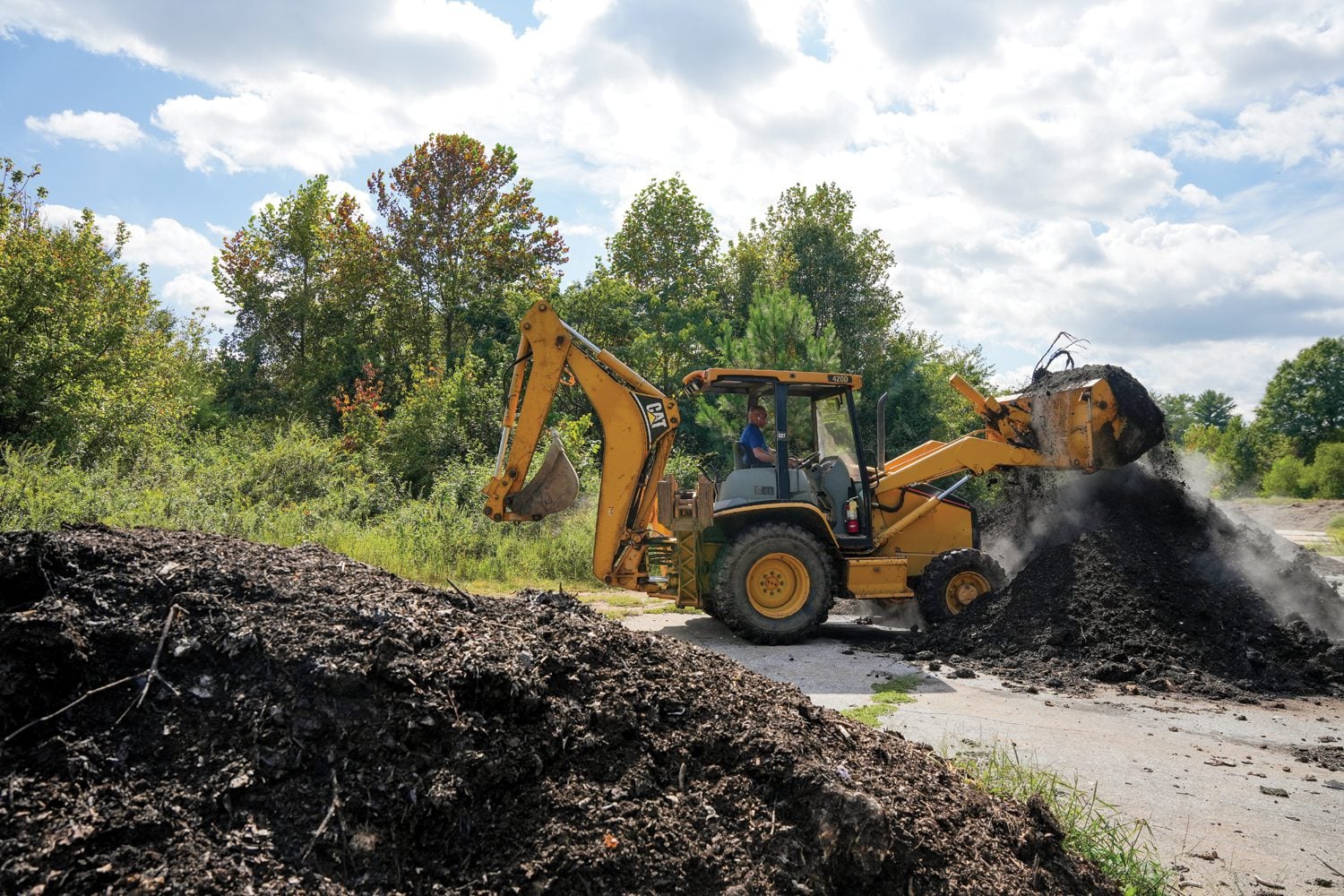
Bruce Adams, manager of the Furman Farm at The Shi Institute for Sustainable Communities, dumps food waste from the Dining Hall into composting piles at an off-campus composting site on September 19, 2024. Photo by Nathan Gray, Furman University
Once there, the food waste is dumped and mixed in a proper ratio with carbon-heavy waste like leaf matter. Adams uses a backhoe to churn the mixture, and as microorganisms start to break down the waste it “cooks.” When the weather is cool, clouds of steam rise from the field as the compost reaches temperatures of up to 160 degrees from the chemical reaction.
The cooked compost is brought back to campus, where it’s filtered and either used on the farm or sold to raise funds supporting the farm and student fellowships. Last academic year, the farm collected nearly 275 tons of food waste, converting it into about 120 tons of finished compost.
“We are able to do this without ever leaving campus and without any third-party help, support or influence,” Adams says. “When I tell people at conferences how we’re doing this, they still don’t get it. That’s 274.8 tons of food waste being prevented from going to a landfill. It has saved more than $40,000 a year from going to the landfill.”
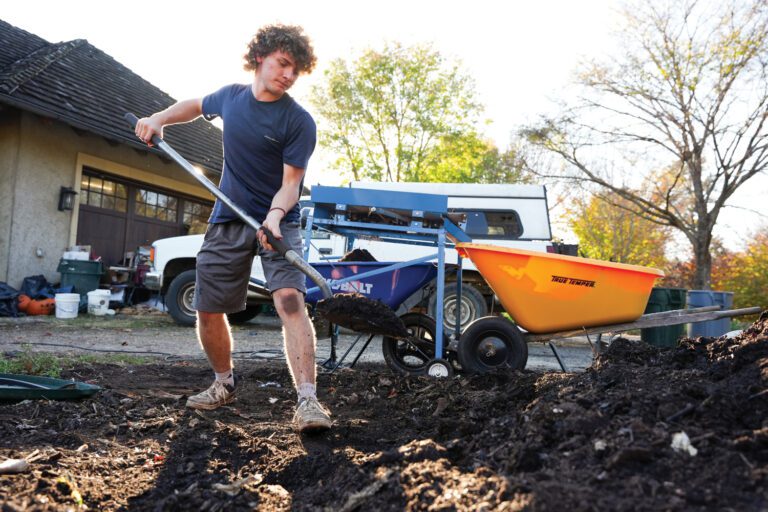
Kevin Amon ’26 sifts compost for debris at the Furman Farm on November 11, 2024. The compost was made using food waste from the Dining Hall. Photo by Nathan Gray, Furman University
FULL CIRCLE
This cycle has a value that can’t be measured. At every point where people interact with the closed-loop food system, they learn how to adopt these practices into their daily lives – students, faculty and staff, but also volunteers, visitors and prospective students who visit the farm on tours. Greenville and Travelers Rest residents pass by while walking on campus; garden clubs and native plant societies learn about these practices at the farm.
“The Furman Farm offers the opportunity for students, faculty and staff to practice existing sustainable agriculture methods and test new solutions.
The hands-on work is also a source of hope and inspiration – where the Furman community can demonstrate that strategies like a plant-based diet, reduced food waste, composting and regenerative farming can improve our health and well-being and also reduce our overall environmental footprint.” Predmore himself now composts at home. The practice has made him more mindful of how he cooks and what he eats, and the process of making the compost requires more physical activity in his daily life.
For Adams, the greatest crops grown at the Furman Farm are the life skills students cultivate for themselves. They leave the farm with sustainable principles and practices they can pass down for generations.