News from campus and beyond
Furman student’s research tells the stories behind being unhoused
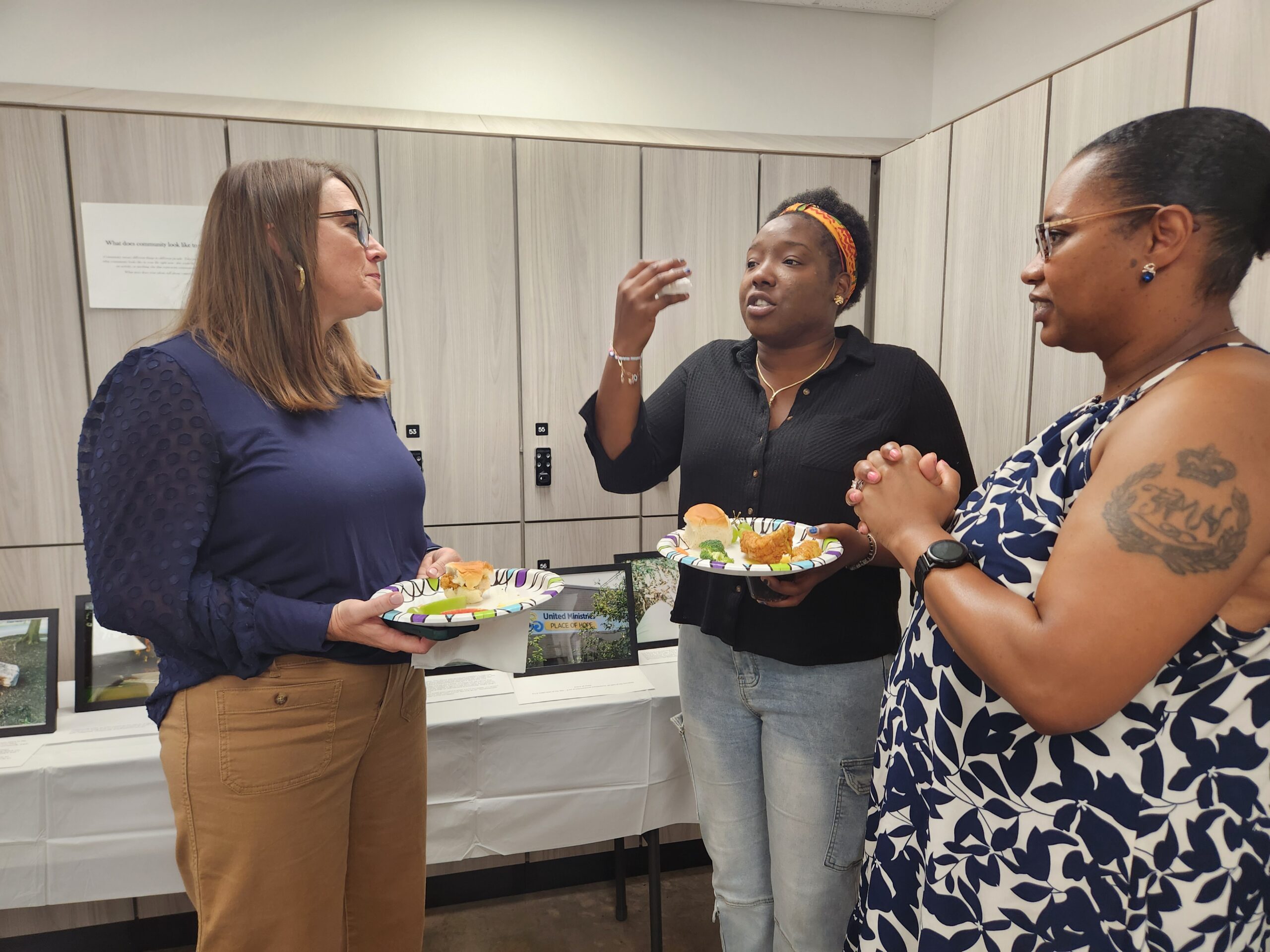
From left: Anna Cass, associate professor of health sciences at Furman University, Judy Hill, and Jamika Nedwards, vice president of programs and operations at United Ministries, talk at an art reception held Sept. 19 at A Place of Hope in Greenville, South Carolina for the participants of a research project Cass conducted with a Furman student. Photo by Damian Dominguez, Furman University.
Since coming to Furman University, Jason Levitt ’26 has aspired to be a primary care physician and make a difference in his community. A faculty-facilitated research opportunity with United Ministries of Greenville, South Carolina provided just that.
Levitt, a public health major from Spartanburg, South Carolina, wanted to go beyond data and textbook knowledge and get involved with his community, learning directly from people experiencing homelessness about how they’re affected by the challenges they face.
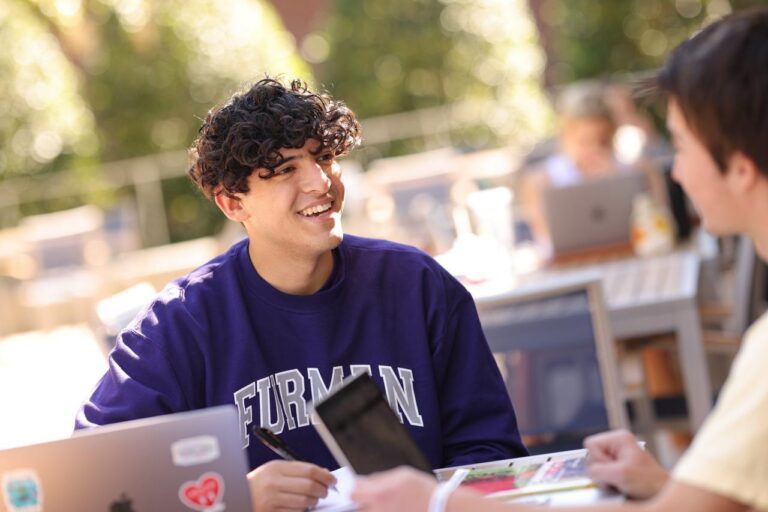
Public health major Jason Levitt ’26 had a guiding hand in a summer research project he conducted with Cass. Photo by Jeremy Fleming.
“Behind every statistic is a person,” Levitt said. “When Dr. Anna Cass (associate professor of health sciences at) came to me with an opportunity to conduct research with United Ministries, I knew this was the opportunity I wanted and needed to pursue.”
By combining a summer internship at Place of Hope Day Shelter in Greenville, South Carolina and a research project working with willing participants who were unhoused, Levitt could get a variety of experiences and perspectives on working with people experiencing homelessness.
That’s where the photovoice method comes in. This qualitative research method has participants take photographs and share narratives about their experiences, all of which provide insights into social, political and health-related issues.
“In this method, advocacy is part of what you’re doing,” Cass said. “I’ve been doing research for 25 years and when I came home after the first day working with our participants I said, ‘I just had the best research day of my career.’”
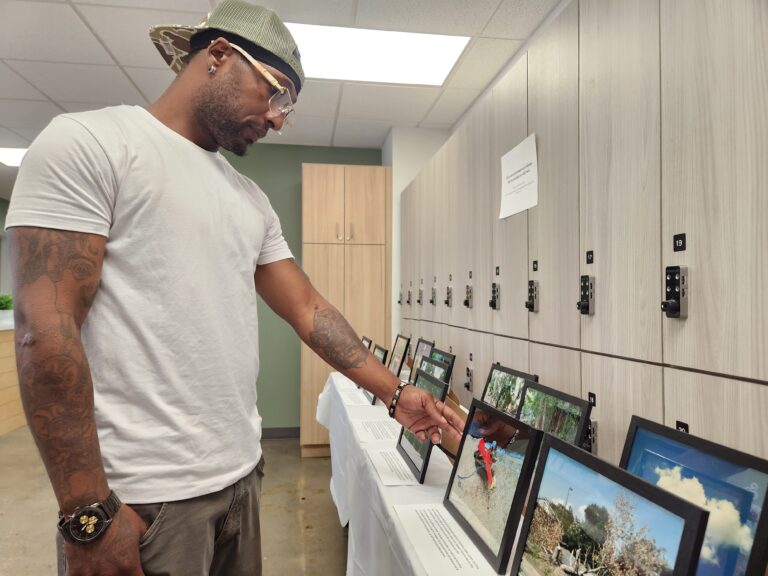
Rodriquez Norris, one of the participants in a photovoice research project conducted by Cass and Levitt ’26, looks at one of the photos Norris took for the project during an exhibition of the work on Sept. 19 at A Place of Hope in Greenville, South Carolina. Photo by Damian Dominguez, Furman University.
After two months of Levitt’s internship working with and alongside the people receiving services at Place of Hope, he helped design and order the prompts provided to their research participants. He and Cass separately worked with participants individually, listening to the stories they shared with each photo and documenting their insights.
“The people who are actually living these circumstances we want to understand – like homelessness – must have a voice in shaping that understanding,” Levitt said. “Their perspectives, shared through their own words and images, can pair with data to make advocacy more impactful.”
Cass and Levitt will continue to work with the narratives collected through their research and find ways to make a difference with the participants’ insights. But on Sept. 19, Cass attended a private exhibition at A Place of Hope, where the participants and their guests had the chance to see a selection of their photos framed, with excerpts of their comments printed underneath. As some of the participants excitedly pointed out photos they had taken Cass chatted with them like old friends, catching up on their new jobs and how their friends have been doing.