News from campus and beyond
Furman hosts emergency preparedness event reflecting on Hurricane Helene
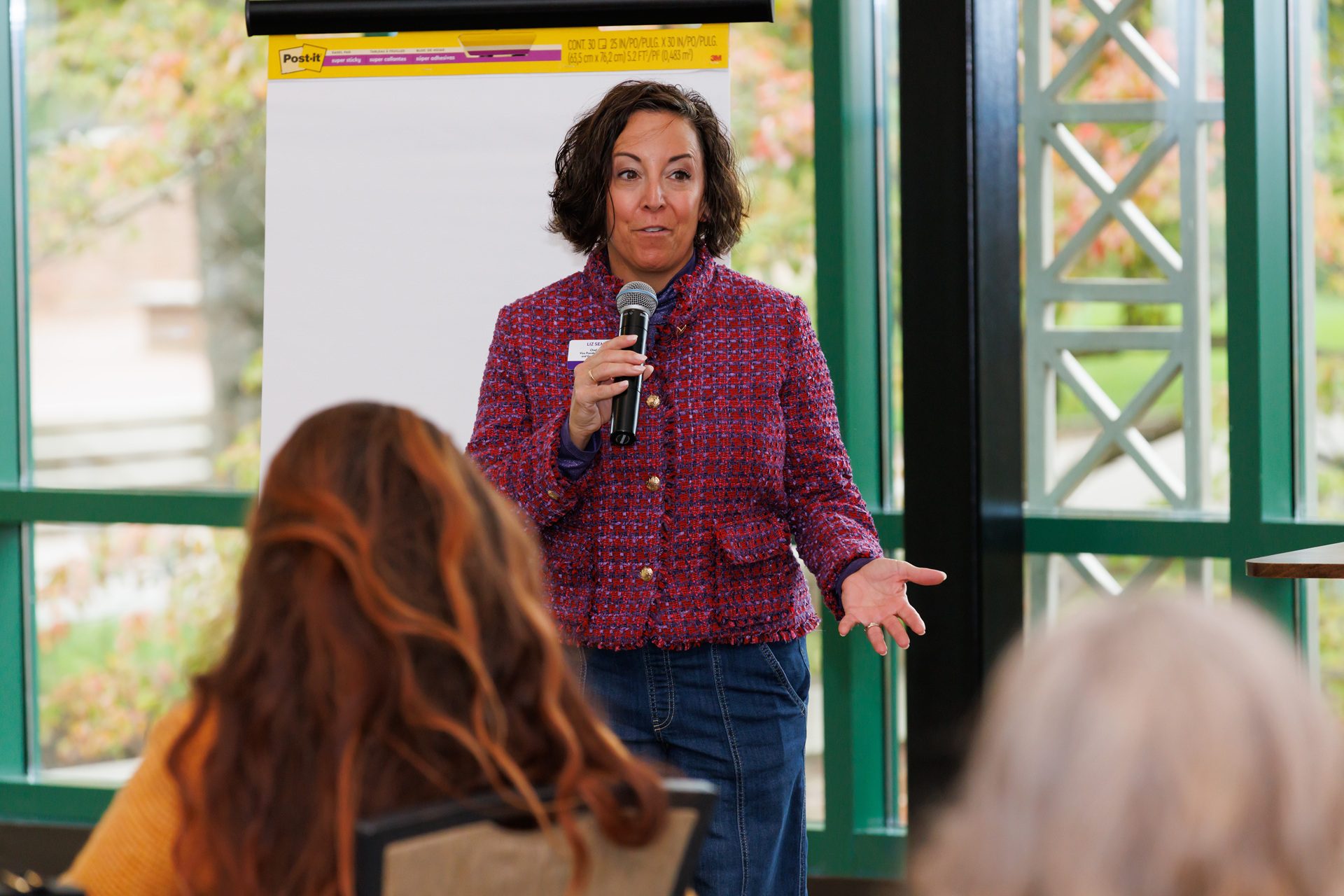
Liz Seman, Furman University’s vice president for community and government relations, spoke in November about how Furman prioritizes emergency preparedness at CreatingHOPE 2025: Helene + 1. Photo by Brian Erkens.
One year after Hurricane Helene devastated the region, Furman University’s Center for Innovative Leadership helped bring emergency preparedness professionals, volunteers and academics together to reflect on what roles they play during a disaster.
CreatingHOPE 2025: Helene + 1 was organized by the Consortium for Humanitarian Service and Education (CHSE), a volunteer, nonprofit organization that blends academic insight with operational realism through immersive, hands-on training. The event ran Nov. 7 and 8, and Furman hosted sessions at Hartness Pavilion and the Furman Innovation Lab.
Emergency professionals and academics came from near and far to discuss the impacts of Hurricane Helene and other disasters on responders and communities, how to prepare future emergency managers and the role citizen emergency responders play in disasters.

Furman University Center for Innovative Leadership Executive Director Garrett Stern participates in a discussion at an even in November 2025 reflecting on Hurricane Helene a year after it struck the area. Photo by Brian Erkens.
The topic of emergency preparedness is critical to Furman. Liz Seman, vice president for community and government relations, noted that the university is not immune to emergencies. “Whether it’s an ice storm, mountain fire or hurricane, Furman takes preparedness very seriously. Our goal is also to be part of the solution and recovery efforts,” said Liz Seman, vice president for community and government relations.
Furman works closely with the community to solve problems, with recent examples including students who collected water and food to support emergency volunteers or supporting utility and first responders while they restored power during Hurricane Helene. “Furman has been part of the solution and will continue to do so in the future,” Seman said.
Hurricane Helene exposed key gaps in regional preparedness, and sessions at CreatingHOPE revealed that past disasters have taught important lessons about interpersonal skills, flexibility and preparation on multiple levels. Attendees came from multiple states, representing organizations including the American Red Cross, AmeriCorps, public works departments and community emergency response teams. Participants openly shared through panel sessions and immersive exercises how they plan and train for emergencies in addition to resilience efforts post-disaster.
Common threads emerged throughout the sessions, involving leadership, learning, cross-entity coordination and adaptability. Clemson Turregano, senior leadership fellow at the Furman University Center for Innovative Leadership, emphasized the importance of taking “the idea of lessons forward from a disaster you’ve been through in the past.” Participants left with not only practical insights but with a renewed sense of camaraderie and collaboration that will help with future disaster planning.