News from campus and beyond
From the court to the courtroom, Ashland Johnson ’05 bridges sports and civil rights
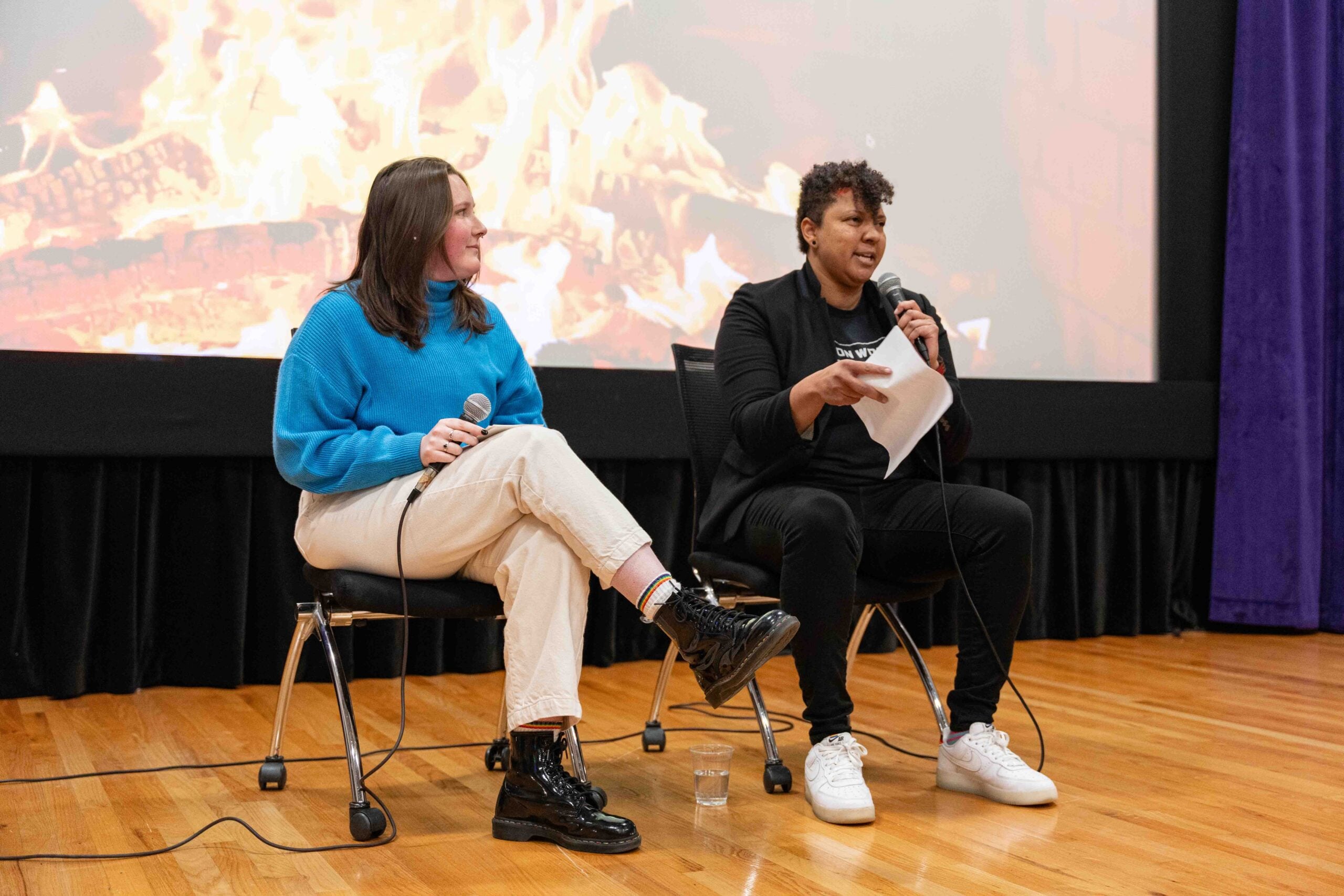
Ashland Johnson ’05 returned to Furman University for a CLP event speaking about her experiences as a collegiate athlete who has since worked as a civil rights attorney.
When Ashland Johnson ’05 attended Furman University, life for queer students looked very different.
“Although I was not the only queer Black person on campus, I was one of the only out queer Black people,” she said. “Being out was a statement.”
From her first moments on campus as a recruit for the Furman women’s basketball team, Johnson was on a path that would put her at the intersection of sports and civil rights.
Johnson was invited back to campus Nov. 21, 2024, as a guest speaker for the Cultural Life Program “Changing the Game: From Furman Grad to Civil Rights Advocate.” She was the second speaker in the Women’s, Gender and Sexuality Studies program (WGSS) series “Belonging.”
“As a former student athlete and current civil rights attorney who works on gender and racial equity, as well as LGBTQ+ inclusion in athletics, we thought Ashland was the perfect person to speak on this theme,” said Kathleen Casey, director of the WGSS program.
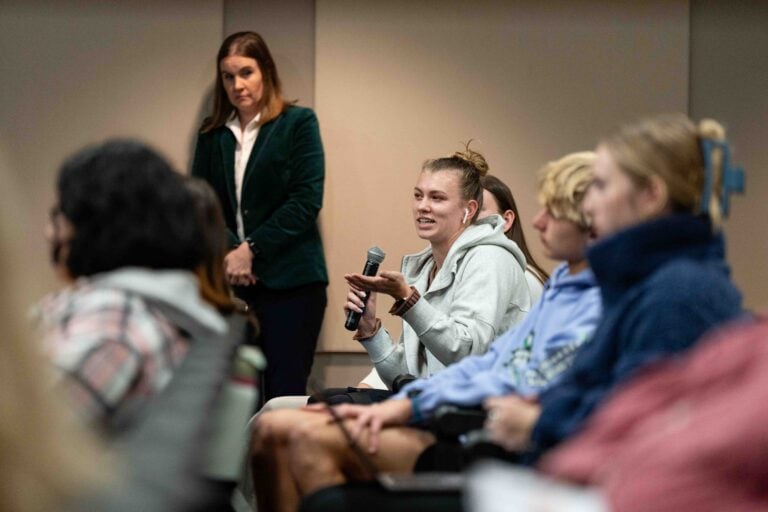
A student asks a question to Ashland Johnson ’05, who was the speaker in a CLP event hosted by Furman’s Women’s, Gender and Sexuality Studies program Nov. 21, 2024.
Johnson recognized early on that she was treated differently because of her identity. Despite a good jump shot and a “decent” crossover, she said her sexual orientation bothered people on campus. She was committed to being an example for other queer Black students, however, and was involved in building a supportive community for LGBTQ+ students on and off-campus. She was a member of the “Friends of Lesbians and Gays” group on campus and advocated with others in 2003 to change the name to the Queer Student Alliance.
The current Furman women’s basketball team was invited to the CLP and had the chance to meet Johnson and take photos with her. Casey said this was an opportunity for them to think about how the themes of inclusion and equity impact their lives, but also for others to learn about the challenges student athletes face and what roles athletics play in their lives.
For four years, Furman University was everything to Johnson. Her college experience was her first time practicing advocacy, and her teammates became lifelong friends and colleagues. When she left Furman, she took a job in Atlanta in higher education. She expected to be able to stretch her legs more as an advocate there but was instead fired when her employer learned she was a lesbian.
Johnson was confident her termination was illegal and sought help from the ACLU and Lambda Legal to challenge it. She learned that, in Georgia, it was legal to fire her for her sexuality.
“I didn’t know my rights, and I hadn’t done anything to protect them,” she said. “Experiencing such discrimination firsthand and fighting in order to protect my rights in collaboration with civil rights lawyers to hold my employer accountable fueled my passion for civil rights advocacy.”
To move on from that painful chapter of her life she pursued her juris doctor at the University of Georgia School of Law. She worked to advance civil rights at organizations including Lambda Legal, the National Gay and Lesbian Task Force, Georgia Equality, the ACLU, the National Women’s Law Center, Athlete Ally and the Human Rights Campaign, where she headed the public education and research program.
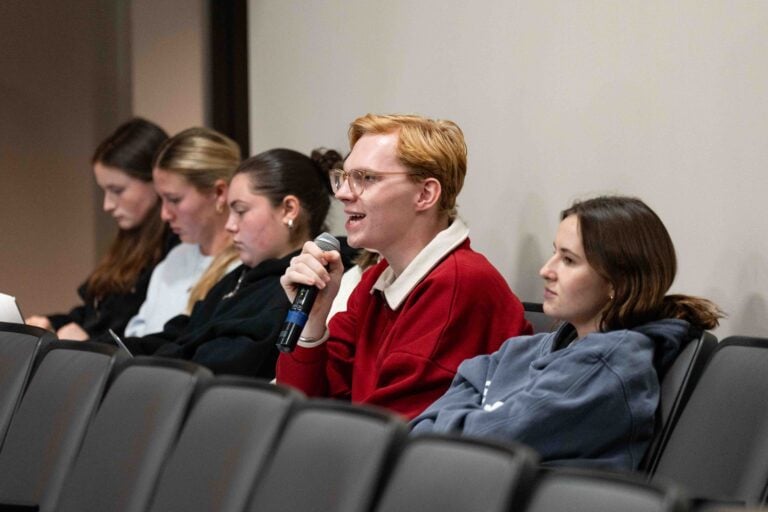
A student asks a question at the Nov. 21, 2024 CLP featuring former Furman women’s basketball player Ashland Johnson ’05, who has had a career as a civil rights attorney.
Throughout Johnson’s career, she’s worked with organizations like the NBA, NCAA, National Women’s Soccer League and the U.S. Olympic Committee, helping draft policies and provide inclusivity training for athletes and coaches alike. In 2018, she started The Inclusion Playbook, a company bringing athletes and policy experts together for social justice.
“I just decided to bet on myself,” she said. “I’m now doing what I love with people I admire, in communities that I deeply care about.”
Johnson’s example encourages students to think about how they might carve their own professional path after they graduate, Casey said. That’s part of The Furman Advantage, she said, connecting with students not only as a mentor and example of a career path they can take inspiration from, but as part of a vast alumni network to tap into.
“Johnson gave students her card, invited them to contact her, encouraged them to do more research on Title IX and learn more about their rights as students and athletes,” Casey said. “She even offered to take Furman students as interns at her company.”
Since Johnson graduated from Furman, the campus culture has improved for LGBTQ+ students and their allies. She was happy to see people with pride pins and ally stickers, and said the WGSS program diversifies students’ perspectives and gives them new ways of engaging with the world.
“Our program tripled in size last year, the library’s collection of queer zines has grown to over 1,000 and we now have an LGBTQ+ Alumni Council,” Casey said. “We believe it’s critically important to provide students with the opportunity to develop a framework for understanding how gender, sexuality and other intersecting identity categories shape their lives.”