News from campus and beyond
Furman adds theatre studies major, digital ethics and medieval studies minors
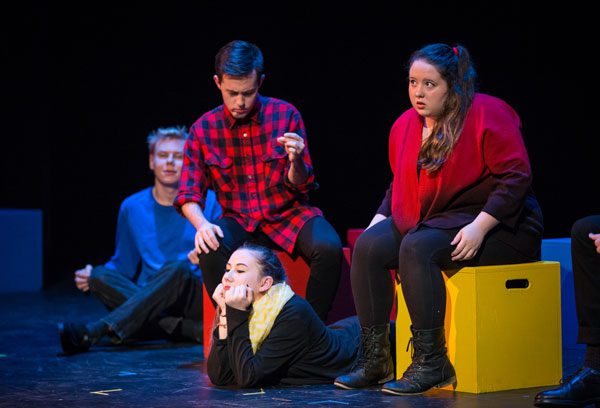
Furman has created a major in theatre studies and minors in medieval and early modern studies and digital ethics. File photo.
As of this fall, Furman University has added minors in digital ethics and medieval and early modern studies, and a major in theatre studies.
“We are excited to make these new areas of study available to our students,” said Beth Pontari, vice president for Academic Affairs and provost. “These are fields in which our students have shown increased interest, and where our faculty have expertise.”
The new programs represent the best of a liberal arts and science education, Pontari said. They cover cutting-edge technology, history that underscores and helps explain modernity, and a major that allows a deeper understanding of theatre as an art form. All of these offer new opportunities for our students in their academic pathway at Furman, while helping to prepare them for life after Furman.
The digital ethics minor arose from the explosive growth of AI and the need to stay in step with the ever-evolving field of technology, according to Chris Alvin, associate professor of computer science, and Darren Hick, assistant professor of philosophy. They led the effort behind the digital ethics minor.
The growth of AI is calling for ethical considerations to be prioritized from public and private domains. The digital ethics minor seeks to educate students on the ethical impact of their work regardless of the course of study. It’s knowledge they will carry with them into the workplace, Alvin and Hick said.
At the heart of the minor are 12 required credit hours including intro to computer programming; morals, law and society in the digital age; and an ethics course. The remaining eight additional credit hours draw from coursework in communication studies, computer science, economics, philosophy and sociology.
Tim Fehler, the William E. Leverette Jr. Professor of History, proposed the medieval and early modern studies minor. The minor will enable students to enhance their understanding of the pre-modern world from a variety of perspectives, focusing on medieval and/or early modern periods, c. 400-1800.
“The tangled legacies of the modern world have deep roots in the medieval and early modern periods,” Fehler said. “Finding solutions for the problems we face today requires us to take a longer view of their origins.
“By combining multiple courses and disciplinary approaches to the study of these dynamic centuries of social, political, and cultural interactions and change, students will develop a firmer grounding in the issues, ideas, institutions, networks and technologies that laid the foundations for the modern world.”
Fehler explained that organizing selected courses into a minor provides students the opportunity to encounter and compare ideas, practices and developments across global cultures by means of a variety of disciplinary approaches.
The minor includes a two-credit-hour colloquium in medieval and early modern studies and 18 additional credit hours curated from a wide pool of courses found in the art, English, French, history, humanities, music, politics and international affairs, religion and theatre arts disciplines.
For decades, Furman’s theatre arts major has served as a mainstay of the university’s liberal and performing arts offering and has prepared scores of students to work in the entertainment and other industries. The new major in theatre studies brings an opportunity for students to engage in the academic discipline of theatre as scholars without the expectation to become practitioners of the craft.
Maegan Azar, chair of the Theatre Arts Department and professor of acting and directing, said the theatre studies major “equips students with theoretical knowledge, aesthetic language, critical perspectives and historical appreciation for theatre as an art form.” She also said the theatre studies major allows students with an interest in theatre to more easily double major with other departments, creating a hybrid experience.
“Students interested in pursuing this course of study will develop critical thinking skills through analysis and interpretation of literature, performance and production,” she said. “They’ll develop problem-solving skills through visual storytelling, research and writing in history and criticism of the art form. They’ll gain opportunities to explore teamwork, communication and collaboration through class projects, applied experiences and exploration of varied disciplines within the theatre world.”
To satisfy the requirements for the major, students will have eight core credit hours devoted to the introduction to theatre, theatre practicum and senior synthesis. The remaining 36 credit hours align with performance studies; design and technology; history, literature and criticism; engaged learning; and electives including theatre and dance courses.