News and Events
Why Social Connection Matters for Community Health
Community Health Conversations | February 11, 2026
Social connection is increasingly recognized as a critical factor influencing health and well-being. On February 11, the Institute for the Advancement of Community Health hosted the latest installment of its Community Health Conversations series, bringing together leaders from healthcare, academia, and community organizations to explore how relationships, belonging, and community environments shape health outcomes.
The conversation was moderated by Loretta Crowley of IACH and featured panelists Cara Reeves, Ph.D., clinical psychologist with Stephens Psychiatry and Girlology; Shaniece Criss, Sc.D., Associate Professor of Health Sciences and Director of the Master of Arts in Advocacy and Social Policy at Furman University; Frank Clark, MD, Department of Psychiatry and Behavioral Medicine at Prisma Health; and Catriona Carlise, Executive Director of Meals on Wheels of Greenville.
Social Connection as a Health Issue
Panelists discussed how social disconnection affects different populations in distinct ways. Older adults, adolescents and young adults, postpartum women, individuals experiencing relocation, and justice-involved populations often face higher risks of isolation and its related health consequences.
Research increasingly shows that loneliness and isolation are closely linked to both physical and mental health outcomes. Chronic conditions can increase social isolation, and isolation can in turn worsen health outcomes, creating a cycle that communities must work intentionally to address.
Designing Communities for Belonging
From a public health perspective, connection is shaped by more than individual relationships. Housing, transportation, neighborhood design, and access to shared public spaces all influence opportunities for people to interact and build relationships.
Panelists emphasized that strengthening connection requires communities to think beyond programs and consider how community design, policies, and institutions can intentionally foster belonging.
A Shared Responsibility
Addressing social isolation requires collaboration across sectors. Healthcare providers, community organizations, policymakers, educators, planners, and residents all play a role in creating environments where connection can thrive.
By recognizing social connection as a core component of population health, communities can move toward strategies that strengthen relationships, reduce isolation, and improve long-term well-being.
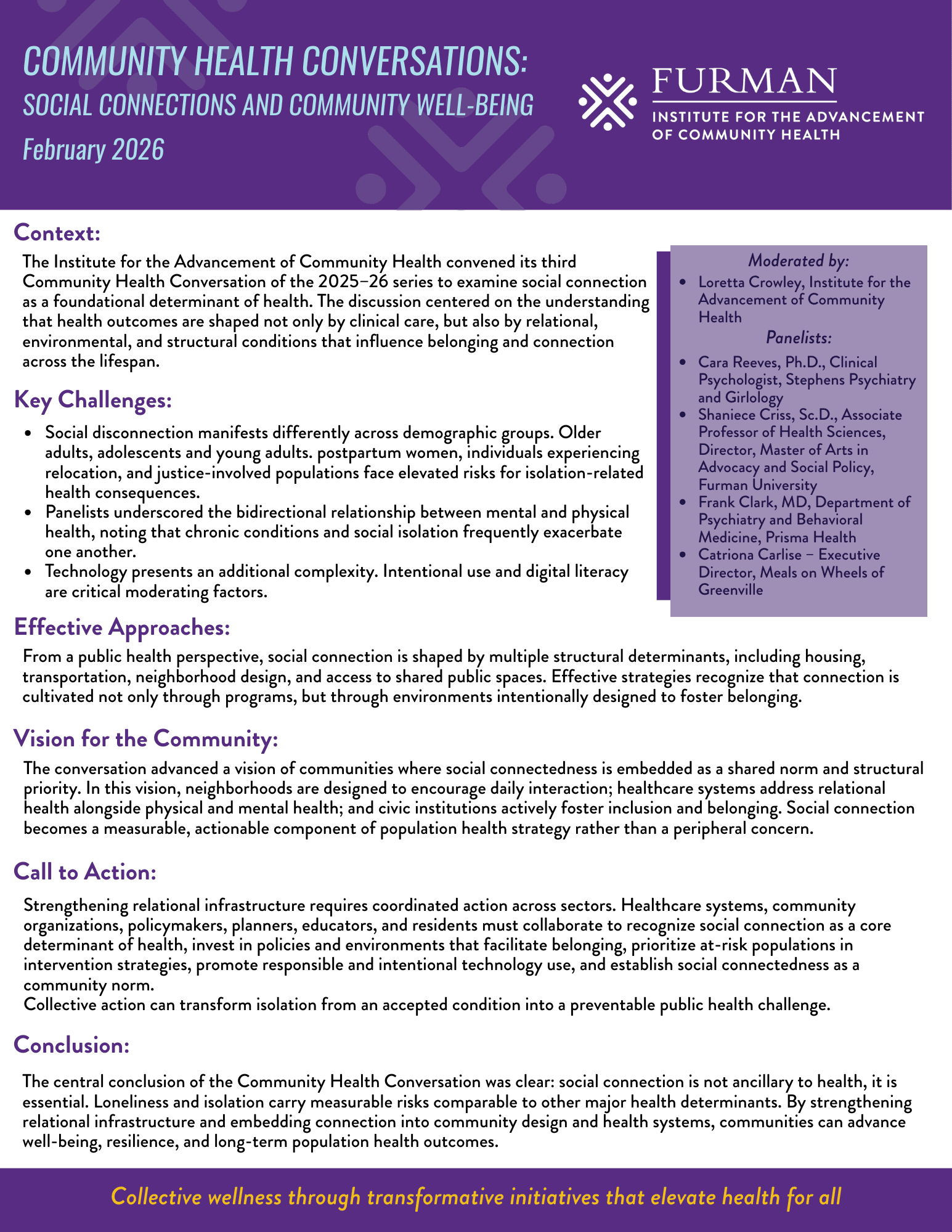 For a deeper look at the key themes and insights from this conversation, read the full executive summary here:
Continue the Conversation
If you are interested in learning more about how communities can strengthen social connection and belonging, we invite you to join us for the Building Brighter Tomorrows Community Health Conference on April 16.
This year’s keynote speaker, Risa Wilkerson of Healthy Places by Design, will explore how communities can move from ideas to action by designing environments, policies, and partnerships that strengthen social connection and improve community health.
Learn more about the conference and join us as we continue advancing conversations that shape healthier, more connected communities.