Tuğçe Kayaal’s Teaching Tips – April
 Furman instructors are implementing many creative practices in and out of the classroom. This month’s “Teaching Tip” feature comes fromDr. Tuğçe Kayaal who highlights her useof Reflective Structured Dialogue and zine projects. Reach out to Tuğçe or the FDC if you’re interested in engaging further with these teaching strategies yourself!
“As a teacher-scholar, I teach and write about the sociocultural and queer histories of West Asia and North Africa, childhood, and postcolonial formations. The topics I teach come with a variety of challenges, but those challenges are also what make teaching such a rewarding, exciting, and collaborative experience between me and my students. Some of these challenges involve asking questions about parts of the world that students are not always familiar with. This becomes especially complex when those questions concern gender, sexuality, friendship, and intimacy across diverse times and places. Navigating these topics with care is essential, particularly for an interdisciplinary student body. With that in mind, the approaches I bring to in-class activities and assignments prioritize two things: cultivating a supportive learning community and developing skills of archival research and reading.
In my intro-level classes, building a supportive and engaging learning community is a central goal, given the disciplinary diversity and range of experience my students bring — from first-year to sophomore students. This semester, in HUM 102, offered as part of Furman’s Humanities Minor and co-taught with Dr. Eunice Rojas, one key tweak significantly helped with student engagement and collective thinking. This came after I completed the FDC workshop series on the Dialogic Classroom, led by Drs. Claire Whitlinger and Stephanie Freis. At the end of each module, students write reflective essays that put in conversation the texts we have studied. The final day of each module is then dedicated to discussing that module through the lens of those essays, centered around a question students themselves have posed. To ensure engagement with each other’s ideas and analysis, we use a reflective structured dialogue in these reflection sessions. Students sit in a circle, and each person has 2 to 3 minutes to briefly present their question and main takeaways without interruption. During this time, others take notes on ideas and questions that come to them. Once everyone has shared, we move to the next step, where students respond with their follow-up thoughts and questions. This activity creates space for every student to express their work, while also fostering reflective and mindful listening in a truly dialogical setting.
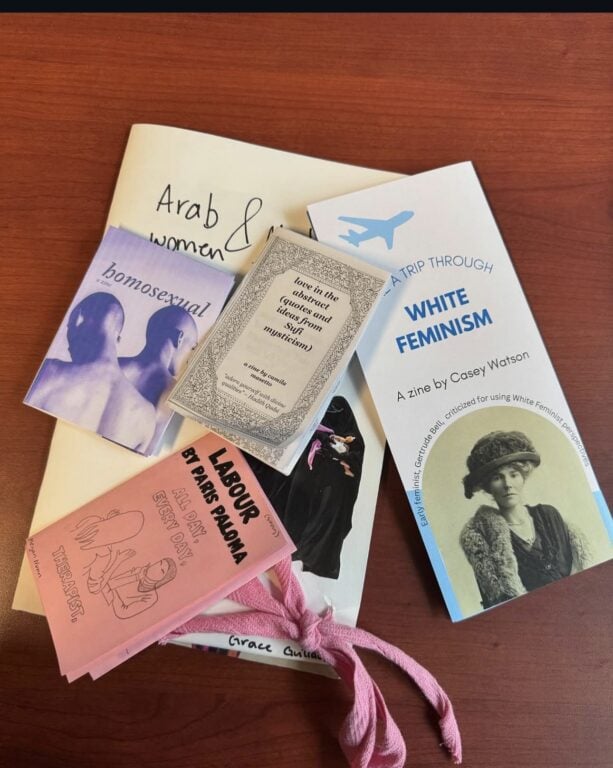
Teaching students how to make their research content accessible beyond academic settings is central to my pedagogy. Regardless of their discipline, this approach encourages students to think critically and communicate with broader audiences through different media. It also helps them see that the critical reading, writing, and project development skills they acquire in a history class are relevant and applicable well beyond it. One assignment that embodies this is the zine project I assign in my upper-level class “HST 254: Gender and Sexuality in the Middle East.” This seminar focuses on a particular theme each semester I offer it and incorporates a final assignment with two parts: writing an original research paper drawing on primary and secondary sources, and producing a zine version of that paper. For the zine, students think carefully about how to make the content of their academic work accessible to non-academic audiences, or to those unfamiliar with their specific research topic. Accompanying their research paper with a zine requires students to mobilize their creativity and project development skills to communicate their work to different audiences, deepening their understanding of their own research while building the confidence to share it meaningfully beyond the classroom.”