What Is the Purpose of a Cover Letter? (And How to Write One)
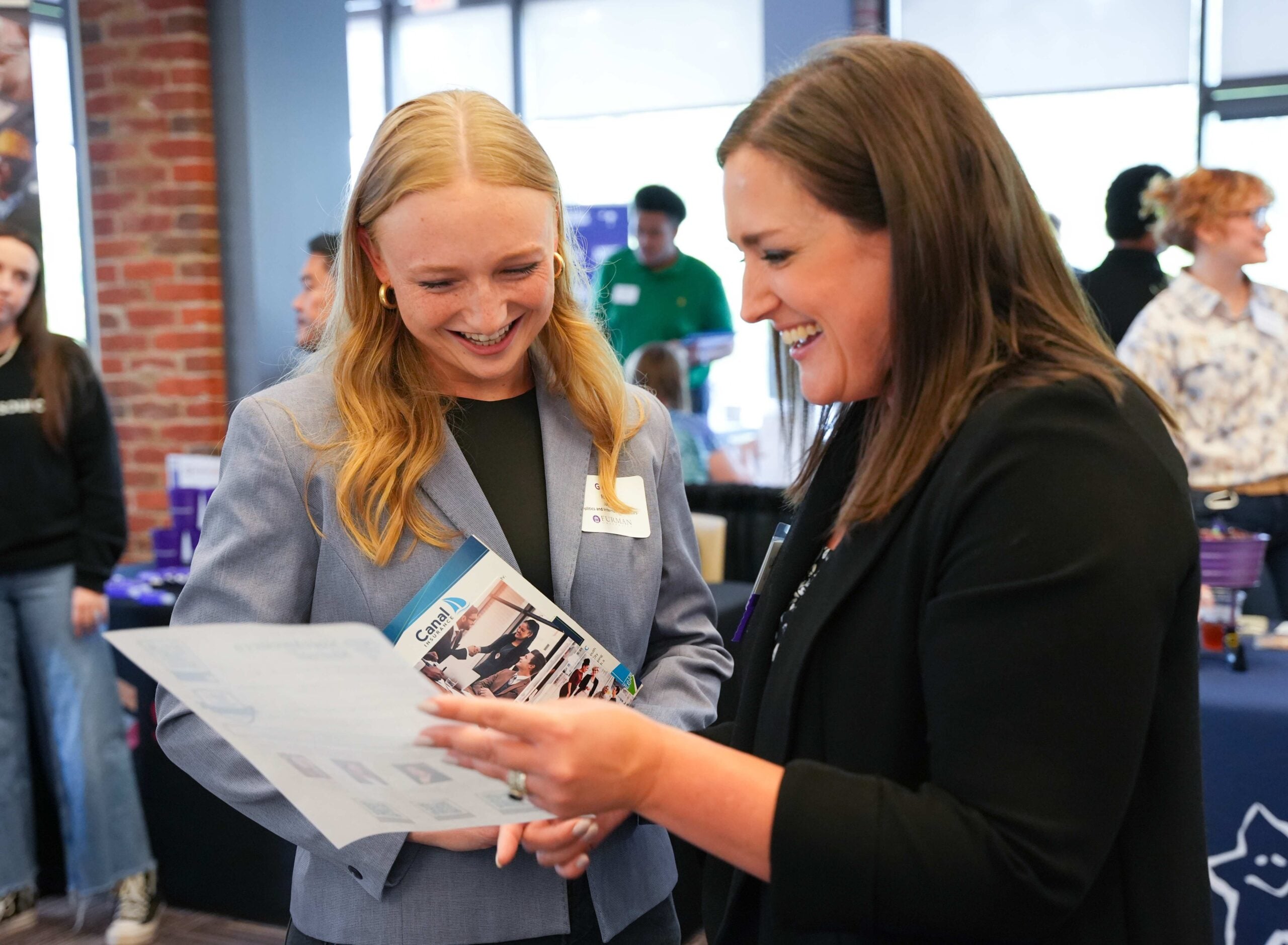
Gywn Reep, left, speaks with Claire Bray of Northwest Mutual during the Career and Internship Fair in the Watkins Room at the Trone Student Center.
When you’re on the hunt for a job, it can be tempting just to submit your resume and move on to the next application. However, a well-written cover letter can make all the difference in setting you apart from other candidates. For example, imagine two applicants applying for the same job. One just submits their resume, while the other takes the time to craft a compelling cover letter that demonstrates their knowledge of the position and the company. In this scenario, the hiring manager will likely be more impressed with the latter candidate.
So, what is the purpose of a cover letter? Your cover letter is the initial introduction of yourself to potential employers. It’s the only opportunity to present a compelling case for why you are interested in the job and how you’re the perfect fit for it.
Is writing a cover letter for your next job application worth it? A well-crafted cover letter can make all the difference in catching the attention of potential employers and landing your dream job. Keep reading to understand more about what is the purpose of a cover letter, best practices and how to write one effectively.
What is the purpose of a cover letter?
A cover letter is a brief and customized document accompanying a job application or resume. Crafting a compelling cover letter is crucial to grab the attention of your potential employer and enhance your chances of being selected for an interview. The cover letter should be thoughtfully structured and contain key components showcasing your strengths and skills.
A cover letter is an excellent opportunity for candidates to introduce themselves to potential employers in a personalized and concise way. It allows applicants to express their motivations, highlight their relevant skills and experiences and explain why they are the perfect fit for the job. Going beyond the information on a resume, your cover letter tells a story that connects your background with the job requirements. For example, how did your previous internship give you experience in one area of the open entry-level role? It also demonstrates your understanding of the company, its culture and how they can contribute to its success. It’s a powerful tool to help candidates stand out in a competitive job market.
Components of a well-written cover letter
Many individuals create their cover letters using Canva or with fancy graphics, but ultimately, none is necessary for a great cover letter or resume. The most crucial aspect is that they are easily read without grammatical or spelling errors. It’s all about the content, so feel free to use a simple template unless you’re a design major and want to show off your skills.
There are a few main components on every cover letter:
The header of the cover letter
At the top of the document create a header at the top of the document that includes your full name, phone number and email address at the top of the page. If you have a personal portfolio or website, you can also include a link to it in the header. Keep in mind that for privacy reasons, it’s not necessary to include your physical address anymore. It is a common practice recommended by most recruiters.
A proper greeting
Nowadays, LinkedIn is a helpful tool that can provide you with a lot of information on a company’s team members and hiring managers with just a quick search. It’s always better to address your letter to a specific person, so if you’re applying for a marketing position, for example, try to find out the name of the marketing lead or head of marketing, as they will most likely be reviewing your application. If you can’t find a specific name, use a generic greeting such as ‘To whom it may concern’ or ‘Dear Hiring Manager.’
Opening paragraph
First, mention the job title and where you found out about the opportunity. Consider adding a hook, such as an impressive achievement, a shared interest in the company’s mission, or a connection to the industry. Express genuine enthusiasm about the possibility of joining the organization and briefly explain why your skills and experience make you a strong candidate. Keep the opening brief and engaging, encouraging readers to continue reading with interest.
Highlighting relevant skills
To prepare for a job application, carefully review the job description and identify the essential skills and responsibilities mentioned. Match your qualifications with the job requirements and create examples of past experiences showcasing your abilities in those areas.
As a new graduate entering the job market, avoiding highlighting things you don’t have yet is essential. Instead of starting with a negative statement such as “Although I don’t have…” it’s best to focus on the positives and highlight the skills you possess from your previous work experiences such as internships, retail jobs or work-study positions. This will highlight your strengths and showcase your abilities to potential employers.
Think broadly—often, good communication skills come in different ways, from staying on top of deadlines to planning events. Or how you creatively led a project at your last internship and how this showcases your critical and organizational skills. It’s all about how you frame it, but be specific and show off both your strengths and soft skills.
Also, list keywords from the job description and strategically incorporate them into your application materials. This is the most important section and the actual purpose of a cover letter.
Research the company
With a competitive job market, companies want to see that you’re interested in their goals and mission. Go beyond the job description and do a little research on their social media, Glassdoor and throughout the internet for any press. Understand the company’s values and culture and see if they fit your working style. Once you have a talking point or two, mention specific aspects of the company that align with your values and career goals. Taking the time to research the company and putting in that effort can help you land a job that you love.
Convey enthusiasm
After showcasing your skills and how your past experience relates to the job, it’s time to wrap things up. Let them know you are attaching your resume for their consideration, and express gratitude for considering your application. Restate your enthusiasm for the position and offer to answer any questions they may have. Finally, thank them once again for their time before signing off.
Cover letter do’s and don'ts
Do’s
- Customize your cover letter to the job. Take the time to customize each cover letter to the job description with specific examples and keywords to stand out from the rest. With the rise of AI, be careful when using any tools to write your cover letter, as it may not be as effective.
- Maintain a professional tone. Use a professional tone throughout your cover letter, and use online tools like Grammarly to make sure you are not missing any grammatical mistakes. Ask a peer to review it before sending it just in case.
- Reach out to professors or mentors. Don’t forget to use the resources available to you while you are still in school. At Furman University, you can take advantage of the career services the Malone Center for Career Engagement offers. Meet with your career advisor to get assistance with crafting your cover letter, search for job opportunities, connect with alums and receive constructive feedback.
- Watch your formatting. Keep it under one page, no crazy fonts (stick to Arial or Times New Roman), and select a font size of 12 or above.
Don’ts
- Generic language that could apply to any job and not customizing the cover letter to the job that you’re applying to.
- Grammatical or spelling mistakes and unprofessional throughout the cover letter. You must proofread your cover letter and seek a friend for a second pair of eyes when in doubt.
- Skipping researching the company can move you to the pass pile if there’s no connection between your experience and the role that you’re applying for.
Unlock your next job
When writing a cover letter, remember that it’s essentially a form of storytelling. Rather than simply listing your qualifications, you should connect the dots between your experience and how it makes you the perfect fit for the job. A well-written cover letter is not just a formal introduction; it should showcase your enthusiasm for the role and the company and demonstrate how your unique skills align with the position’s requirements.
Approaching cover letter writing with confidence and enthusiasm can make you stand out. It also shows employers that you are not just seeking any job but a meaningful opportunity to contribute and thrive within their organization.
Need more help writing a winning cover letter? Check out our Cover Letter Writing Guide for more guidance on how to successfully write one that will hopefully land you your next job.
The perspectives and thoughts shared in the Furman Blog belong solely to the author and may not align with the official stance or policies of Furman University. All referenced sources were accurate as of the date of publication.
Interested in Learning More About Furman? Let's Talk!
Loading...