Interview with Mark Lilla: Democracy, Tocqueville, and the Will to Ignorance
By Elizabeth L’Arrivee
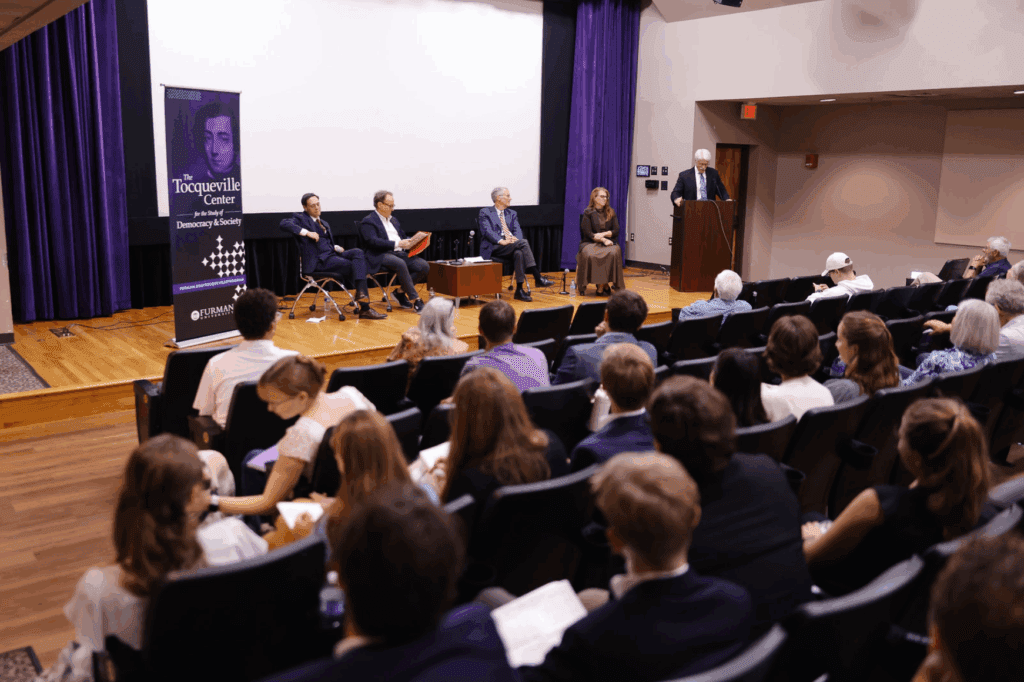
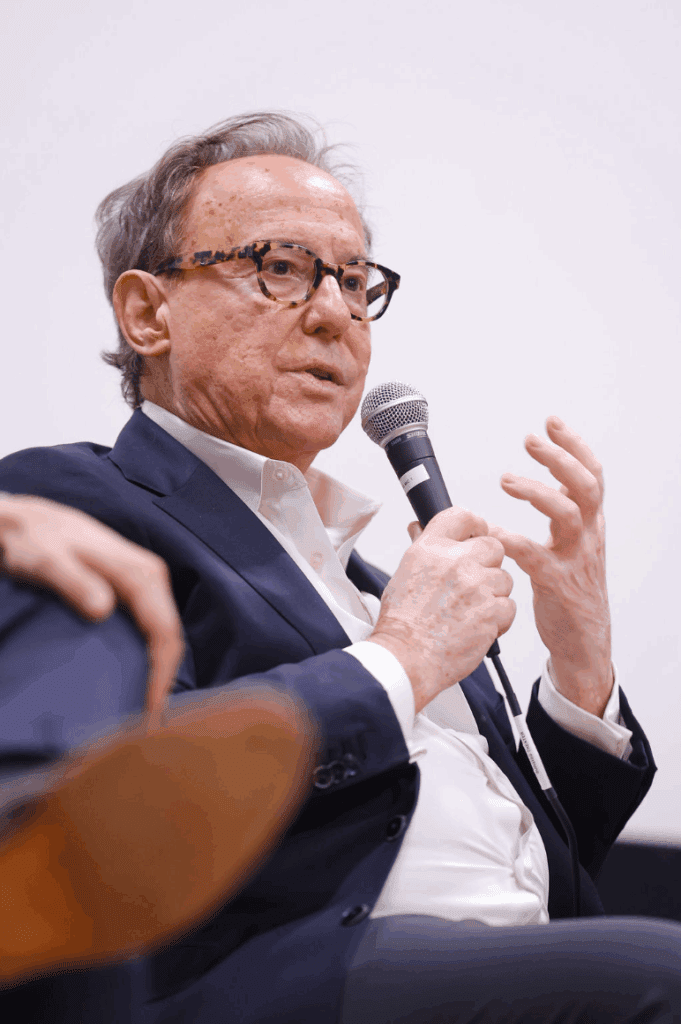
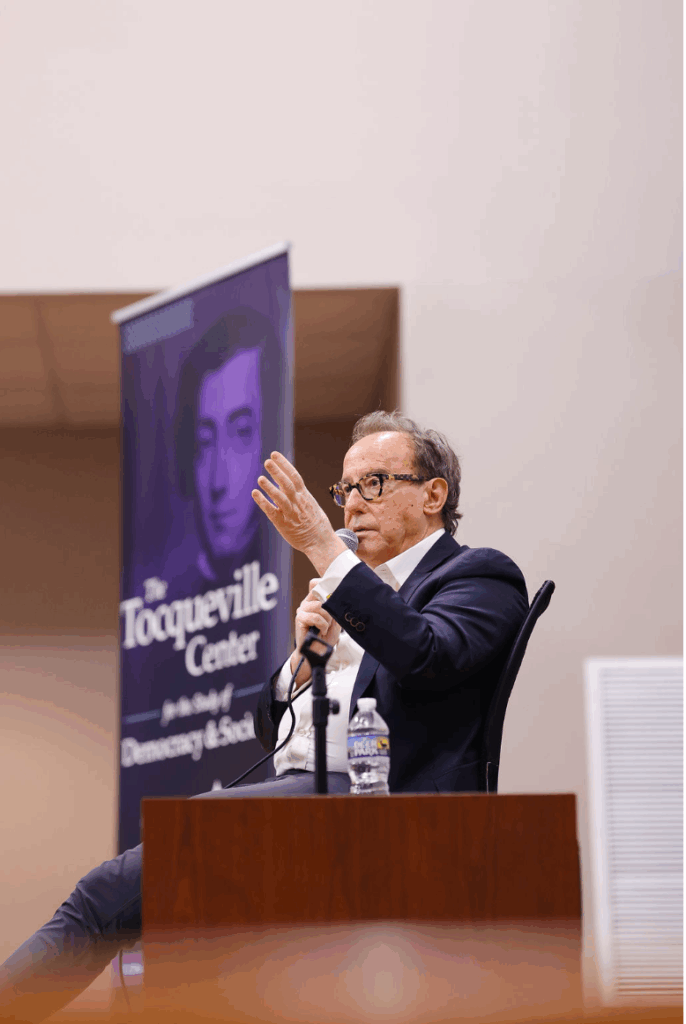
In September 2025, the Tocqueville Center hosted Columbia University professor and noted public intellectual Dr. Mark Lilla for the Walters Memorial Lecture and On Discourse series. Following his talks, Dr. Elizabeth L’Arrivée, Writer and Content Editor for the Tocqueville Center, sat down with Professor Lilla for an in-depth interview about Tocqueville, the state of American democracy, and his forthcoming book.
Elizabeth L’Arrivée
Last night you spoke about Tocqueville and how his audience for Democracy in America was his fellow Frenchmen. At the very beginning of Democracy in America, he remarks that in France, sentiments and ideas had become divorced: people’s feelings and their thinking were completely disconnected. Then he comes to America and sees them somehow united.
If Tocqueville were visiting America today, what do you think he would say? Would he still see sentiments and ideas united here—or have they broken apart in America?
Mark Lilla
Well, on the one hand, when you’re abroad and a group of Americans is in a restaurant, you recognize them immediately. It’s not just the language, it’s not just the clothing. It’s a kind of comportment.
I once wrote about this by imagining you’re a graduate student in France. You’re trying very hard to pass. You’ve learned the language, you’re trying to speak without an accent, you sit in cafés reading the newspaper. And then a group of Americans comes in. They’re very loud. They ask the waiter’s first name. They introduce themselves by their first names. By the end, they want to trade emails.
If you’re missing home, it’s a relief. If you’re trying to pass, you’re ashamed. But in either case, you vibrate with what’s going on with them. It’s not some alien thing to you.
So in that way, I think if you look at basic, nonpartisan sentiments about democracy — equality, informality, everyone thinking they understand everything, politicians being mocked for pomposity — those sentiments are still shared.
The breakdown, I think, is not in political principles but in recognition: really different ways of life. Everything from how you comport yourself, how you take care of your body, the food you eat, whether you engage your children in conversation at the dinner table. It turns out that’s crucial for intellectual achievement. Studies show children in talkative families are more articulate. In working-class families where “parents know best” and there isn’t much conversation, children are less articulate and tend to withdraw when challenged by more fluent peers.
Even the sports we watch differ — the tennis set versus the wrestling set. When all those things get added up, I think there is a breakdown in shared sentiment that spills over into politics, rather than political sentiments themselves having disappeared.
That’s the long answer.
Elizabeth L’Arrivée
Let me follow up. In your restaurant example, Americans would still be recognizably American. But have we reached the point where being of a certain class of American is more defining than Americanness itself?
Mark Lilla
I think so.
Certain things still distinguish us compared to other countries — we drive, we speak loudly in restaurants, all that. But if you isolate Americans and compare today to 30 or 40 years ago, there’s a big difference.
When there were only three main television networks, everyone watched the same shows — cowboy shows, sitcoms. Whether you had a college degree or not, you probably ate meatloaf and canned peas. Food wasn’t a big class marker. Eisenhower’s dinner wasn’t much different from a factory worker’s.
That’s no longer true. The Clinton example is instructive. Bill Clinton was a moderate Democrat, but the reaction against him was fierce. Part of it was cultural. Bill and Hillary seemed part of a new “yuppie” class. They spoke about feminism and sex in ways that felt alien.
The same thing with Obama — brewing beer in the White House, joking about arugula prices, shopping at Whole Foods. These were signals of a different class style. So in my lifetime, American life has fractured along those lines.
Elizabeth L’Arrivée
Would you like to share a bit with our audience about your latest book, Ignorance and Bliss: On Wanting Not to Know?

Mark Lilla
Sure! This is a book that’s been in the background for 25 years while I was doing other things. It comes partly from personal experience.
I was a teenage evangelical, from about 13 to 20, living in a Catholic charismatic world — first in Detroit, then in Ann Arbor, which had one of the big charismatic communities along with Notre Dame and Marquette.
When I left, I thought a lot about what had happened to me. It wasn’t only a will to know, but also a will not to know. Nietzsche called this the “will to ignorance.” I became fascinated by the desire not to know — when it’s bad for us, but also how it can play a beneficial psychological or even social role.
The book begins with Plato’s Cave, but I rewrite the story. In my version, the freed man climbs into the sunlight with a young boy. The boy struggles. He misses dreaming and fantasizing. He says: “I don’t want to be here. I have no friends. The lights are on all the time. We know too much for love, because we fully understand each other.”
He begs to go back. And so the man agrees.
This version suggests Plato didn’t show us the whole deck. There may be a healthy desire not to be exposed to everything. From there, I trace how our wills to know and not know play out — in Oedipus, in myths, in nostalgia, in poetry. It’s a ramble, really, through different ways the will to ignorance shapes our lives.
Elizabeth L’Arrivée
One final question. Where do you see today’s university students? Are they like Glaucon in Plato’s Republic — attached to their civic education and politics — or more like the characters in your book, struggling between knowing and not knowing?
Mark Lilla
That’s a great question. My book begins with an epigraph from George Eliot’s Daniel Deronda: “There is all this talk about the power of knowledge, but who has duly considered the power of ignorance in our lives?”
That captures what I see. Ignorance is not just absence — it’s a force.
So the challenge of education is pacing: introducing the world in such a way that students don’t rush ahead and collapse when they lose bearings. Rousseau’s Émile is all about this. The “Profession of Faith of the Savoyard Vicar” describes how to overcome despair when faith collapses. Rousseau structures Émile so that by the end, the student is open to knowledge but morally grounded enough to handle it.
That’s what education needs to do. And I worry it’s not thought about enough.
Closing Note
The Tocqueville Center was honored to host Mark Lilla for these conversations. His reflections on Tocqueville, civic friendship, and the will to ignorance remind us of the enduring challenges of democratic life and education.
Our next program, “Religion and the American Founding,” will feature Mark Noll (Notre Dame) and Caitlin Chess (Duke) on October 7–8. Join us as we continue the work of free inquiry and civic reflection.