Finance-Economics Major

Table of Contents
Understand Why Markets Move
Finance runs on economics. The theories behind portfolio optimization, asset pricing, and derivatives all emerged from economic research. In the Finance-Economics major, you’ll learn those foundations and how to apply them.
You’ll graduate with a quantitative toolkit that sets you apart: calculus-based modeling, econometric analysis, and the ability to explain why markets behave as they do. These skills open doors to analytical roles in investment banking, asset management, consulting, to graduate programs, and more.

Intentional Preparation, Unmatched Support
Small classes, real relationships. Your professors will know your work, write your recommendations, and help you navigate from coursework to career.
Quantitative depth. Real technical skills in optimization, statistical modeling, and financial analysis. The kind of depth that employers and graduate programs notice.
Research experience. You’ll have opportunities to engage with real finance research throughout your time at Furman, culminating in a senior seminar where you’ll analyze published work and apply what you’ve learned. Excellent preparation for graduate school and analytical careers.
Early career support. You don’t have to figure it out alone. A dedicated finance career coach is available from your first year, before you’ve even declared a major, to help you navigate recruitment timelines, build your resume, and prepare for technical interviews. And you’ll tap into a network of alumni at Wells Fargo, Jefferies, Bank of America, McKinsey, Deloitte, and more.
Location. Charlotte, one of the largest banking centers in the U.S., is just 90 minutes away. Real opportunities for networking, site visits, internships, and recruiting connections.
Study Away
About 70% of Furman economics students study away at some point during their four years. Finance-Economics majors have options ranging from semester programs to short-term May experiences, both in the U.S. and abroad.
A few highlights for students interested in finance:
- Edinburgh Internship Program
A Furman faculty-led semester program that combines coursework with an international internship. You’ll take classes and work 20-30 hours per week, gaining professional experience in a global city. - CIMBA Italy
A semester or summer program based in the Italian Alps, about an hour from Venice. Coursework includes finance, economics, and business, all taught in English. The program also includes a leadership development component and built-in travel time to explore Europe. - John Cabot University in Rome
A U.S.-accredited university in the heart of Rome offering business, economics, and liberal arts courses taught in English. Semester and summer options available, with opportunities for internships.
These are just a few of the programs available. Furman’s Rinker Center for Study Away can help you find the right fit.
Launch Your Career
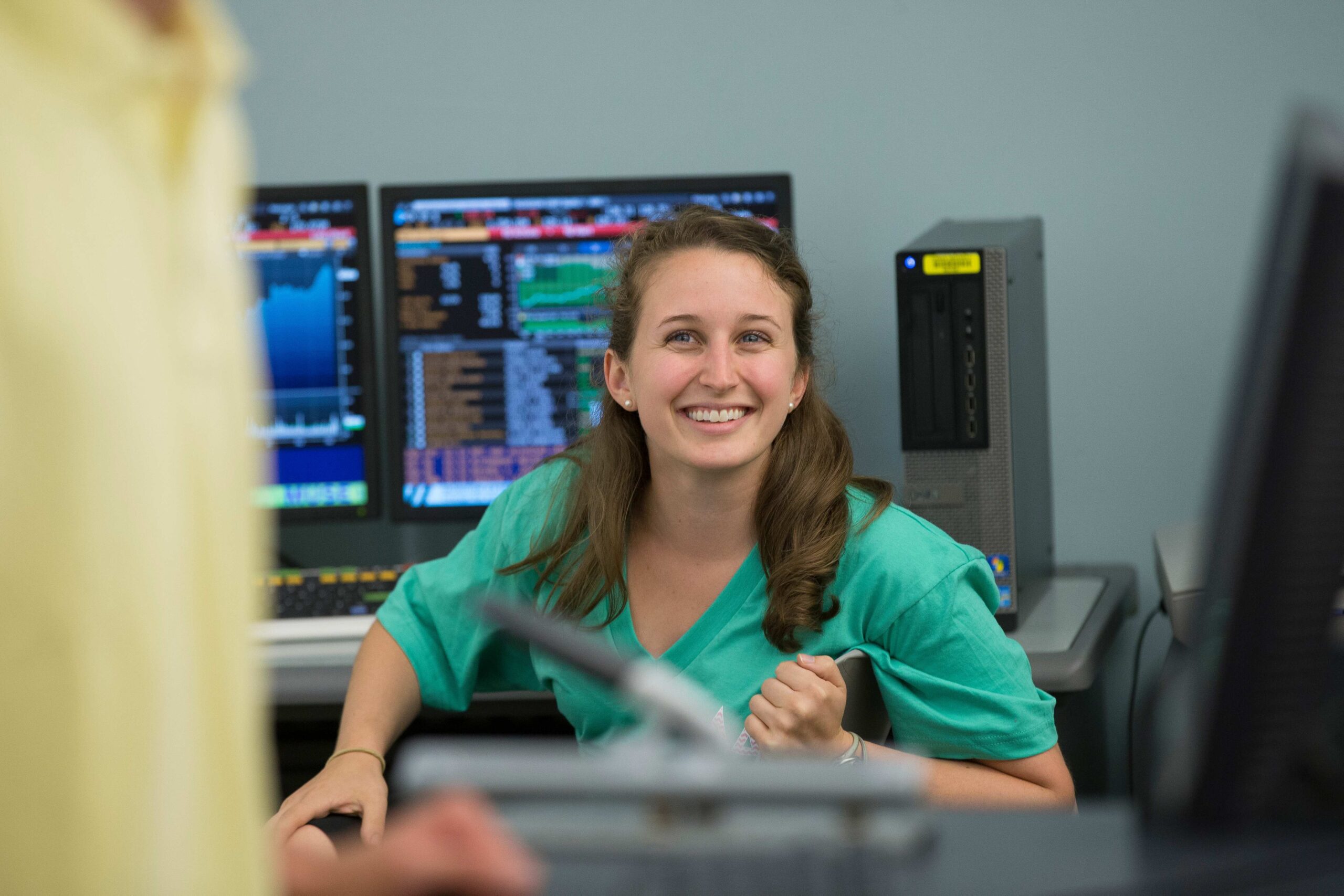
Finance recruiting moves early and fast. Investment banking recruitment starts sophomore spring for summer internships 18 months out, and over 90% of interns receive return offers. That’s why early guidance matters.
Industry-Specific Career Coaching
At Furman, you don’t have to wait until you’ve declared a major or figured everything out. A dedicated finance career coach through the Malone Center for Career Engagement works with any student interested in finance, business, or consulting, starting as early as freshman year. They’ll guide you through recruitment timelines, help you build competitive applications, and prepare you for technical interviews. Your coach knows the firms, the timelines, and what it takes to stand out.
Alumni Network
Furman graduates work at Wells Fargo, Jefferies, Bank of America, Deloitte, PNC, McKinsey, PwC, Lazard, and more. They’re invested in helping current students, which translates into mentorship, internship leads, and professional connections that extend well beyond campus.
Hands-On Experience
Finance Career Treks to Charlotte, New York, and Atlanta. Alumni panels. Employer workshops. The Hill Institute’s Clemens Angel Analyst Fellowship is a 10-week program with Venture South where top performers earn analyst positions. An Investment Club partners with Furman’s investment office, giving you hands-on experience with the university’s portfolio.
Choose Your Finance Path
Furman offers two routes into finance. Both lead to strong careers, and they share a common starting point: introductory courses in economics, accounting, and statistics.
Finance-Economics is quantitative and analytical. You’ll take calculus, econometrics, and economic theory, building toward a research seminar. It’s designed for students who want to go deep on the analytical side of finance.
The Finance-Business major combines finance with marketing and management, with more emphasis on managerial practice and broad business foundations.
This makes a real difference in your job search, and it makes you more attractive to employers.
If you want to understand markets through mathematical and economic analysis, Finance-Economics is your path. If you prefer a broader business foundation alongside finance, the Finance-Business major may be a better fit.

Finance-Economics Major FAQ
If you’re drawn to quantitative analysis and want to understand financial markets through economic theory, it’s a great fit. If you’d prefer a business curriculum without a calculus requirement, take a look at the Finance-Business major.
Graduates go into investment analysis, corporate finance, consulting, banking, and graduate programs in finance, economics, and related fields.
The major requirements are the same. The difference is in general education. The B.S. includes more science, the B.A. includes a foreign language. Choose based on your interests.
You’re not starting over. This major shares significant coursework with Economics and Mathematics-Economics, so transitioning is straightforward.
The program launches Fall 2026. If you’re entering Furman in Fall 2026 or later, you can declare Finance-Economics as your major. Current students interested in finance should connect with the Economics Department to discuss their options.
-
90 minFrom Charlotte, a top U.S. banking center
-
70%Economics students who study away
-
1st yearAccess to a dedicated finance career coach
Faculty
You’ll learn from faculty who combine academic expertise with real-world perspective. They’re active researchers, experienced mentors, and genuinely invested in your success.

Nathan Cook

Kelsey Hample

Jessica Hennessey

Jason Jones

M. Taha Kasim

Kailash Khandke

Kenneth D. Peterson

Lilly Trotter

Jessica Sauve-Syed

Jeffrey Yankow
EXPLORE THE ADVANTAGE
-
 HOLA’s Chief of Staff Giselle Osorio-Beltran finds community, then helps build it for others
 -
Article in Food Drink Life reveals more reasons to love Furman, Greenville, Travelers Rest
-
For Furman’s newest families, Family Weekend feels a little like coming home
-
Furman Theatre Arts announces 2026-2027 season