StraightTalk 2020: Voting in America
The history of voting in America makes plain that voting rules have always been entangled with broader issues of wealth, class and race, and political parties. At our country’s founding, only white men who owned property were allowed to vote. 244 years later, we celebrate the centennial of the 19th Amendment, guaranteeing the right to vote for white women, and the sesquicentennial of the 15th Amendment, declaring that the right to vote cannot be denied because of a person’s “race, color, or previous condition of servitude.”
Despite these constitutional amendments, controversies over voting rights, voter fraud, and the value of an individual’s vote abound. While some fear voting by mail will lead to widespread voter fraud, others worry that without it, they will be forced to spend several hours waiting for the opportunity to cast a ballot, perhaps endangering their health due to COVID-19. Moreover, in 2021, new Congressional districts and local government districts will be redrawn based on the information gained from the 2020 census. In most states, including South Carolina, those who are in places of political power get to choose whose votes count the most.
We examined the history of voting in America and the struggle for enfranchisement among the poor, women, Black Americans, and Native Americans, the ongoing struggle against Gerrymandering, voter and election fraud, and voter suppression, and how we can safeguard the integrity of our election infrastructure and process. Ultimately, as we face these challenges, we ask ourselves, “Will our 244-year-old experiment in democracy succeed?”
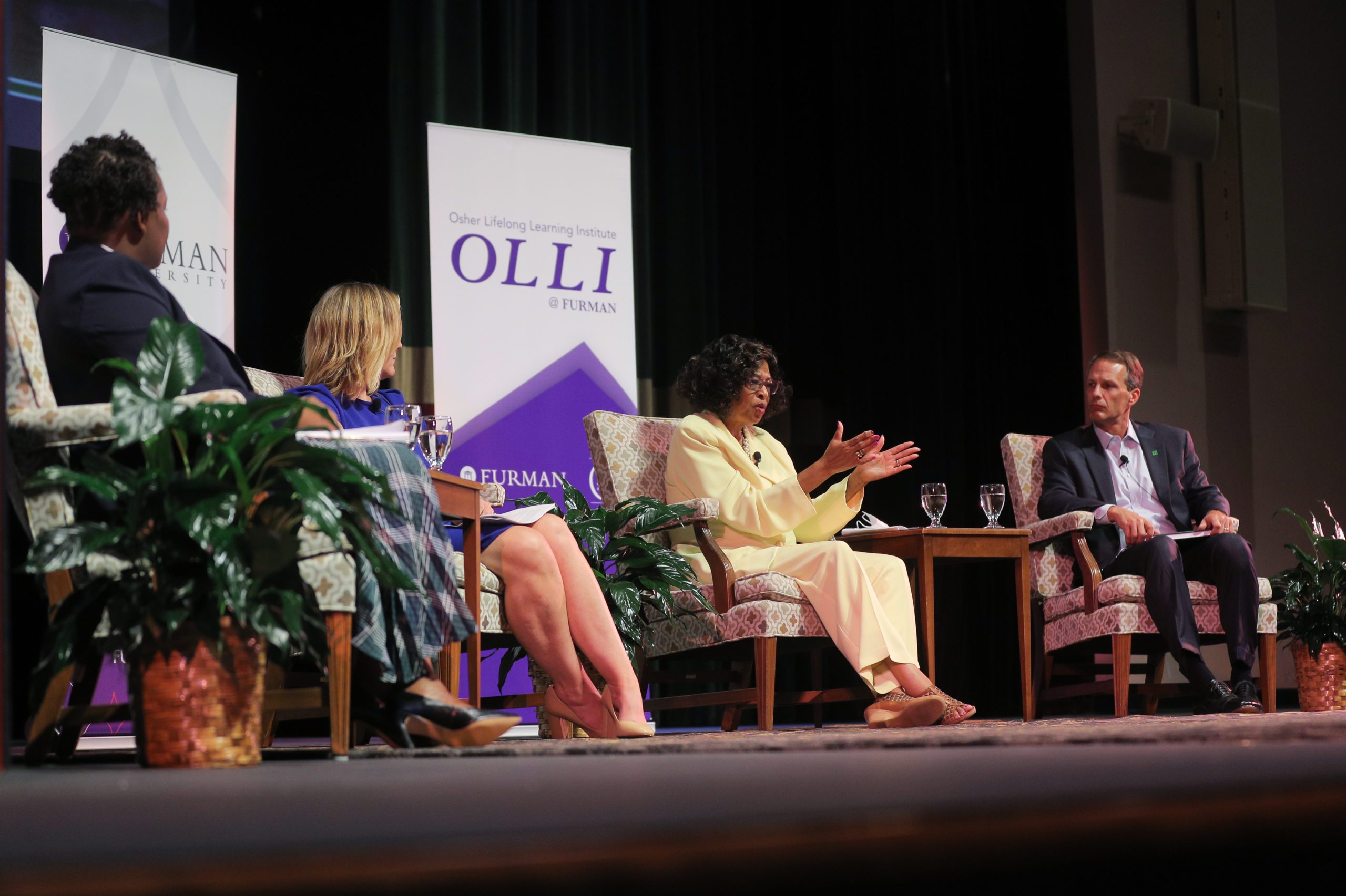
StraightTalk is carried out annually in partnership with OLLI@Furman.


Speakers
Speakers I Speakers
- Michael Waldman; president, Brennan Center for Justice at NYU School of Law
- Kelly Dittmar; associate professor of political science, Rutgers University–Camden
- Chryl Laird; assistant professor of government and legal studies, Bowdoin College
Speakers II Speakers
- Robert Costa; moderator and managing editor PBS’ Washington Week
- Ned Foley; Ebersold Chair in Constitutional Law, Ohio State University
- David Levine; elections integrity fellow, Alliance for Securing Democracy
- Michael McRobbie; president, Indiana University
- Teresa Nesbitt Cosby (moderator); associate professor of politics and international affairs, Furman University
Speakers III Speakers
- Angela Glover Blackwell; founder in residence, PolicyLink
- Russell Booker; executive director, Spartanburg Academic Movement
- Gavin Jackson; host, South Carolina ETV’s This Week in South Carolina
- John Simpkins; president, MDC