Beyond Professional Development: How DLI Changes Leaders
by Melissa Charles
Not every leadership program leaves a mark, but The Riley Institute’s Riley Fellows DLI Program does. A fire chief, a foundation executive, and a law enforcement veteran came into DLI from very different backgrounds. What they walked away with changed how they lead their organizations.
The Freedom to Ask “Why”
For more than 20 years, DLI has helped participants navigate diversity through a nonpartisan, commonsense approach. Cohorts bring together leaders from a variety of organizations and sectors from all over the state. Each participant brings their own distinct professional and personal experiences and perspectives to the program.
Chief Pierre Brewton rose through the ranks of Spartanburg’s fire department to become assistant fire chief. He then served as the first African American fire chief in Albemarle, North Carolina, before returning home to serve as fire chief for the City of Spartanburg Fire Department. He completed DLI in 2025.
Unlike other programs he had participated in, DLI gave Brewton tools and resources to address root problems. He felt genuinely engaged rather than simply satisfying a requirement.
“This program was different than any program that I’ve gone to or been part of,” Brewton said.
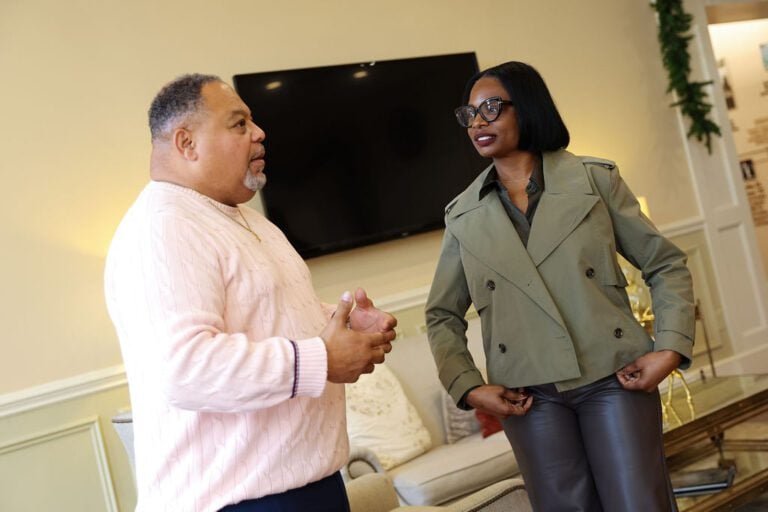
Pierre Brewton and Debra Rice chat during a break.
According to Brewton, DLI prompted him to evaluate his department’s culture and character. He formed a representative committee to review existing policies. Updates included adopting the term “firefighters” instead of “firemen” for team members, refreshing uniform standards so they represented a variety of body sizes and genders, and revising an outdated grooming policy related to hair length. The department also improved their mission statement so it would be clearer and more concise.
For Brewton, DLI’s greatest gift was the freedom to ask “why” and talk honestly about tough subjects. He learned how to create an environment where his team felt able to speak openly.
“The class helped me to be able to help people understand that it’s okay to be comfortably uncomfortable when you’re having a conversation, but you have to be comfortable enough to have a courageous conversation,” Brewton said.
Learning to Sit with Differences
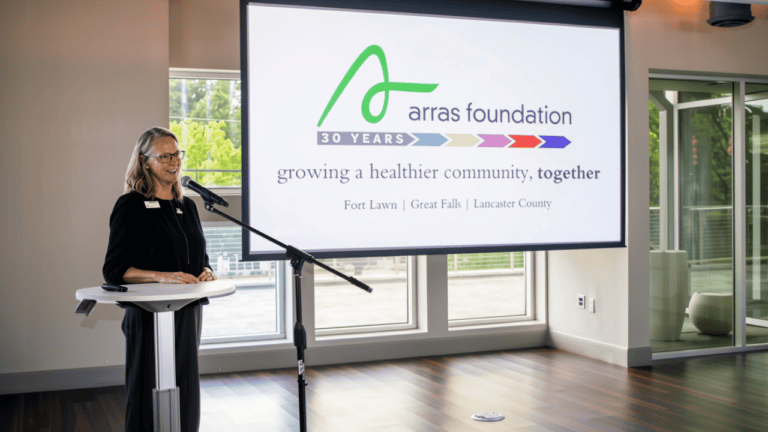
Susan DeVenny welcomes guest at a Riley Fellows reception held in summer 2025.
That same sense of discovery and comfort with differences resonated in the philanthropic sector. Susan DeVenny ’84 is president and CEO of the Arras Foundation in Lancaster. Before this role, she served as state director for South Carolina First Steps, a state agency focused on young children and families. She graduated from DLI in 2009.
“DLI gave my classmates and me the opportunity to discuss current events through the lens of our own lived experiences. We got to exercise skills and practice being vulnerable in a safe and respectful environment,” DeVenny said.
DeVenny brought these insights back to her office, redoubling efforts to consider all perspectives before making a decision. Leading a state agency at the time, that provided services to some of South Carolina’s most vulnerable families, DLI helped DeVenny and her team navigate the nuanced cultural differences that are found in communities across the state.
“DLI equipped me with additional techniques on how to sit with difference, how to listen without response, and how to challenge myself to listen for understanding,” she said.
New Perspectives Inspire New Policies
For Sonny Ledda, before participating in DLI in 2015, his professional development experiences focused solely on law enforcement viewpoints. A veteran of both military and law enforcement service, Ledda was serving as the chief of police in Laurens at the time. DLI connected him with leaders from a wide range of sectors, including non-governmental organizations, nonprofits, and the medical sector.
“It broadened my horizons,” Ledda said.
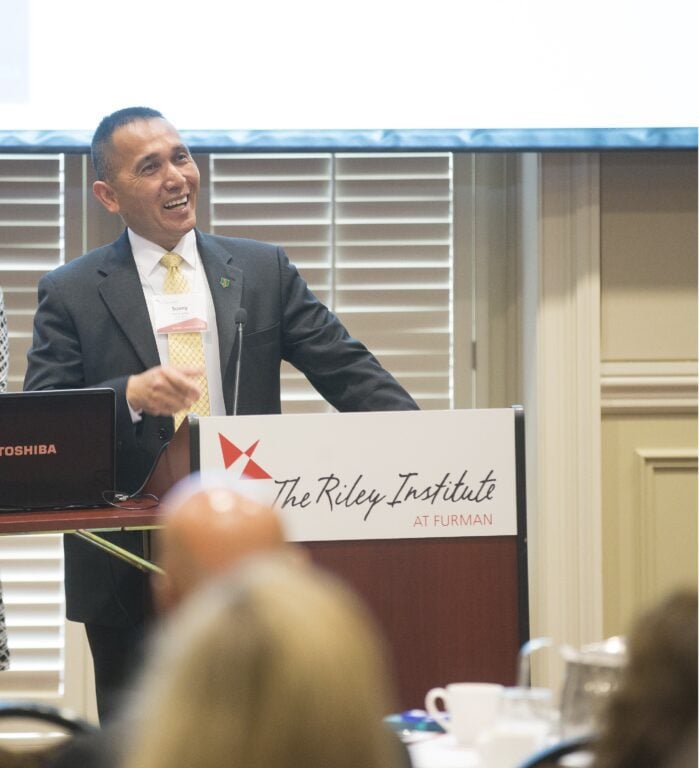
Sonny Ledda presents his capstone project.
Ledda remembers one session, in particular, in which The Riley Institute’s Cathy Stevens shared her story, opening Ledda’s eyes to a challenge he had never encountered. Stevens described how flexible and generous sick leave supported her while caring for a child with special needs.
Ledda brought that concept back to the City of Laurens. The City established an employee-led board to oversee a sick leave bank, with rotating seats to ensure balanced input. Ledda later helped launch a similar program in Clinton.
Building lasting networks
Policy updates and team growth are only part of the program’s impact. The relationships built during DLI continue to deliver results.
When Brewton’s department faced a program challenge, one phone call to a DLI graduate—known as a Riley Fellow—made all the difference. That single call solved the problem and secured the needed resources that saved funds.
DLI had such a profound impact on DeVenny that the Arras Foundation regularly nominates staff and board members to the program to build a culture of continuous learning across the entire organization. The experience connects them with leaders and knowledge that they carry into their work, providing a ripple effect across the community.
“The magic of DLI is you learn by doing and deepening relationships with people that you would otherwise have never met. And I do think that just the common goal of all of us wanting a stronger South Carolina made us equally attuned to each other,” DeVenny said.