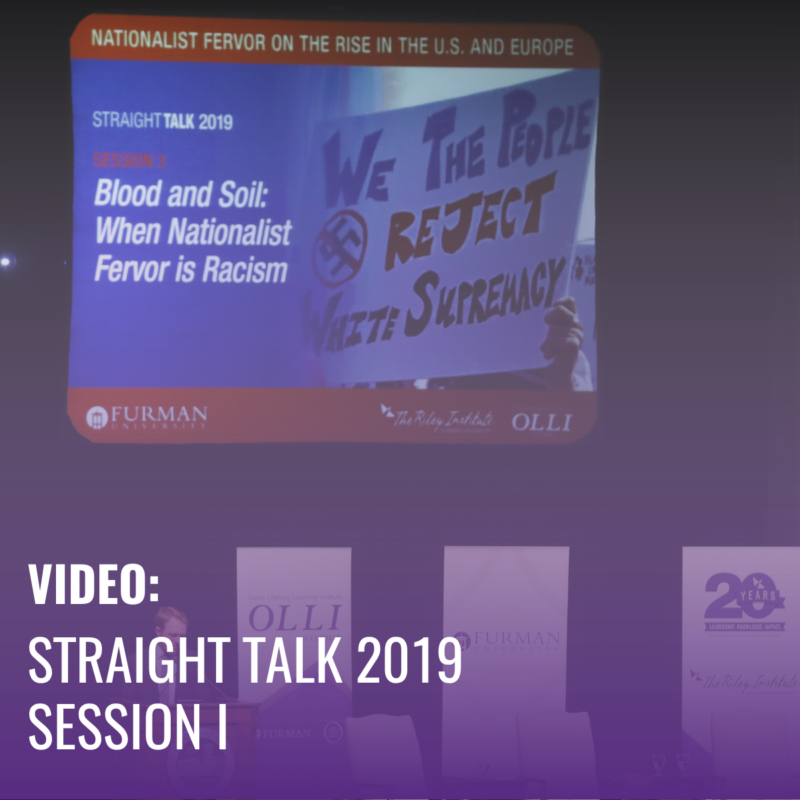
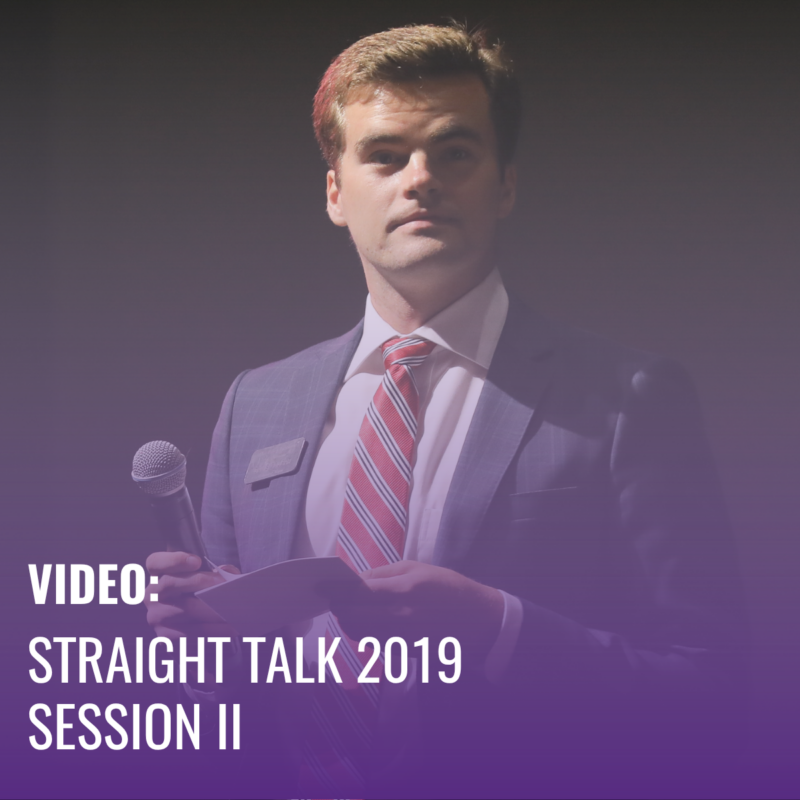
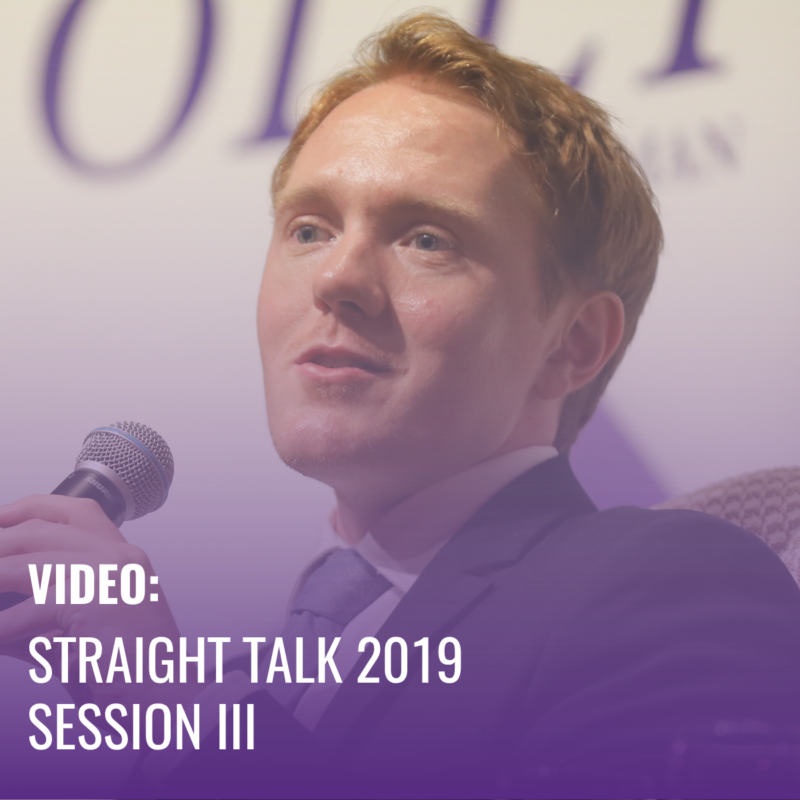
Straight Talk 2019
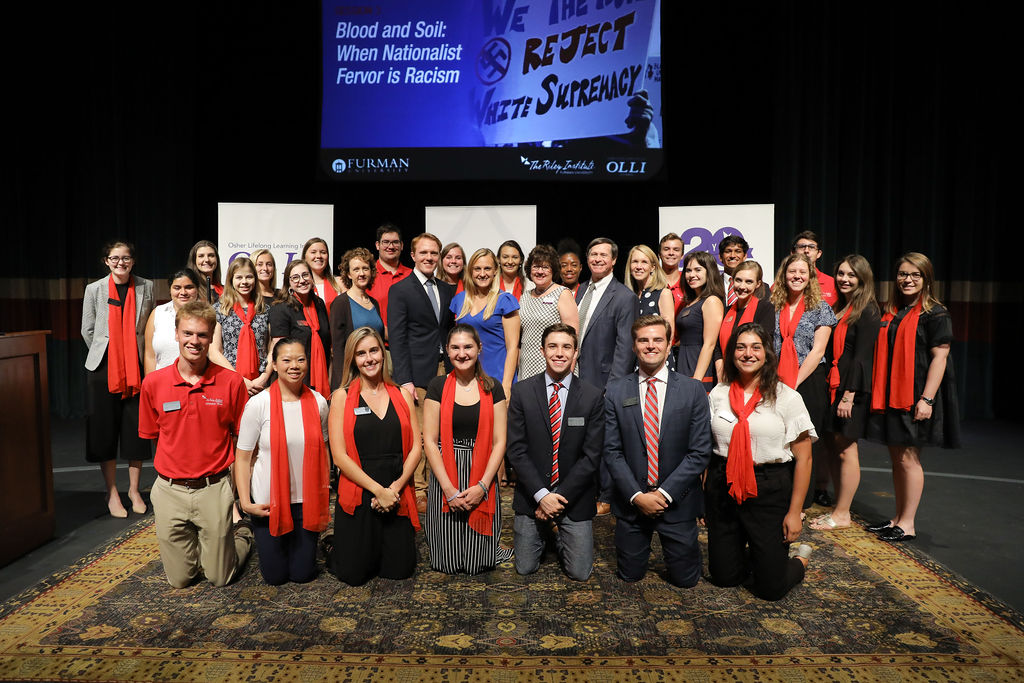
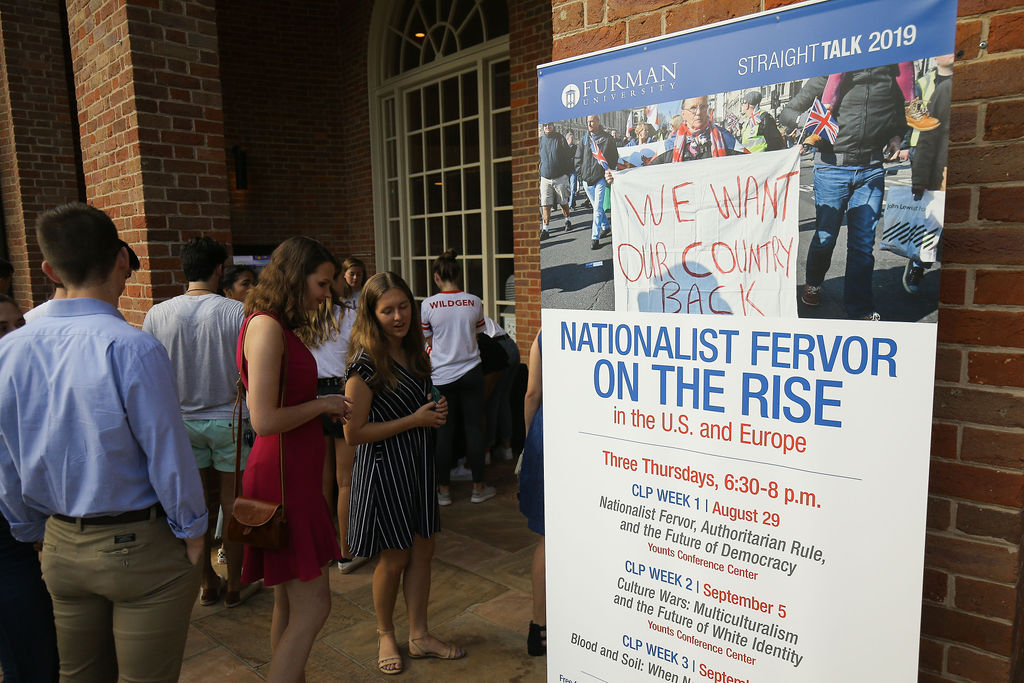
Nationalist Fervor on the Rise in the U.S. and Europe
We are experiencing a nationalist fervor that is energizing to some but alarming to others. The rise in the U.S. and Europe of populist nationalism is considered by many to be the single-most important political development of the 21st century. The election of Donald Trump, who was sent to the White House on a wave of right-wing populism, England’s Brexit movement, and the rise of the far-right in many European elections point to a phenomenon that is unmistakably tied to white identity, immigration, and demographic change.
Over three weekly sessions, we looked at the rise in nationalist fervor from three distinct points of focus. On August 29, we examined nationalism’s connection to populism and authoritarianism and how this influences our politics and our democracy. On September 5, we considered how white group identity and changing demographics are having an impact on our politics and our public discourse. Finally, on September 12, we shifted our focus to white nationalism as we hear one man’s journey from heir apparent in the white nationalist movement to critic of the movement’s toxic ideology, false narrative and racist views.
Are we witnessing a moment in time that soon will pass, or are we at the beginning of a new era?
StraightTalk is carried out annually in partnership with OLLI@Furman.





Session I
Nationalism comes in various forms, and when it embraces authoritarianism, it can have a negative impact on a democracy. Are Western democracies strong enough to withstand the force of a nationalist fervor that seeks authoritarian rule as an answer to the many problems that exist without easy solutions?
Speakers
- Bart Bonikowski; associate professor of sociology, Harvard University
- Major General Chris Ballard; U.S. Army ret., career military intelligence office
- David Fleming; professor of politics and international affairs, Furman University
Session II
People who identify strongly with their whiteness can feel threatened by shifting majorities. Should conservatives be able to express a sense of loss without being labeled as racists? How is demographic change transforming Western politics? How should we think about the future of white majorities and the future of minorities?
Speakers
- Eric Kaufmann; professor of politics, University of London; author, Whiteshift: Populism, Immigration, and the Future of White Majorities
- Ashley Jardina; assistant professor of political science, Duke University; author, White Identity Politics
- Khalilah Brown-Dean; professor of political science, Quinnipiac University; author, Identity Politics in the United States
- Danielle Vinson; professor of politics and international affairs, Furman University
Session III
Racism and racial injustice are often in headlines and spur frequent protests. With heightened attention to these complex issues and the promise of federal investment in communities as they recover from losses due to COVID-19, now is a pivotal moment. How might these funds and other measures be employed to counteract the exacerbation of racial inequities during the pandemic? What can local leaders do to build up communities and drive equitable outcomes? What is our hope in this moment?
Speakers
- Sarah McCammon; correspondent, NPR’s National Desk. Lead reporter assigned to the Donald Trump campaign in 2016
- Derek Black, the godson of KKK grand wizard David Duke to share his story of transformation from heir to the white nationalist movement to outspoken critic
- Danielle Vinson; professor of politics and international affairs, Furman University
Watch Session Recordings