Keely, Winkler describe benefits of youth development programs in SC
As high school seniors across South Carolina prepare to graduate in the coming weeks, there’s much to celebrate but also important questions to ask. Are students truly prepared for college and careers? Do our systems work together to ensure their success?
While graduates have shown improvement in career readiness, 27 percent of S.C. students fell short of that benchmark last year, and only one-third of graduates were considered college-ready.
Part of this ongoing challenge is that efforts to improve youth outcomes often operate in parallel rather than partnership. Schools work on academics. Nonprofits focus on enrichment. Employers discuss workforce readiness. Cities tackle transportation or recreation access. Philanthropic organizations fund isolated initiatives.
As a result, many children — particularly those facing transportation barriers, limited income or other structural challenges — lack sustained access to programs and experiences that build academic and social skills, confidence, relationships and readiness for a future beyond school.
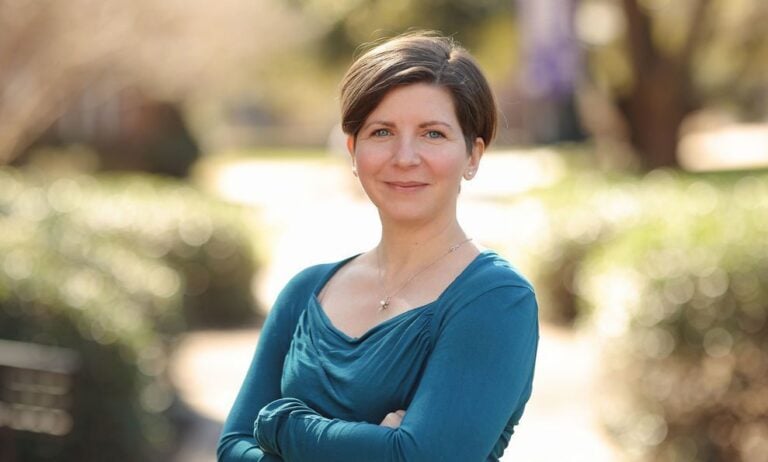
Claudia Winkler, The Riley Institute. Photo: Jeremy Fleming.
Kids On Point, the 2026 Dick and Tunky Riley WhatWorksSC Award winner, offers a microcosm of what becomes possible when communities adopt a coordinated, holistic approach to youth development.
KOP is an afterschool and summer program serving about 500 students in the Lowcountry, and its success depends on a closely aligned network of more than 50 partners. The College of Charleston hosts Kids on Point students on its campus, where they participate in academics and athletics while building relationships with undergraduate mentors. Community organizations provide enrichment experiences ranging from theater to outdoor education. Public agencies and partners help address barriers such as transportation, food access and facilities. Charleston County School District administrators share student data to help support academic progress.
This kind of collaboration should be the rule, not the exception, and the proof of this model’s success is clearly reflected in Kids on Point’s data.
Last school year, 79 percent of KOP participants in grades four through eight improved or exceeded grade-level expectations in math or English Language Arts (or both) on Edmentum Exact Path diagnostics, which Kids on Point administers three times per year. The organization’s afterschool program maintains a very high average attendance rate of 81 percent and a retention rate of 87 percent — factors that have been shown to lead to statistically significant gains in reading, math and foundational skills such as positive social behaviors and improved school attendance.
But the success doesn’t stop in K-12. On average, about 80 percent of participating students matriculate to postsecondary institutions, and another 10 percent transition directly into career pathways or military service. For the 2025-26 school year, all Kids on Point graduating seniors are pursuing postsecondary education.
What’s more, KOP is keeping whole families engaged and building a community of support around their students. Parents participate in “kitchen table talks,” where they share feedback and discuss further needs, such as transportation and scheduling. In its most recent surveys, 96 percent of parents reported a positive experience with the program.
Notably, it accomplishes all of this with a full-time staff of only nine people.
If a relatively small nonprofit working with partners can create this kind of impact, it raises important questions about what could be achieved through stronger city- and statewide coordination around youth development.
In Massachusetts, Boston After School & Beyond functions as a backbone organization that aligns schools, nonprofits, philanthropy, businesses, city agencies and community groups around a shared vision for youth success. Its network connects hundreds of programs serving more than 20,000 children while creating common systems for measuring quality and outcomes. Numerous research studies have documented the impact of these coordinated programs on students’ academic success.
Similarly, Baltimore’s Summer Arts for Learning Academy brings together classroom teachers, professional teaching artists, school leaders and community organizations to create a citywide summer experience that blends academics with arts-integrated learning, reaching more than 2,300 students. The program has earned national recognition for reducing summer learning loss and boosting student engagement.
To improve South Carolina’s college readiness, workforce participation and long-term economic mobility, we must bring together the systems and supports that shape youth success long before graduation day. As the Boston, Baltimore and Kids on Point examples demonstrate, improving youth outcomes at scale requires sustained investment in high-quality afterschool and summer learning, stronger infrastructure for transportation, meals, staffing and shared data systems and more coordinated cross-sector approaches to youth development at the city and county levels.
South Carolina does not lack caring organizations or dedicated leaders. What we often lack are alignment, sustained investment and systems-level coordination. Kids On Point offers a reminder that meaningful progress toward better youth outcomes is possible when communities commit to all three.
Amy Keely is the director of South Carolina Afterschool Leaders Empowered at The Riley Institute. Claudia Winkler is the institute’s director of marketing, communications and strategic alignment.