News from campus and beyond
Up, up and away! Physics launches balloon to measure muons
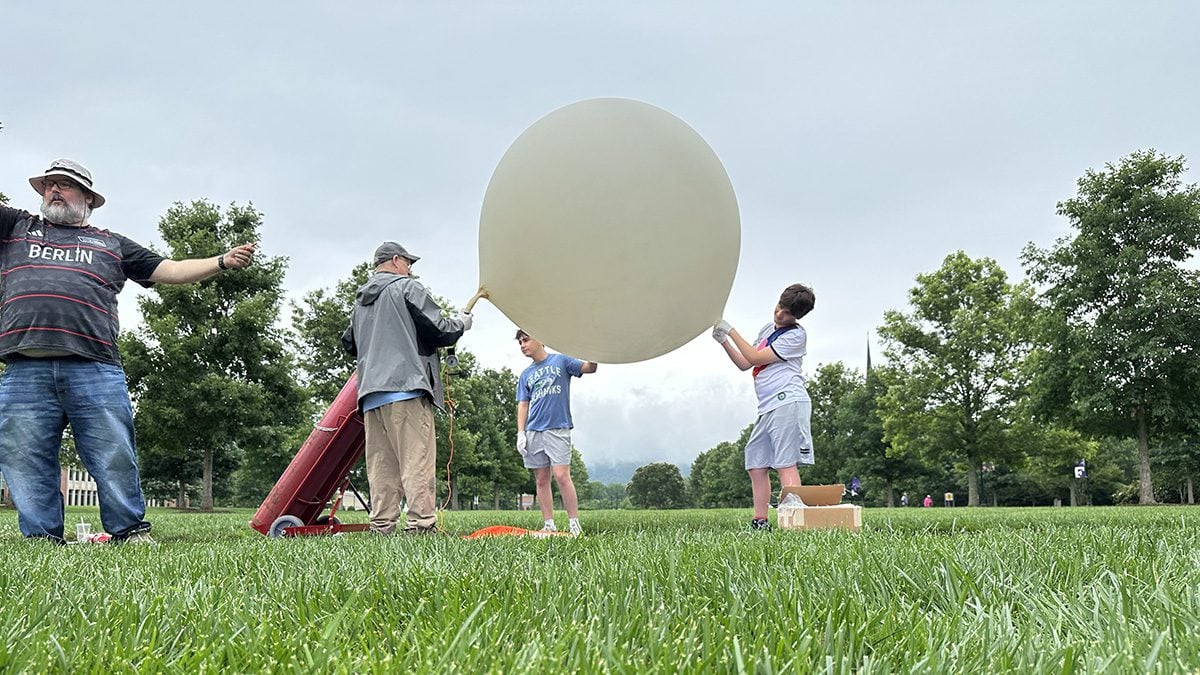
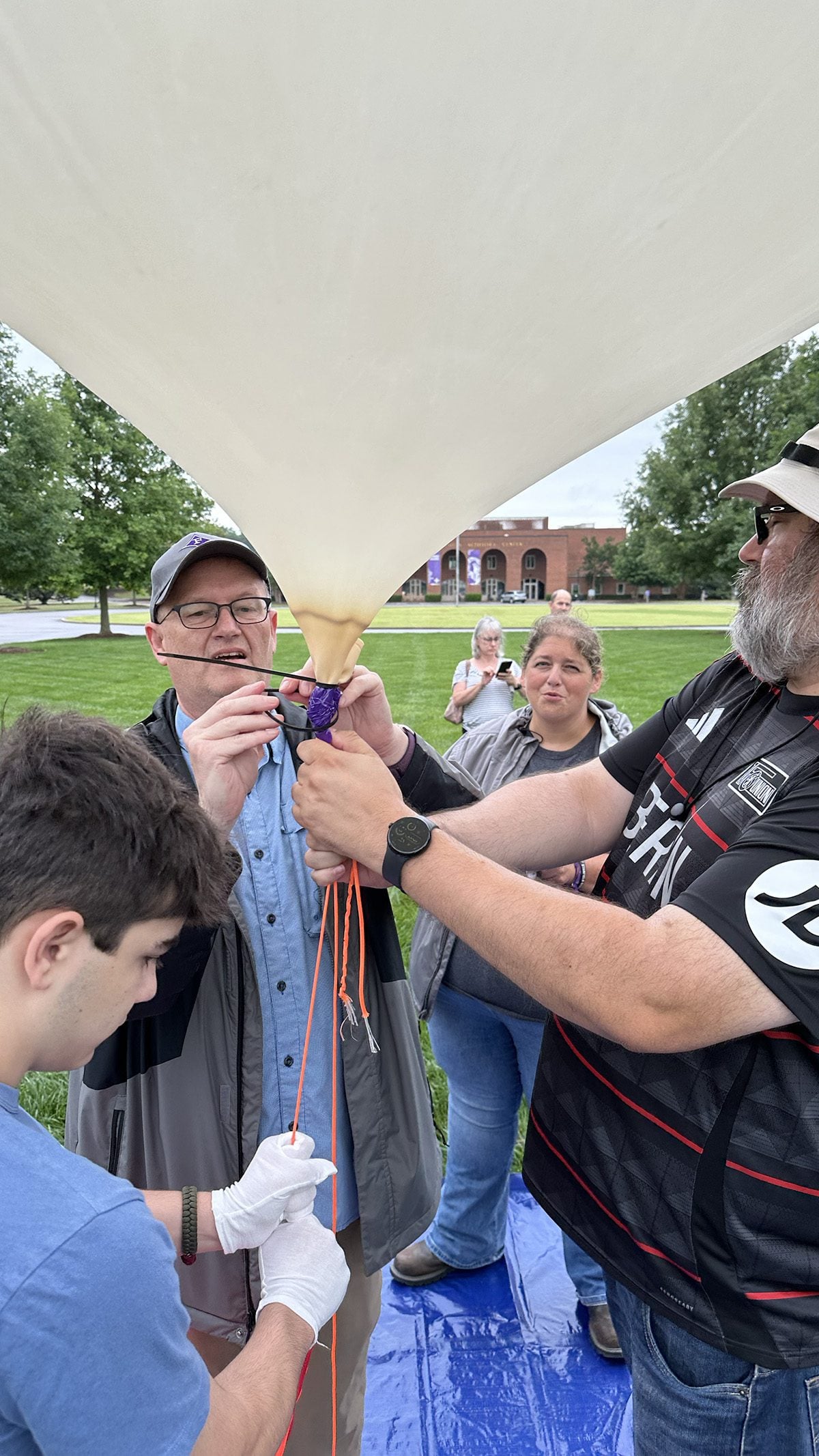
Bob Anderson ’18, professor of physics David Moffett, and JL Mann students Teddy Fields and Bobby Anderson launched a weather balloon June 8 to measure muons.
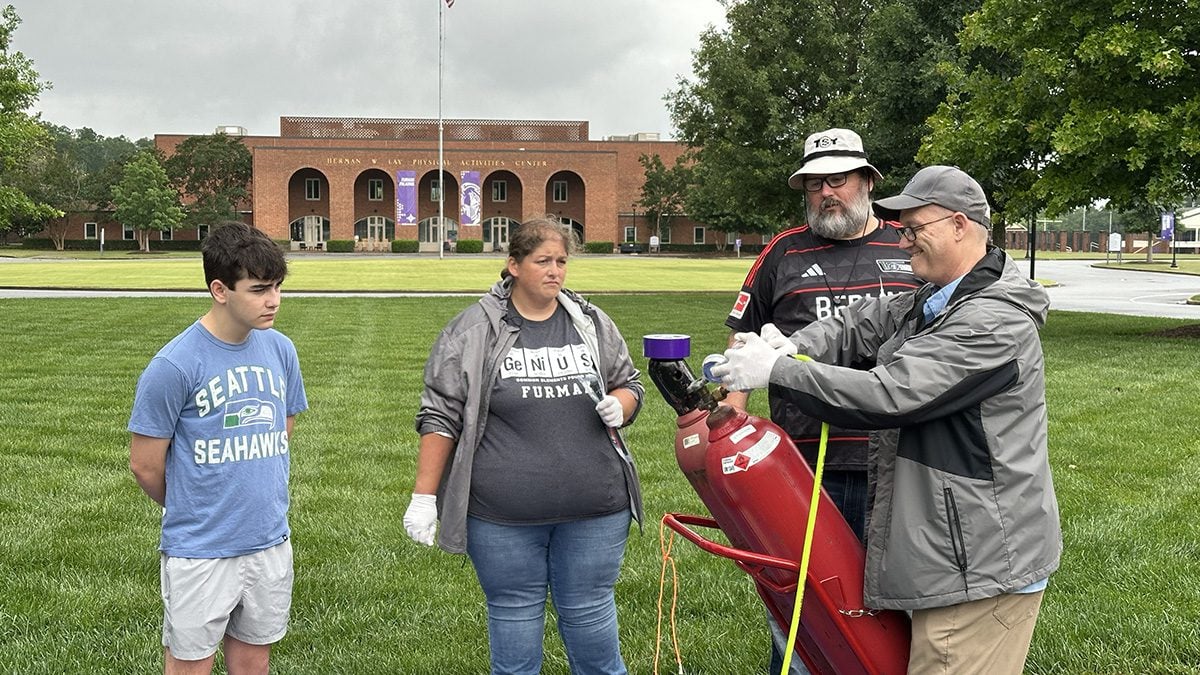
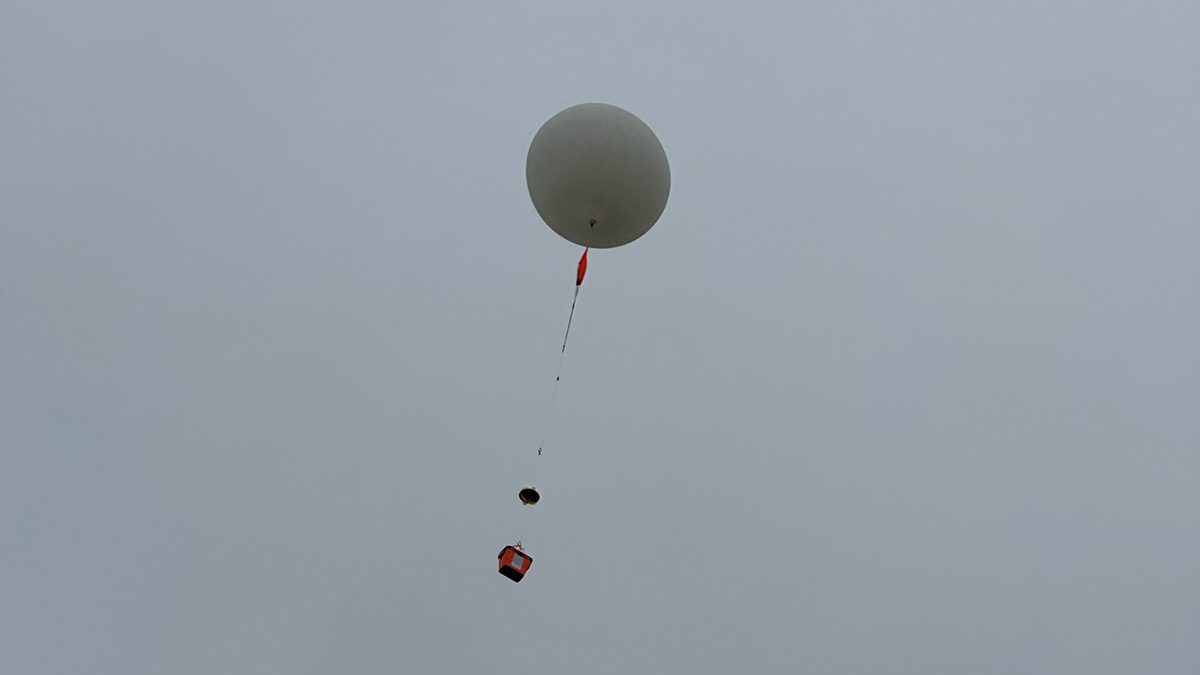
With fog overhead like a pillowy grey ceiling, David Moffett and Bob Anderson slowly filled a weather balloon with helium, then sent it up, up and away, floating high over the Furman University campus, drifting through the clouds across the Upstate of South Carolina, measuring muon flux.
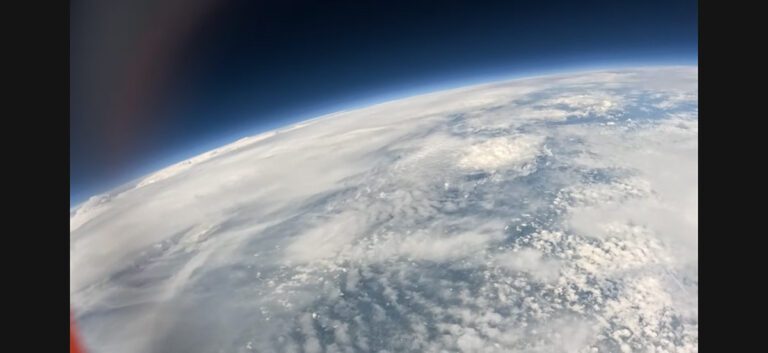
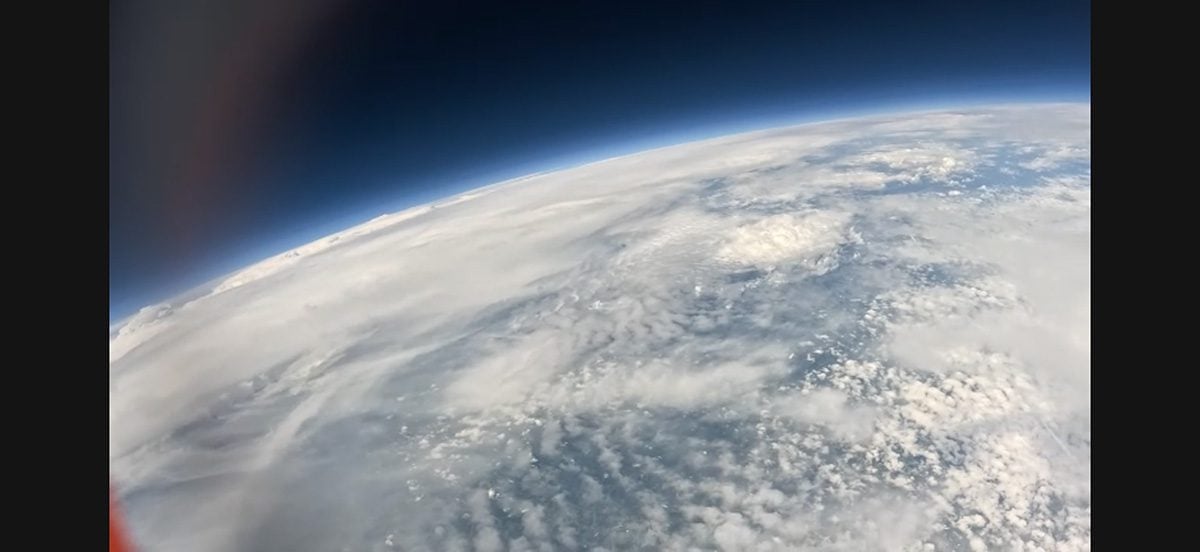
Earth seen from the balloon’s at over 80,000 feet. Image from David Moffett, professor of physics.
Wait. Muon what?
“Muons are created by the collision of cosmic rays (high energy electrons and heavy ions arising from energetic processes in deep space) with atoms and molecules in the upper layers of Earth’s atmosphere,” said Moffett. He’s a physicist at Furman, and Anderson ’18 teaches physics at J. L. Mann High School.
Moffett, Courtney Kucera, the physics department’s lab program manager, Anderson, and two J. L. Mann students, Teddy Fields and Bobby Anderson (Bob’s son), were measuring the flux, or flow, of muons near Furman’s latitude, which is roughly 34.93 degrees north.
That day, other scientists and students were measuring muon flux at Drexel University and Springside Chestnut Hill Academy in Pennsylvania.
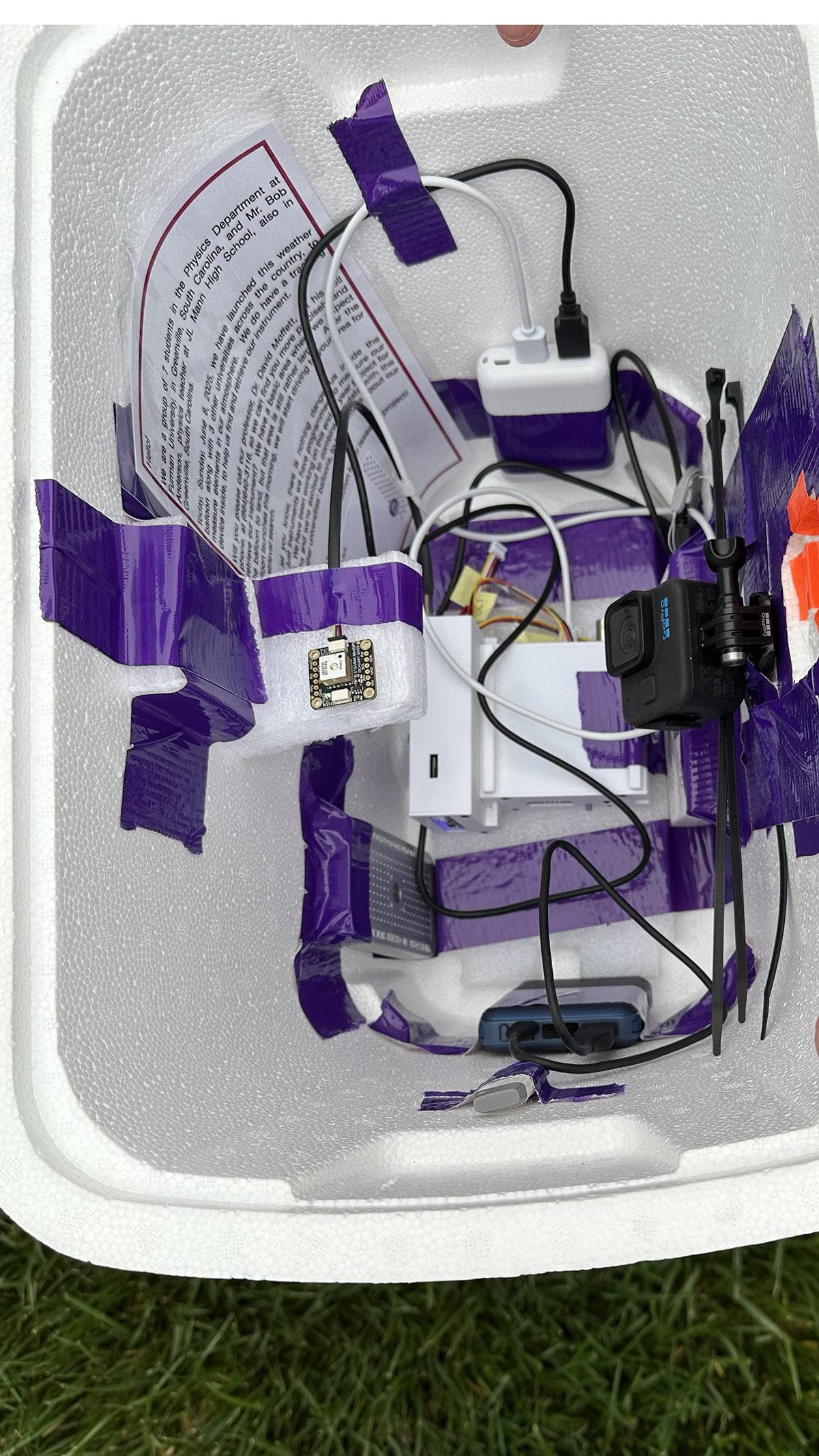
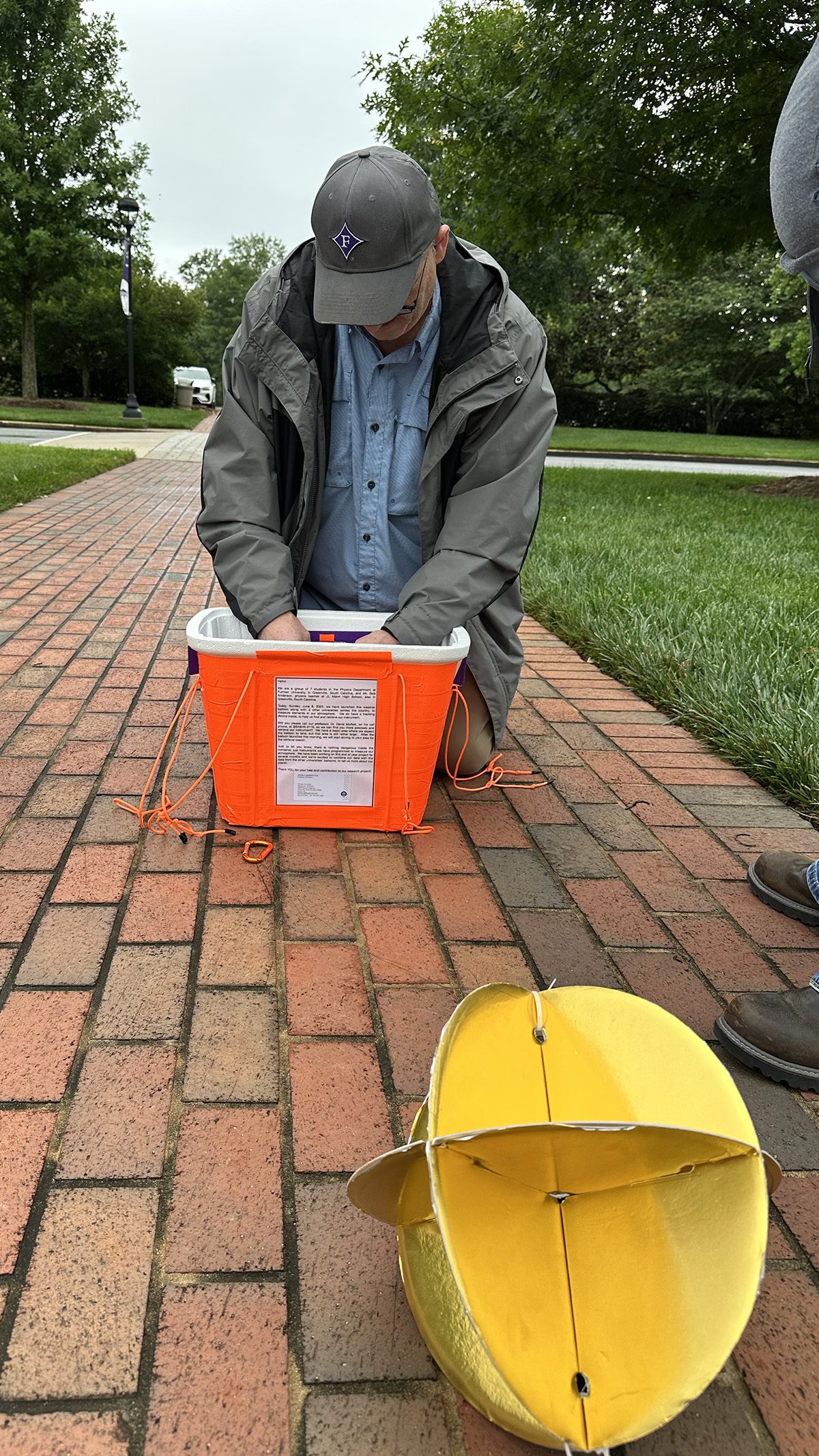
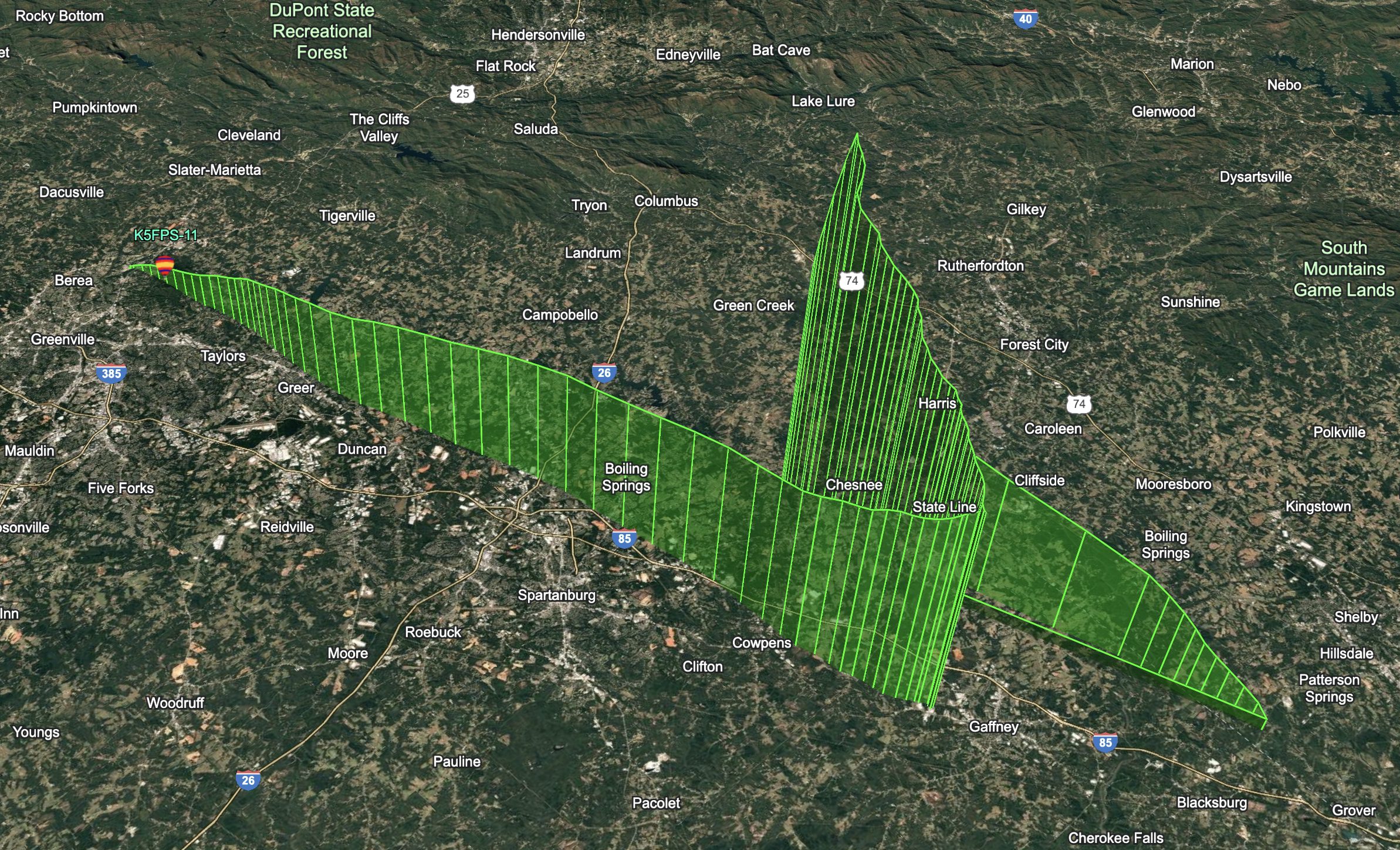
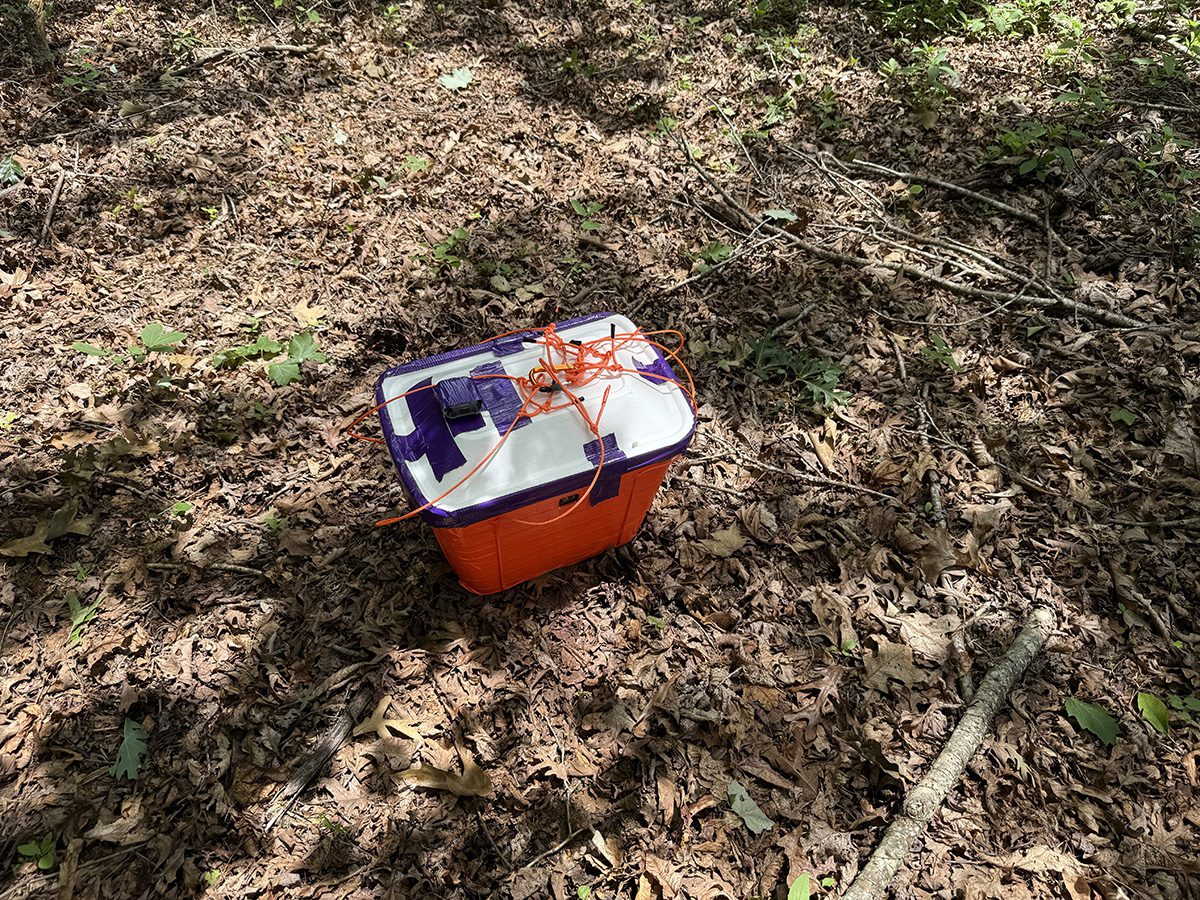
The balloon, inflated to the size of a Mini Cooper, rose steadily and floated eastward. It crossed Interstate 85 North, and before it got to Gaffney, about 50 miles from campus, it zigzagged, crossing back over the highway, climbed to a height of 107,000 feet, and then popped. Its payload, a bright orange ice chest holding a Geiger counter, a camera, a GPS tracker and other instruments, glided eastward on a parachute about 20 miles and touched down near Grover, North Carolina.
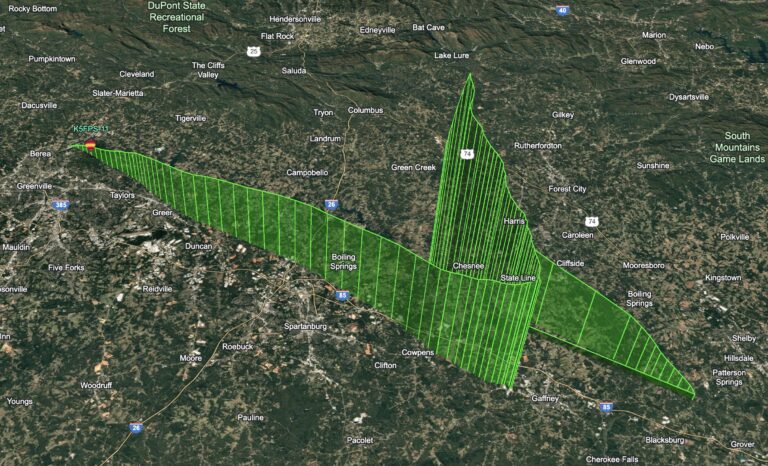
The balloon drifted eastward and climbed to 107,000 feet before it popped.
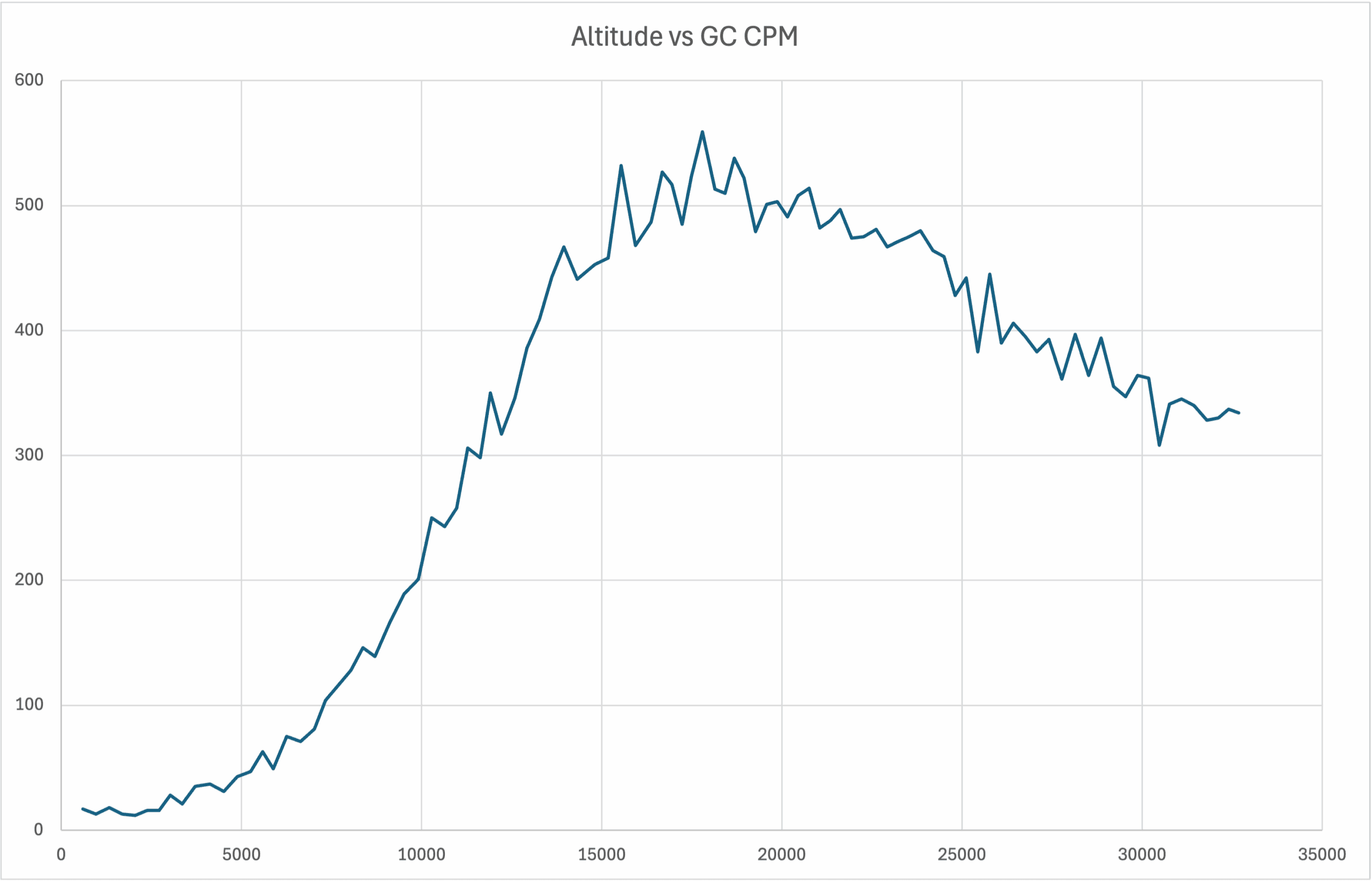
The maximum flux of muons occurred at about 59,000 feet above sea level, Moffett said.
The recent launch was the second, with several more to come from the consortium of universities, Moffett said. They worked out some kinks this time, including sending a backup Geiger counter in case the primary instrument failed, like it did in the first launch. This balloon also carried a GoPro camera to capture video of the flight.
“The temperatures dropped below -45 Celsius (-49 F) and sapped the camera’s battery, so we have great footage of the launch, all the way up to 80,000 feet, where you can see the atmosphere-to-space boundary,” Moffett said. The next trip will have a backup battery.
On its descent, the payload separated from the parachute. The payload survived the fall, but the parachute and radio transponder were lost somewhere in North Carolina.
The next balloon launch will be around Oct. 25, Moffett said. “The experiment will likely expand to include detectors for measuring the Earth’s magnetic field, atmospheric pressure, temperature, among other observables,” he said.