For alumni and friends
of the university
of the university
A Wealth of Well-Being
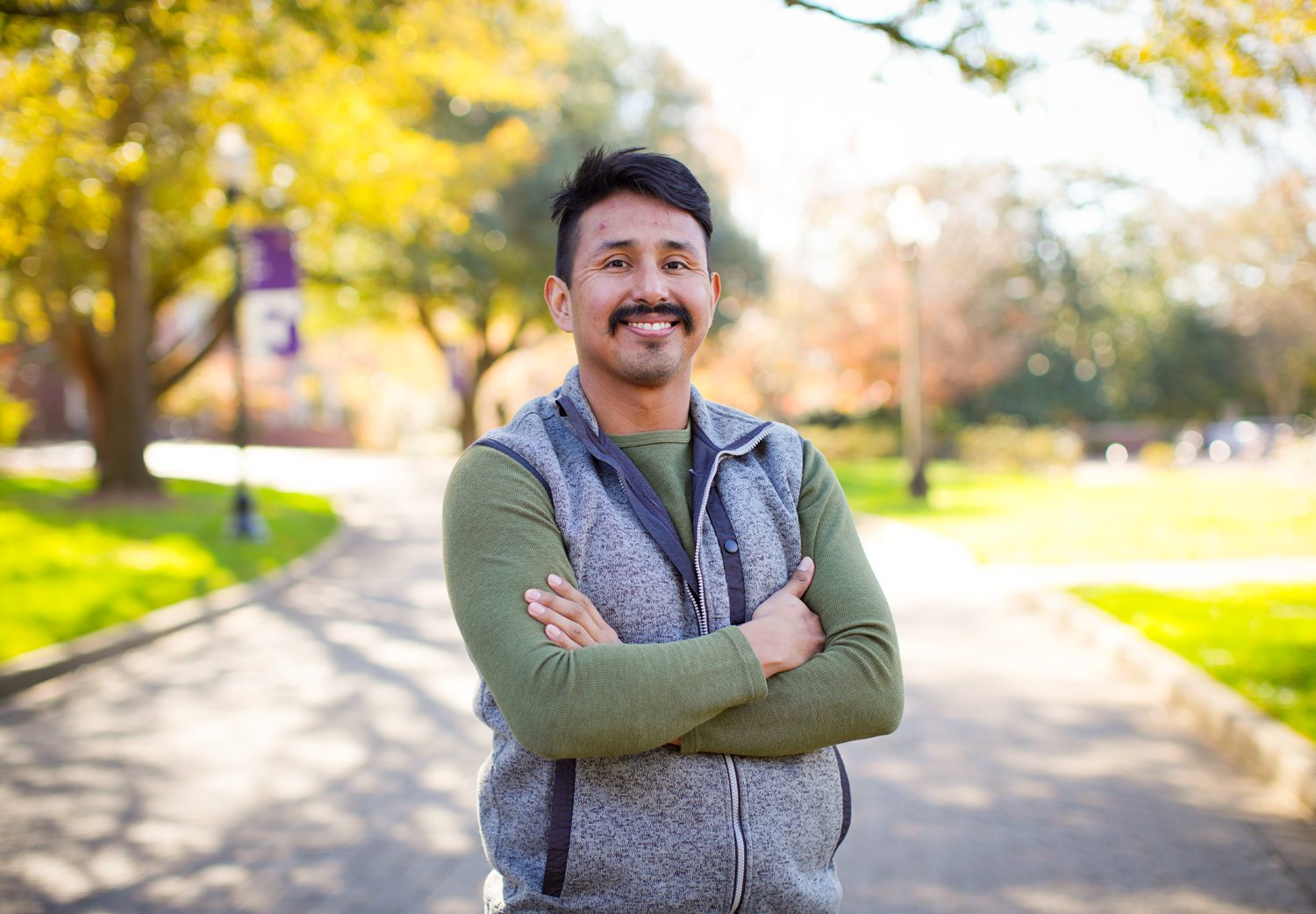
Jose Morales-Martinez ’18 pictured here at Furman University’s campus, works at Berea High School mentoring hispanic students. Photo by Nathan Gray, Furman University
Jose Morales-Martinez ’18 starts the day with two cups of coffee and spends as little time as possible in his office at Berea High School.
As site coordinator for Communities in Schools, he’s at the door when students are streaming in. “How was the weekend?” he asks. “How was your birthday? How was your quinceañera? How are you doing?”
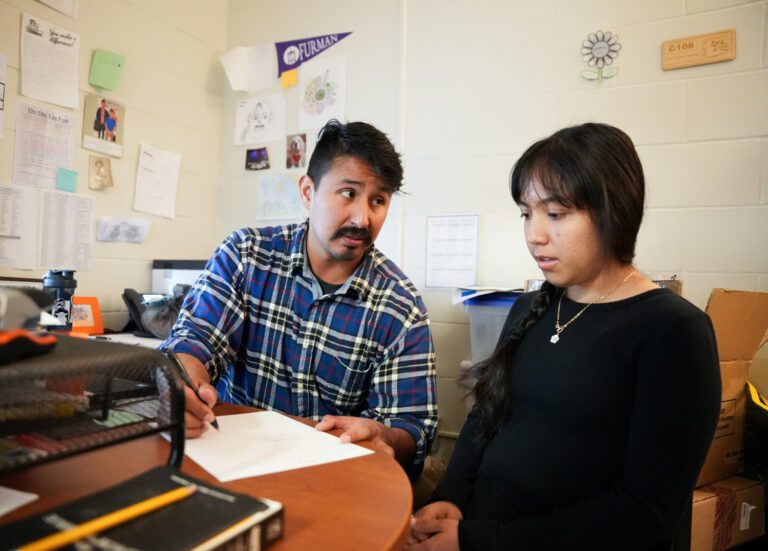
Jose Morales-Martinez ’18, talks with Stacey Reyes, a senior at Berea High School, about her college application process at the school on Monday, Dec 9, 2024. Photo by Nathan Gray, Furman University
When he needs to meet with students, he tries to catch them between classes, walking alongside while offering both encouragement and course corrections.
“I’m speaking highly about you, but the teacher sees otherwise,” he might tell someone.
After school, he’s busy coaching girls’ varsity soccer – and brainstorming ways all of the high school’s athletes could mentor younger students at the elementary and middle schools that feed into Berea High.
“It fills my cup when I can see other people advocating for themselves, learning the skills and then sharing them with other people,” Morales-Martinez says. “I’ve been gifted a pretty wonderful life.”
He’s not asking something of these students that he didn’t do himself.
Morales-Martinez was born in Mexico City and was 4 years old when his family crossed the desert into the United States.
“I remember the coyote telling us to be careful, be quiet,” he says. He also remembers subsequent years living in fear.
Two programs were pivotal for him: Deferred Action for Childhood Arrivals, or DACA, a federal program that gave Morales-Martinez temporary legal status; and Bridges to a Brighter Future, a Furman program that helps high school students with both significant promise and significant obstacles make their way to and through college.
“For me, I carry that like a badge of honor,” he says. “It made me become brave, strong-minded. It made me believe that I can be someone other people can look up to.”
His mom comes up frequently in conversation. She did what she could to improve life for her family – and she also told her children to get an education, so they’d be able to do more.
“When I got (to Furman), my whole mindset was that I wanted to help people out,” Morales-Martinez says.
His mom suggested he do that by being a doctor. But he was uninspired by his first biology class.
His personal workouts in the gym led him to the health sciences program. He took a May X course to learn about the work of a medical paralegal and broadened his understanding of advocacy. He took classes in psychology and sociology, poverty studies and public health.
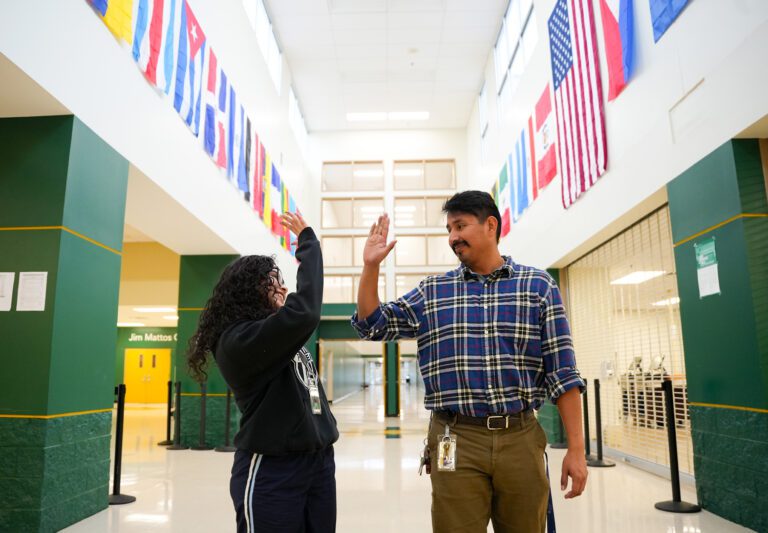
Jose Morales-Martinez ’18, high fives Leslie Peralta, a junior at Berea High School, while walking through the hallways of the school on Monday, December 9, 2024. Photo by Nathan Gray, Furman University
“How does our society develop us?” he wanted to know. “Everything can affect somebody’s well-being.”
Tony Caterisano, a professor of health sciences, taught Morales-Martinez and coached him in powerlifting.
“What impressed me about Jose was he was very altruistic,” Caterisano says. “He had a really great sense of community.”
Now, through Communities in Schools, Morales-Martinez operates at the intersection of social work and advocacy. His mission is the well-being of students, whether that means getting to the bottom of behavioral issues or chronic absences or academic struggles.
“Everything that I do, I think about the things that I studied, the things that my professors taught me at Furman,” he says.
And he’s encouraging the next generation to follow in his footsteps.
“Your path for college is not going to be easy … but also, fight for what you want,” he says.