News from campus and beyond
International Food Festival Serves Up Culture and Community
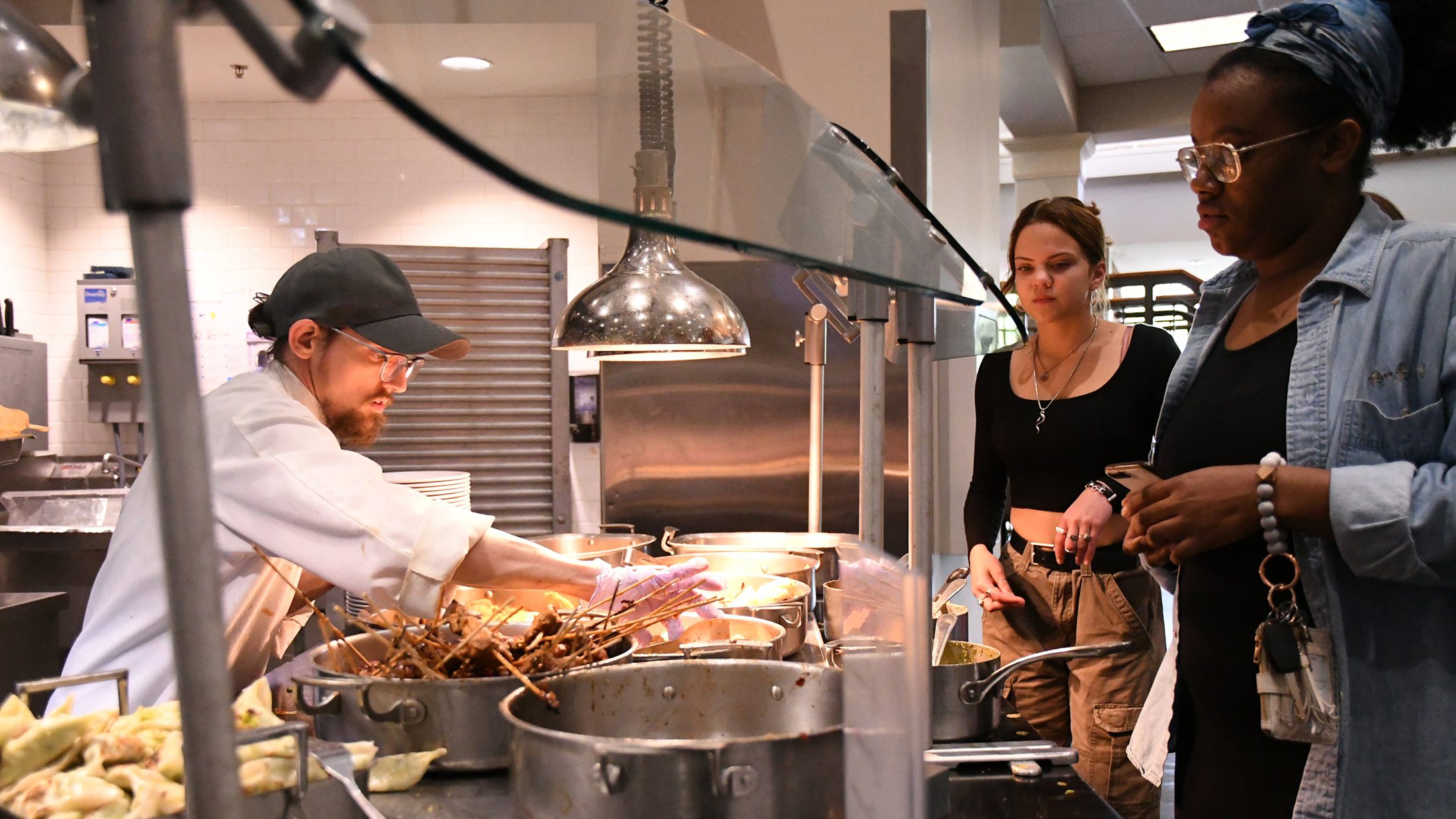
Foods from Peru, India, Kazakhstan and other countries make up the international food festival, hosted by Furman University International Students Association.
At Furman University, the International Food Festival has become more than a meal – it’s a campus tradition rooted in collaboration, culture and culinary creativity.
“This used to be a luncheon,” said Tony McGuirt, director of auxiliary services at Furman, recalling the festival’s modest beginnings in the Watkins Room of the Trone Student Center on campus. “They brought in food from local, international restaurants and it grew so large that people would wait in line and we would run out of food.”
Today, it’s a full-blown campus event that feeds more than 1,500 people and showcases dishes from 40 countries. Led by Bon Appetit Executive Chef Gustavo Sanchez-Salazar, the dining team works closely with student organizations like the Furman University International Student Association (FUISA) to bring authentic international recipes to life.
“We’re a scratch-made kitchen,” Sanchez-Salazar said. “You’re not seeing a lot of things from freezers or cans. We put our heart into the dishes.”
The planning for the International Food Festival begins weeks in advance. DD Nayreau ’25, member of FUISA, coordinates with Alex Akulli, associate director of international student engagement, to gather a list of countries represented by Furman’s international students.
“We work with the dining staff to make the whole thing a success,” said Nayreau. “We advertise it, decorate the dining hall with flags and put together an international playlist for the day.”
The students also submit recipes – some handed down from generation to generation – which the chefs do their best to recreate with local and specialty-sourced ingredients. Sanchez-Salazar noted the challenge of finding certain spices and ingredients in Greenville: “I have to order some of them from overseas. I remember searching for a specific rice one year and finally found it on Amazon and had it shipped from another country,” he said.
Nayreau fondly remembers past hits like dumplings, tamales, tres leches cake, and horchata. “It’s really meaningful,” she said. “Students come up to us after and tell us how much they enjoyed a dish – it tastes like home.”
For McGuirt, the biggest win is the joy it sparks across campus. “It’s a learning experience. Students who aren’t even from those cultures are trying new things and coming back asking for more.”
As much as the food fuels the event, the festival’s true strength lies in its ability to connect.
“It bridges gaps,” said David McMillan, director of operations for Bon Appetit. “It’s a celebration of identity, of discovery – and most of all, it brings everyone to the table.”
The Furman University International Food Festival will take place from on Friday, April 11, from 11 a.m.-2 p.m. in the Daniel Dining Hall. It is a part of the larger Furman Engaged activities taking place that day throughout campus.
Furman International Food Festival Menu
Aqua Fresca
Tangawisi drink (Congo)
Horchata (Mexico, North Africa, Spain, Portugal)
Chicha Morada (Peru)
Butter & Sugar
Enrollado – sweet cream horns (Venezuela)
Honey beignets (France)
Alfajores – dulce de leche cookies (Argentina, Peru)
Sticky toffee pudding with raspberry and caramel sauce (United Kingdom)
Greens & More
Venezuelan-style chicken salad (Venezuela)
Kartoffelsalat potato salad (Germany)
Kachumbari Salsa (Tanzania)
Cheese and Watermelon Salad (Cyprus)
Soups
Vegan okra soup (Nigeria)
Lagman soup (Kazakhstan)
Sancocho Dominicano (Dominican Republic)
Grate & Griddle
Arepas con queso served with Guasacaca sauce (Venezuela)
Empanada with salsa picante and lime wedges (Mexico, Chile)
Vegan tamales with salsa criolla (Mexico, Latin America)
Tostones with hogao (Colombia)
Croquettas (Spain, France)
Global Market
Pork, vegetable medley (red peppers, green onions, green cabbage, yellow onions, shredded carrots) or crispy tofu Yakisoba noodles stir-fried (Japan)
Gyoza or dumpling (Japan, China)
Kitchen Table
Jerk bone-in chicken (Cayman Island)
Gallo pinto – rice and beans (Cayman Island, Costa Rica)
Gomen collard greens (Ethiopia)
Nepali Aloo-Gobi (Nepal)
Plant & Pasture
Mapo Tofu (China)
Beef Mishkaki (Tanzania)
Near & Far
Aji de Gallina (Peru)
Steamed white rice with Peruvian corn (Peru)
Aloo Matar Ki Sabzi – curry potatoes and peas (Pakistan)
Roasted asparagus with shallots and white balsamic vinegar (France)
Root & Stem
Handi portobello mushroom (Pakistan)
Haitian Legume (Haiti)
Waakye rice and beans (Ghana)
Garlicky oven-roasted broccoli and cauliflower
Roasted sweet plantains (Ecuador, Colombian, Peru, Bolivia, Nigeria, Uganda, Cuba, Brazil, Egypt)
Stone & Sauce
Pierogis or Vareniki (Russia, Ukraine)