News from campus and beyond
Furman library presents ‘Medieval Manuscripts’ exhibition

Furman’s collection of medieval manuscripts is currently on display in Special Collections of the James B. Duke Library.
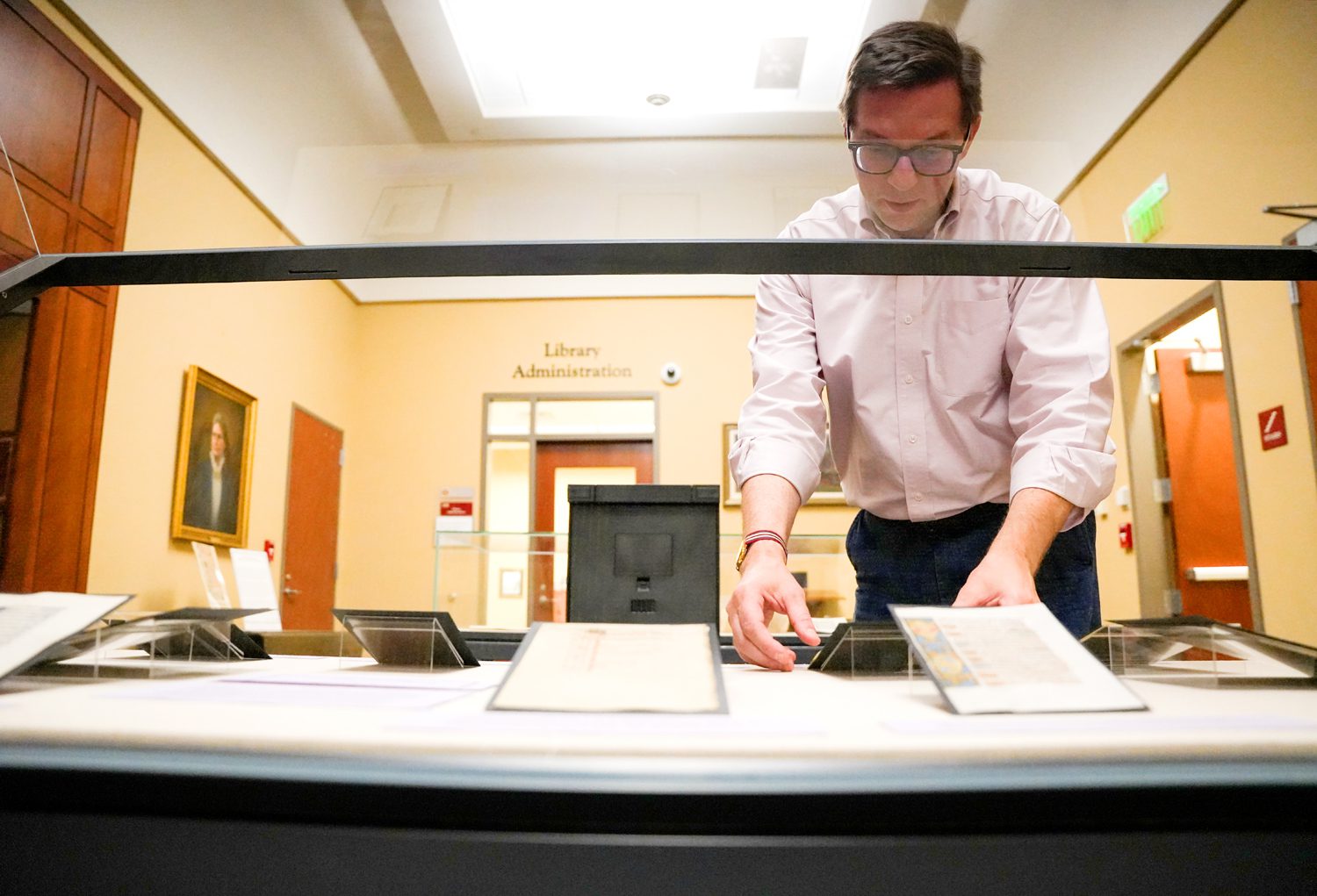
A new exhibition at Furman University Libraries opens a window to the thoughts and actions of people in Western Europe during the Middle Ages. “Medieval Manuscripts: Treasures from Furman’s Collections,” is open to the public in Special Collections and Archives in the James B. Duke Library through Tuesday, Dec. 17.
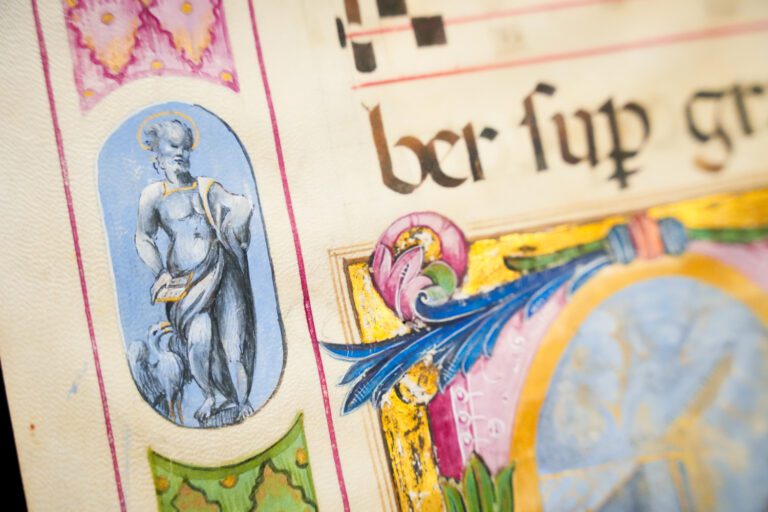
Furman’s collection of medieval manuscripts dates back to 1150.
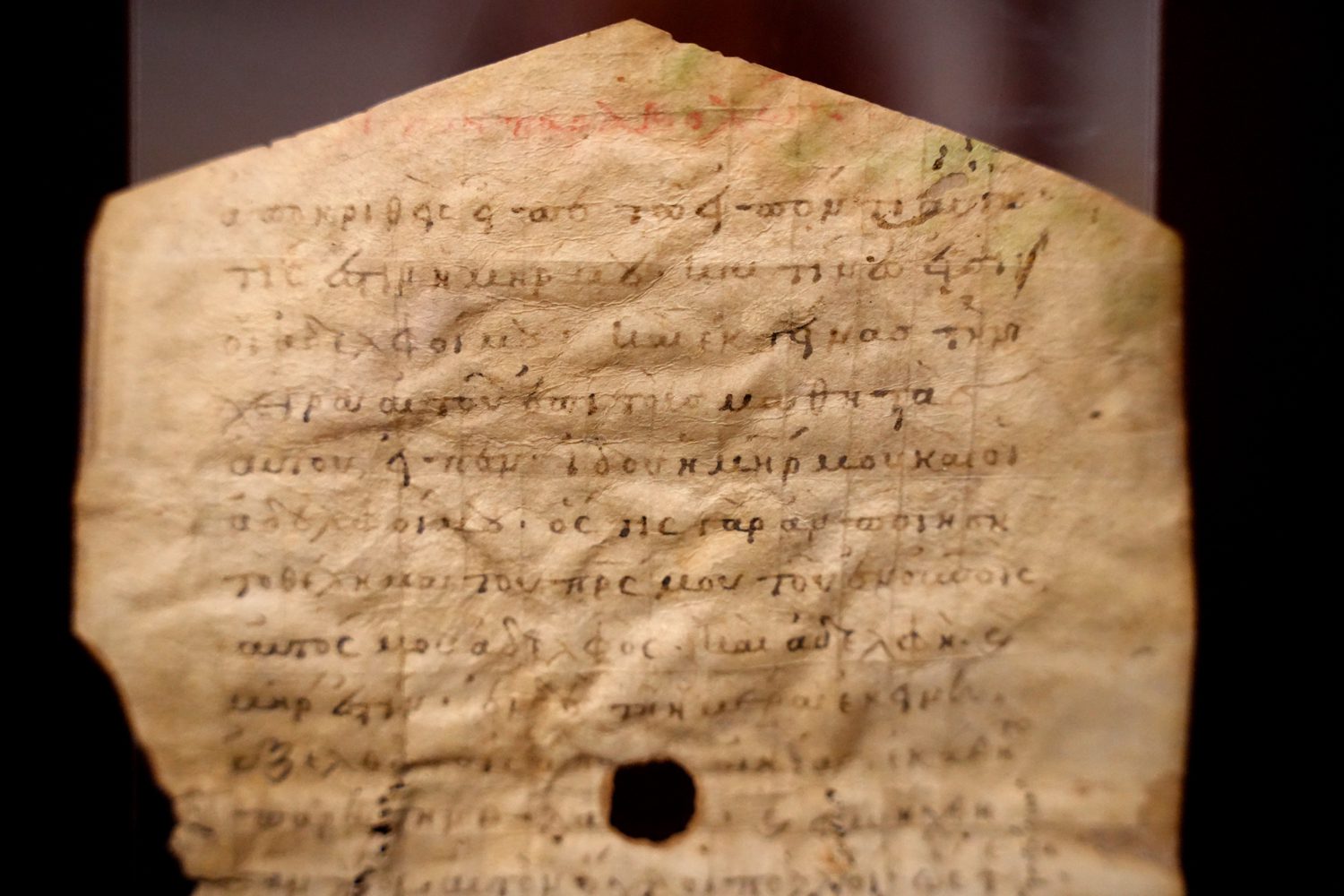
Furman’s collection, the second largest in the state, numbers more than 65 hand-crafted leaves and documents dating back to the year 1150.
Jeffrey Makala, associate director for Special Collections and university archivist, said early manuscripts written on treated animal skin (vellum or parchment) tell us much about civilizations.
“Documents like these are the most readily available evidence we have of medieval Europeans’ lives and thoughts and work,” he said. “There are textiles that have survived and stone buildings, but it’s really through manuscript culture that we learn the most about the late medieval world.”
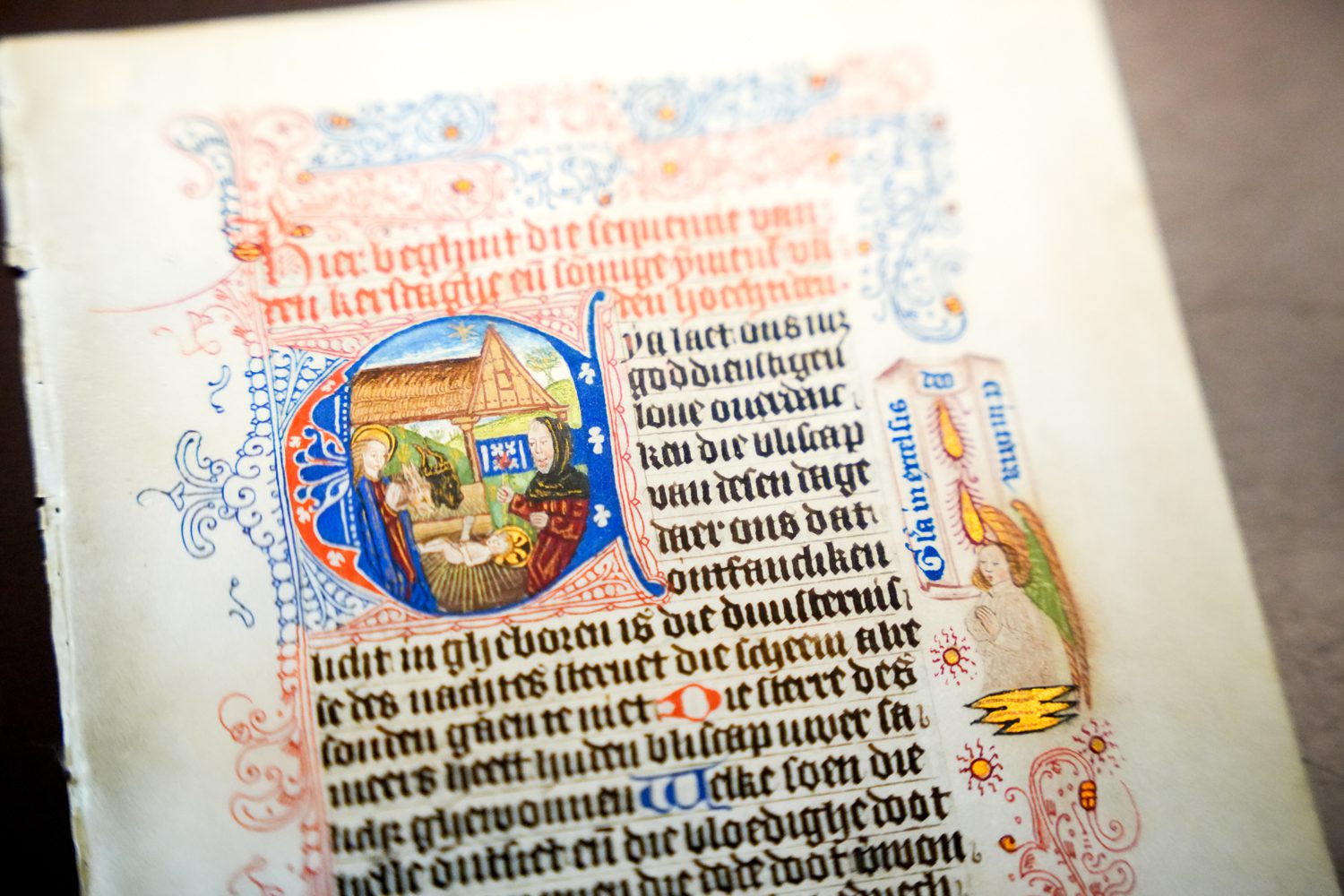
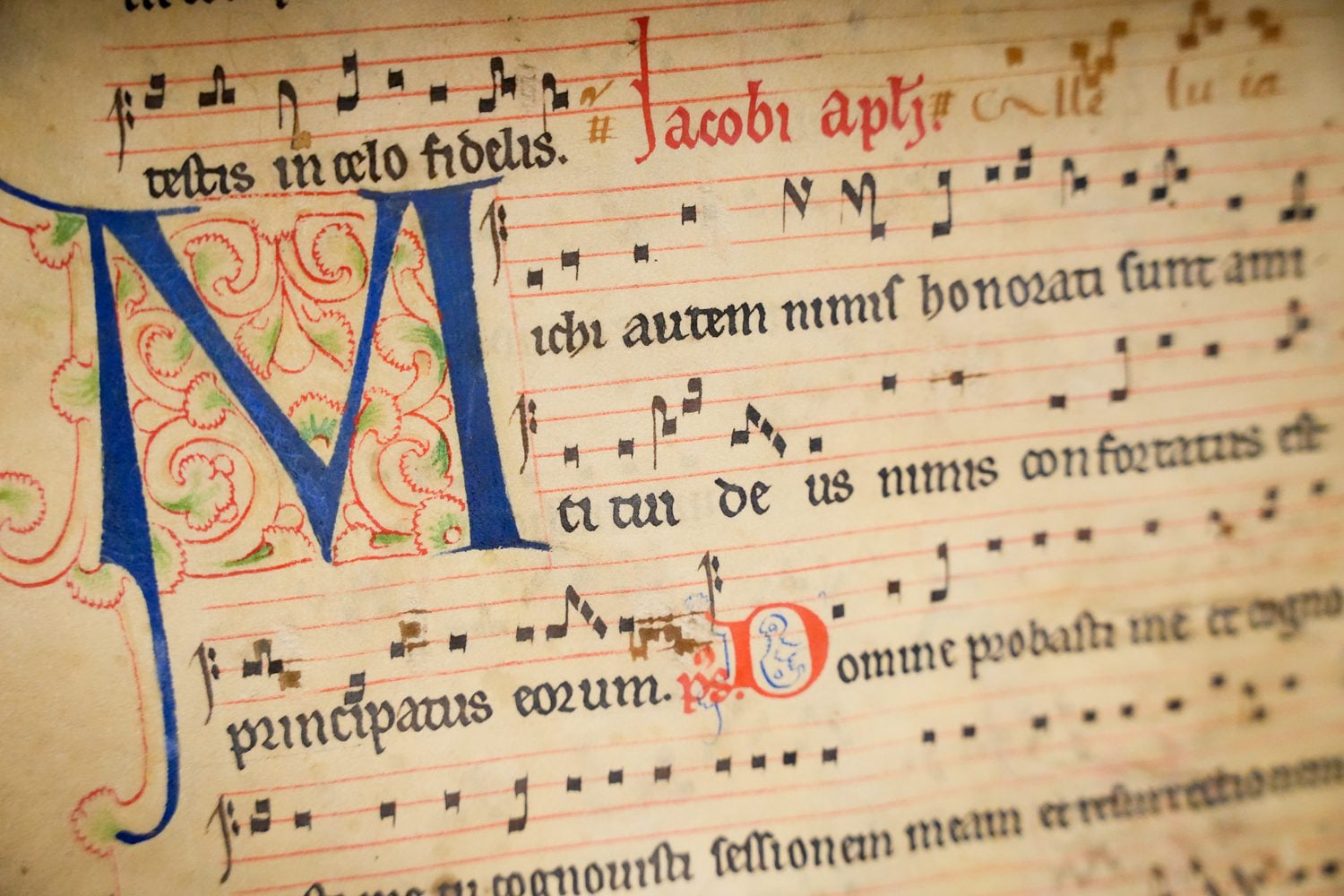
Also known as “illuminated manuscripts” for the use of precious metals and bright colors in their production, the trove is visually striking, Makala said. A leaf from an example of a Book of Hours, a prayer book, shows an uppercase D with a diminutive depiction of a Nativity scene. “It’s as big as your thumbnail, but it has gold and all this wonderful detail – the gold shines, it just pops,” he said.
Like other holdings in Special Collections, the manuscripts are part of Furman’s teaching collection. When they aren’t on display, they are used in classes, such as art history and classics. And Makala intends to weave the collection into his OLLI@Furman class, “Six Centuries of the Book.”
Timothy Fehler, professor of history, plans to tap the historical assets. “The manuscripts in addition to Special Collections’ early printed books and newspapers are such a rich resource for our students,” he said. “Having this public exhibition of Furman’s growing collection of medieval documents is an exciting addition to our inaugural semester of the Medieval and Early Modern Studies minor.”
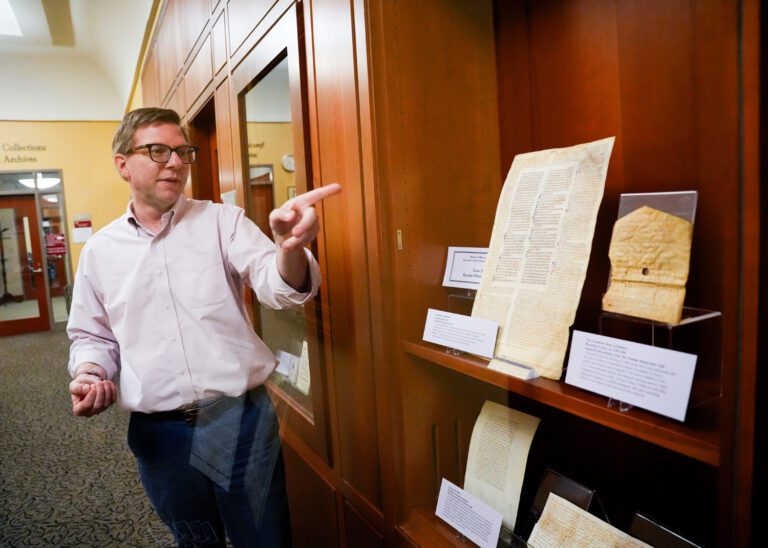
Jeffrey Makala, associate director of the Library for Special Collections and University Archivist, talks about exhibits that are part of the medieval manuscript collection.
For Makala, the documents represent a source of pride. But don’t ask him to identify a favorite piece in Furman’s collection. “I can’t choose,” he said. “It’s always the newest thing that comes across my desk.”
Makala’s excited to offer Furman and the larger community a glimpse into the lives of people who lived roughly 600 to 900 years ago.
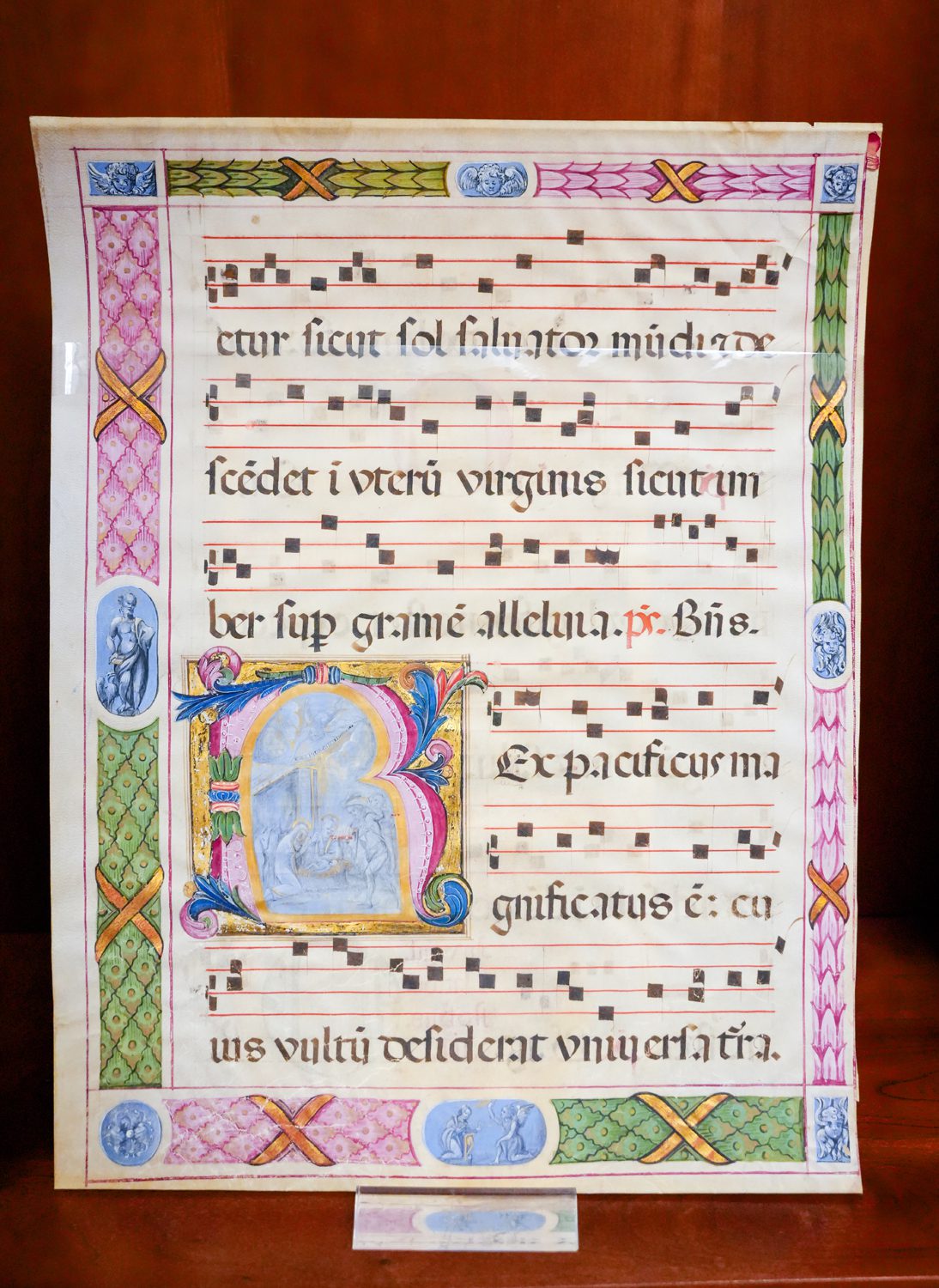
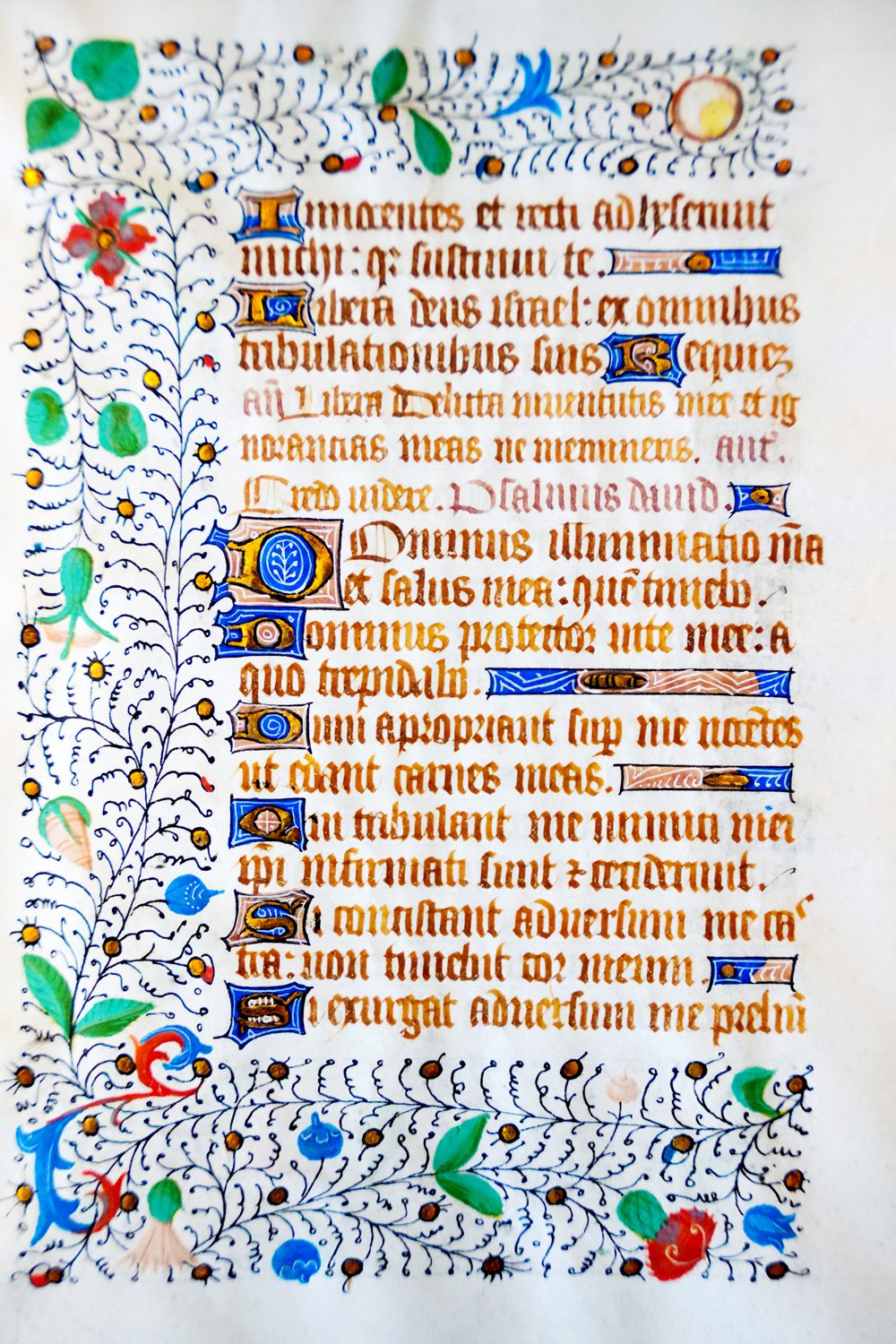
“When you see the whole tableau of Western Europe laid out before you, it’s really impressive,” he said. “There’s a case full of leaves from variants of the Book of Hours, the bestseller of the Middle Ages. You can basically move from Spain to France to the Low Countries to Italy looking at different design styles and various approaches to creating these handwritten documents that are unique to a particular place in a particular time.
“The collection is rich in diverse genres, places and time periods. So there’s enough there that we can really do some comparative work with them. That’s what’s really nice.”
Special Collections and Archives is open 8 a.m. to 5 p.m., Monday through Friday, or by appointment. Contact Special Collections for more information, 864-294-2297.