News from campus and beyond
Furman earns top sustainability ranking
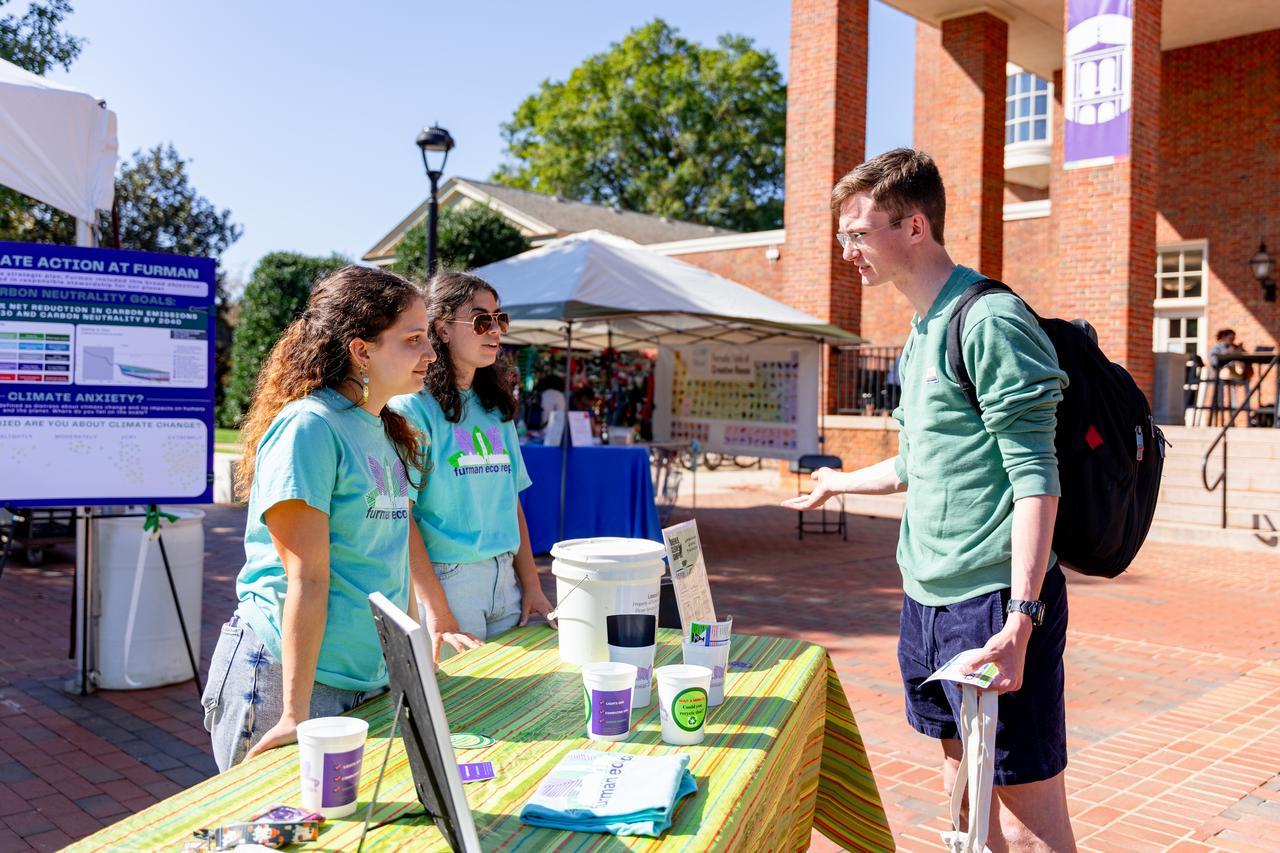
Furman Eco Reps Nabila Wilson ’27 and Nina Mahintorabi ’27 were featured in a photo in the 2025 Sustainable Campus Index as an example of Furman University’s commitment to campus engagement with sustainability practices. Photo by Owen Withycombe, Furman University.
Furman University’s sustainability initiatives earned it the top spot among all baccalaureate institutions in the 2025 Sustainable Campus Index, produced by the Association for the Advancement of Sustainability in Higher Education (AASHE).
Each year, AASHE uses the Sustainability Tracking, Assessment and Rating System data platform to rank institutions through its Sustainable Campus Index. These reports and data are publicly available, and are used for other key higher-education rankings.
Furman was placed at the No. 1 spot for top performers among baccalaureate institutions, ahead of Amherst College in Massachusetts and Agnes Scott College in Decatur, Georgia, each of which submitted reports under the most recent version of the ranking system. Furman was also ranked No. 2 among all institutions, including doctoral and masters institutions, for campus engagement. Furman was edged out of the top spot in a tiebreaker by Technological University Dublin in Ireland, but beat out the University of California, Berkeley.

Students paint reusable tote bags during an Eco Fest event in October 2024 promoting sustainable practices. Photo by Owen Withycombe, Furman University.
“Sustainability has been a focus at Furman for over 15 years,” said Laura Bain ’02, associate director of sustainability assessment at Furman’s Shi Institute for Sustainable Communities. “We’ve made steady progress due to the tireless efforts of our outstanding faculty, our committed facilities services team and the unique programming and research at the Shi Institute for Sustainable Communities that places students at the forefront of action.”
The 2025 SCI report section on campus engagement features a photo of student Eco Reps Nabila Wilson ’27 from Houston, Texas and Nina Mahintorabi ’27 from Memphis, Tennessee speaking with another student at the Eco Fest event in October 2024.
Among the criteria institutions are graded on, Furman performs exceptionally well in engagement and academics. The university supports a sustainability-based curriculum through its bachelor’s program in Sustainability Science, undergraduate research opportunities and fellowships through the Shi Institute for Sustainable Communities.
There’s always room for improvement, Bain said, and reviewing the STARS report she noted growth opportunities in energy efficiency, purchasing, transportation and long-term planning.
“Through this effort, our students will get hands-on experience in the messiness, perseverance and joy inherent to sustainability work, building skills that will serve them well in any discipline,” she said.