News from campus and beyond
Furman’s climate resilience work helps coastal communities
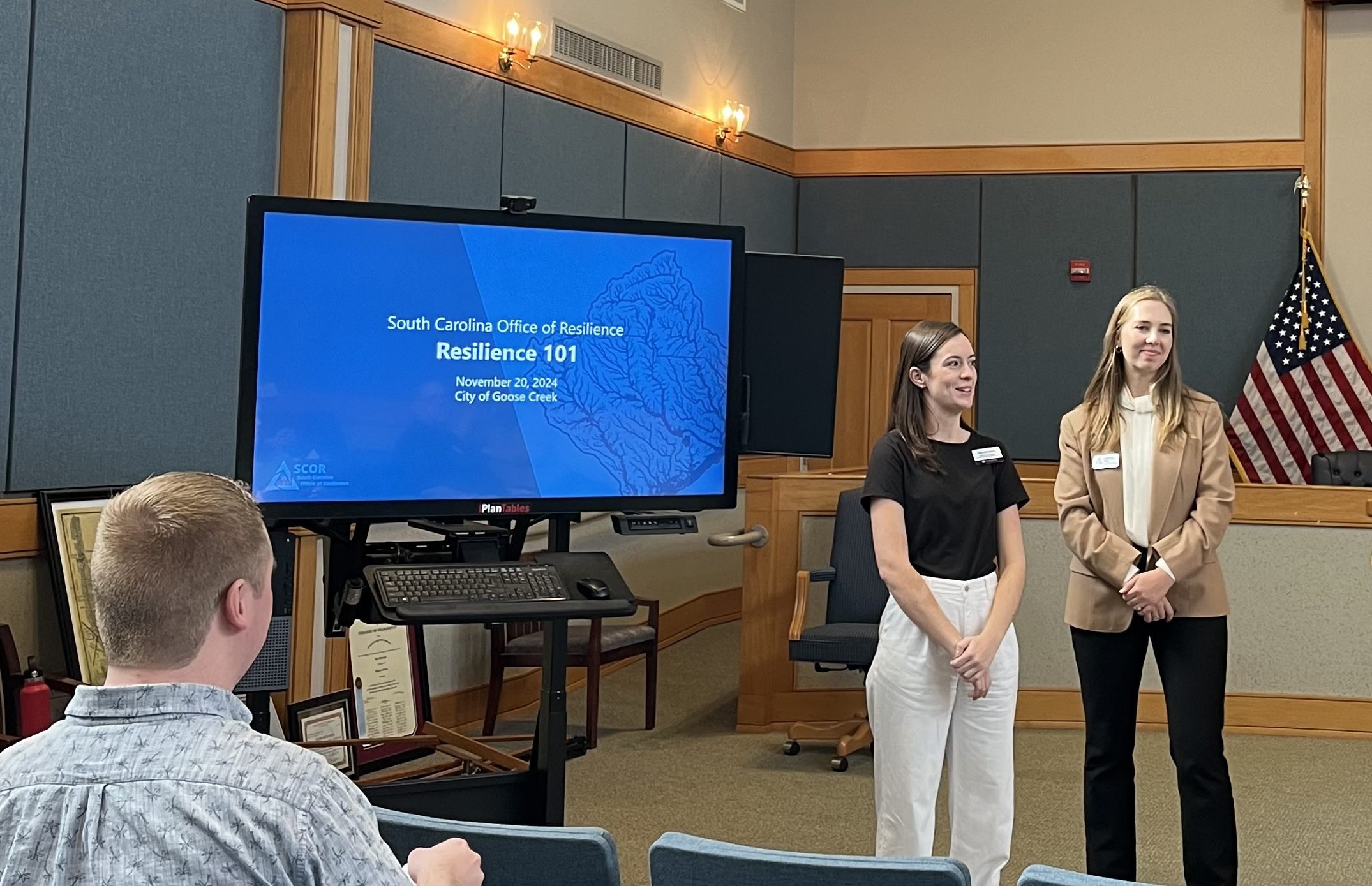
Shi Institute Climate Reslience Manager Adelaide Bates, left, hosted a resilience training session for the city employees of Goose Creek alongside S.C. Office of Resilience Santee Watershed Coordinator Catherine Min ’20.
When Hurricane Helene struck the southeast, millions were caught unprepared for the resulting flooding and wind damage. A staff member and a student with Furman University’s Shi Institute for Sustainable Communities are working across South Carolina to make areas more resilient to the impacts of natural disasters and climate change.
“Helene was a reminder that climate resilience is an important part of thriving communities,” said Shi Institute Executive Director Andrew Predmore.
From her office in Charleston, Adelaide Bates works with communities in the Lowcountry and the PeeDee regions to prepare for and reduce the effects of natural disasters in areas the Federal Emergency Management Agency has identified as “Community Disaster Resilience Zones,” areas with distinct social vulnerabilities and natural hazard risks.
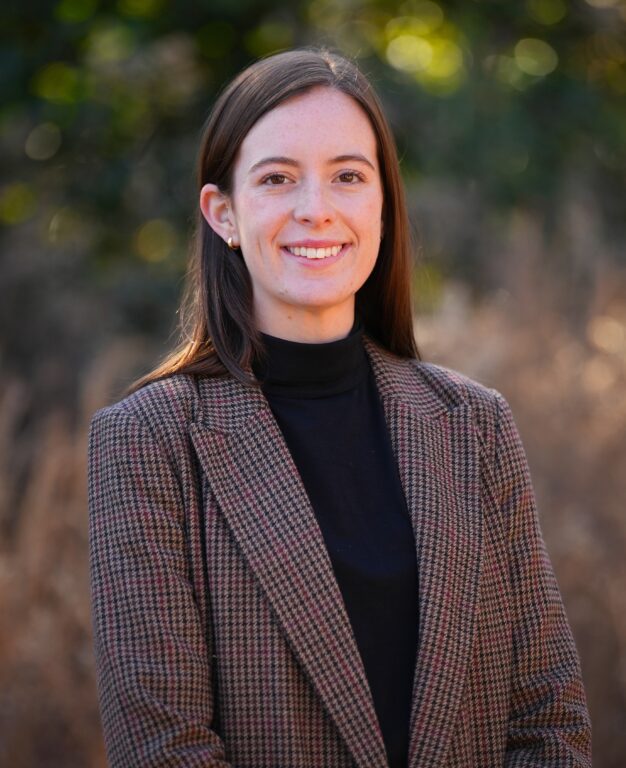
Adelaide Bates was hired in 2024 as the Shi Institute’s climate resilience manager, partnering with community leaders in some of the state’s most-threatened areas based on social vulnerability and natural hazard risks.
“Communities that get this designation are prioritized for financial and technical assistance,” said Bates, the Shi Institute’s climate resilience manager.
She’s helped Beaufort County secure funding through the National Coastal Resilience Fund to explore building living shorelines that provide a habitat for oysters while blocking erosion. She helped Beaufort County launch a regional resilience working group, and the Shi Institute hosted a resilience accelerator workshop there. In Summerville, she identified funding opportunities to make parks more energy efficient and provide more shade for parkgoers. Bates co-hosted a training with the South Carolina Office of Resilience for Summerville and Goose Creek city employees on climate resilience, and provided other support services such as helping organize a resilience workshop.
Back on Furman’s campus, Aubin Vertueux Dzossa Bontse ’27, a Shi Institute climate fellow, is helping these areas understand how social and environmental hazards affect their communities. He’s been the Shi Institute’s climate resilience fellow since the summer of 2024.
“One of my goals is to help the applied research team that Adelaide is part of,” he said.
While Bates works directly with communities, Bontse applies his data analytics minor from the campus in Greenville by using satellite and census data for coastal communities in South Carolina to help draft plans that will guide climate resilience policy decisions for years to come. He researched and designed a score card the town of Bluffton can use to assess the quality of its existing climate plans and help identify their most-effective approaches.
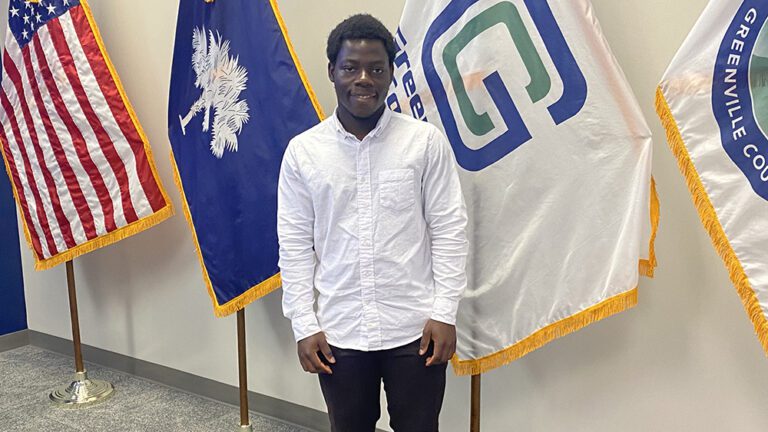
Aubin Verteux Dzossa Bontse was the summer 2024 Shi Institute Climate Resilience Fellow, working with the institute’s applied research team. Photo provided.
As an international student from Cameroon, Dzossa Bontse has seen how climate change has exacerbated drought conditions in the Central African nation.
“Coming from an underrepresented community myself, I liked the idea of helping these vulnerable communities prepare for future disasters,” he said. “I love being able to find that sense of fulfillment helping these municipalities direct their resources in a way that will make an impact.”