All Blog Posts
The Portfolio Difference: How Furman’s MASD Program Prepares Designers to Stand Out
Grace Van Rij remembers the moment she first heard about the Master of Arts in Strategic Design (MASD). The program first caught her eye during her undergraduate years at Furman. Even without an art background, she immediately knew it was the right fit.
Anne Heaton Sanders knew from an early age that she loved art and wanted to pursue it. During her undergraduate years at Furman, she worked in the art department. Anne Heaton created marketing materials for both the department and the MASD program, an experience that sparked her passion for graphic design.
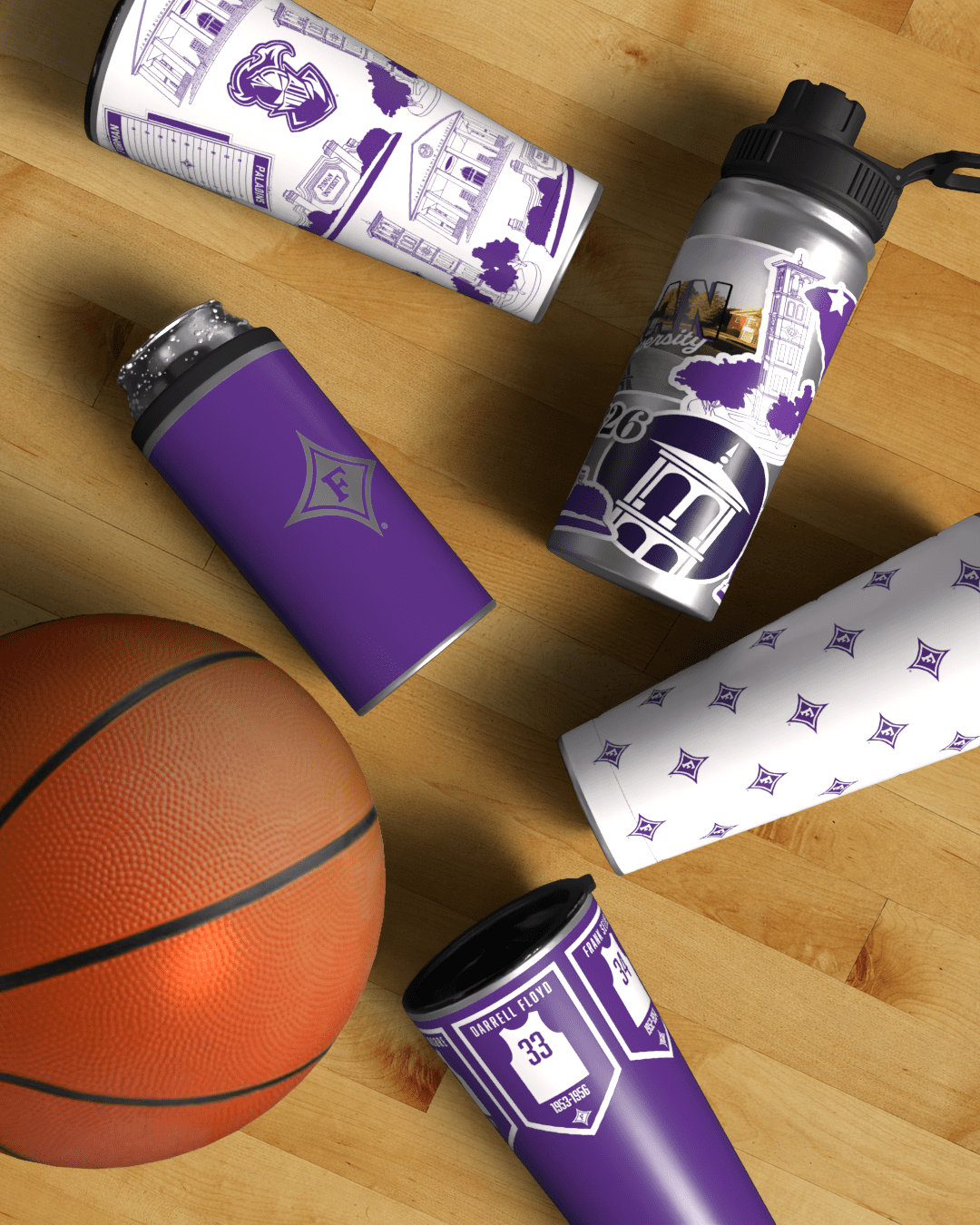
Today, the two are working together at Stache Cups, a Greenville-based company that designs and makes personalized cups. Grace serves as creative director and Anne Heaton recently joined as senior graphic designer. Both graduated from Furman’s MASD program in 2024.
Their paths to Stache Cups reflect the kind of connections the program cultivates. Grace credits Emily Price, lecturer in the MASD program, with helping her land her role. Though the two never discussed Grace’s career goals directly, Emily knew her well enough to recognize a good fit when she saw one. When an opening arose at Stache Cups, Emily made the introduction. Grace, in turn, knew exactly who to call when a senior graphic designer position opened. She recommended her fellow MASD graduate, Anne Heaton.
A Program Built on Passion

Grace Van Rij
Several aspects of the MASD program set it apart. Professors and mentors brought genuine enthusiasm to the coursework, and students were encouraged to pursue projects rooted in their own interests. Tiffany Williams, lecturer in the MASD program, gave students the freedom to dive deep into what they cared about. MASD Director Marta Lanier went a step further, helping Anne Heaton find a graduate assistantship to help fund her degree.
That student-centered approach shaped the kind of work Grace and Anne Heaton produced. Favorite projects included branding concepts for a family reunion and a project focused on the Olympics. Anne Heaton also created a promotional video for the Swamp Rabbit Trail, while Grace developed graphics for the Furman Innovation Lab at Flywheel coworking space. These weren’t just class assignments. They were opportunities to tell meaningful, research-driven stories that became the foundation of their own narratives.
The Portfolio Difference
When it came time to enter the job market, both women had something that set them apart: a portfolio built from two years of passion projects. Those portfolios didn’t just showcase technical skills. They told a story about who they were as designers and their ability to think creatively.

Anne Heaton Sanders
Anne Heaton still considers how to keep her portfolio fresh and updated. The guidance she and Grace received from Marta and their mentors on what to include and how to present it is a skill they continue to rely on today.
“There is an art to putting together the portfolio that I think is ingrained within us in the way that you tell the story,” Anne Heaton said.
For Grace, the portfolio represented something more personal. Coming into the program without a graphic design background, she could look at her finished work and see exactly how far she had come. When she interviewed at Stache Cups, her boss told her he had never seen a portfolio like hers.
The difference became even clearer once Grace found herself on the other side of the hiring process. Reviewing candidates’ materials, she noticed that some arrived without a portfolio while others brought only limited examples of their work. The contrast made the value of the MASD program’s mentorship and its emphasis on building a thoughtful, complete portfolio impossible to miss.
Skills That Transferred

Beyond the portfolio, both women came away from the program with skills they use every day. For Anne Heaton, one unexpected discovery was a love of research and strategy. Since she came from an art background, she never considered herself a copywriter until a project on verbal branding changed her perspective. Learning to develop the words and concepts that define a brand before ever choosing a color or shape ignited something new in her. She also came to understand the lasting value of networking and building genuine professional relationships.
Grace found that the program refined her time management skills in ways that translate directly to her current role. Working through semester-long projects with structured milestones taught her how to pace herself and meet deadlines, which are essential in a product-driven industry. She also developed a stronger ability to communicate effectively with clients and collaborators during the design process.
“I learned so much in the master’s program because I didn’t have a background in any of that,” Grace said.
Those skills prepared both women for the variety of work that comes with being part of a small team. At Stache Cups, Anne Heaton and Grace handle everything from artwork requests and email marketing to project management and design. The MASD program gave them both the range and the confidence to move seamlessly across all of it.
More Than a Career Path
The MASD program didn’t just shape what they could do. It helped them determine what they wanted to do. Grace appreciated that professors offered candid, real-world guidance on salaries, job markets and what different career paths truly look like day to day.
“I just really appreciate that because it really opened my eyes to what I actually want,” Grace said.
Anne Heaton echoes that sense of being well-prepared. The program’s interdisciplinary approach and Furman’s liberal arts foundation gave her a breadth of perspective that has prepared her to grow within any role she takes on.
“Our grad degrees really do put us a big step ahead,” she said.
-

- Stache cups design example
-
- Grace portfolio example

-
- Anne Heaton portfolio example

-
- Stache cups design example
