
BY JEFFREY MAKALA, Ph.D.
Special Collections & Archives
_

_
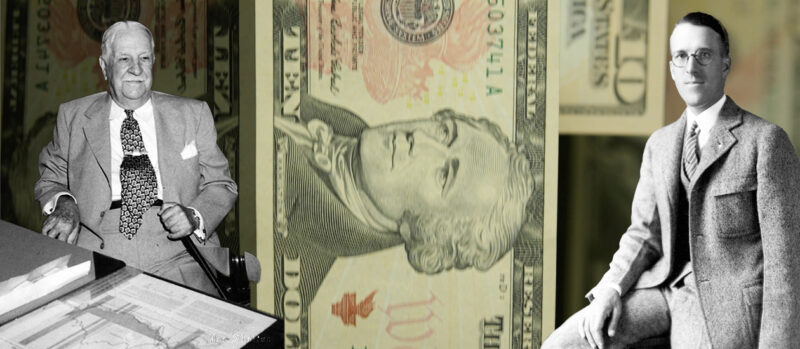
Alester Garden Furman, Sr. (1867-1962) formed a company to sell real estate and insurance in Greenville in 1888. Still in business today, The Furman Company works in commercial and residential real estate, insurance, and finance. In the early twentieth century, The Furman Company assisted Northern textile mill owners as they began looking for Southern sites to build new mills. By the middle of the twentieth century, Furman’s son, Alester Garden Furman, Jr. (1895-1980) and his grandson, Alester Garden Furman III (1918-2007) served as the primary real estate brokers for those same mills as they sold the mill village rental housing to their workers.
_
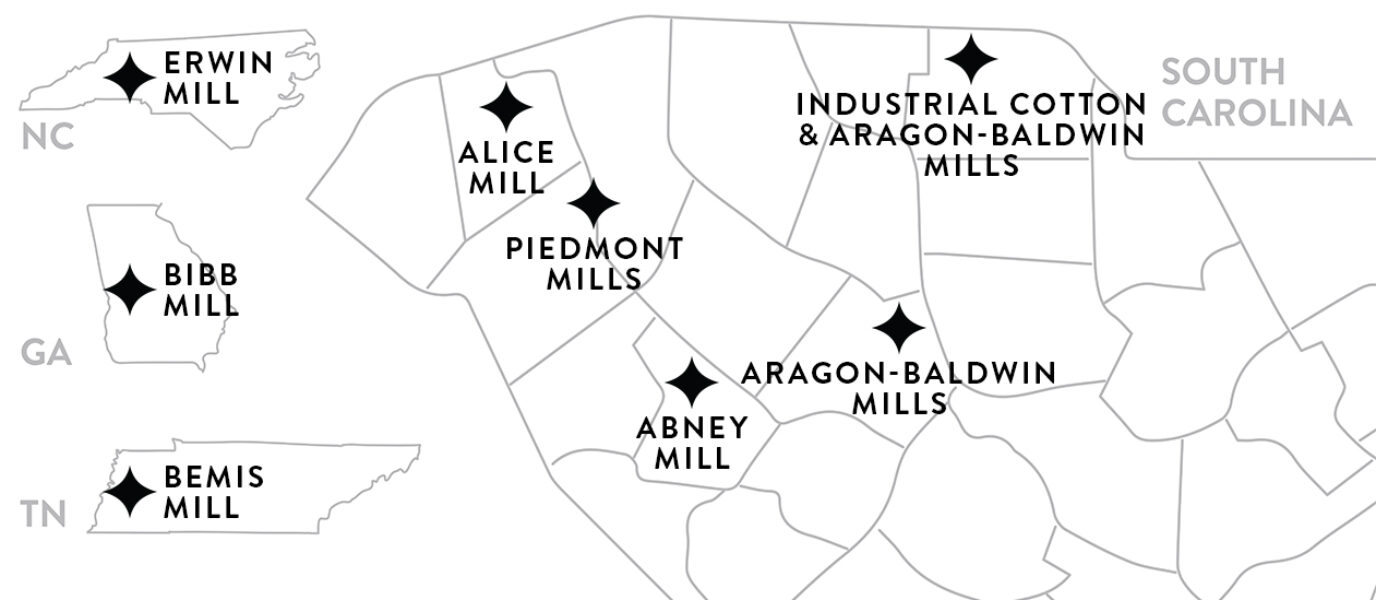
“Beginning in 1939 and continuing through the 1980s, The Furman Company brokered the sales of over 27,000 residential properties owned by textile mills in Alabama, Georgia, North Carolina, South Carolina, and Tennessee.”
In the immediate postwar years, these large-scale corporate commissions allowed The Furman Company to grow and flourish in significant ways and to further diversify its operations into finance, insurance, and mortgage banking.[1] The work that the Furmans performed for Northern textile mills allowed the company, the family, and also Furman University to grow and thrive in the twentieth century.
Alester Furman Sr., Jr., and III all served on the Furman University Board of Trustees. Alester Jr. and III also served as chairmen of the Board. Alester Sr. was the grandson of James C. Furman, the first president of the university. The Furman family, its corporation, and the university that bears their name in their hometown of Greenville all have deep interconnections.
_
“The growth and development of the city of Greenville is also directly connected with the growth and development of The Furman Company itself, the prosperity of its leadership, and Furman University.” [2]

Mill Village Residential Sales
_
Beginning in 1939, The Furman Company began working with textile mill owners to sell mill-owned village housing to textile workers. The company, as the licensed broker, assumed all responsibility for completing the total sales. They arranged for appraisals of each property and, on agreement with mill ownership, in most cases set sales prices below market value for the renters of each property.
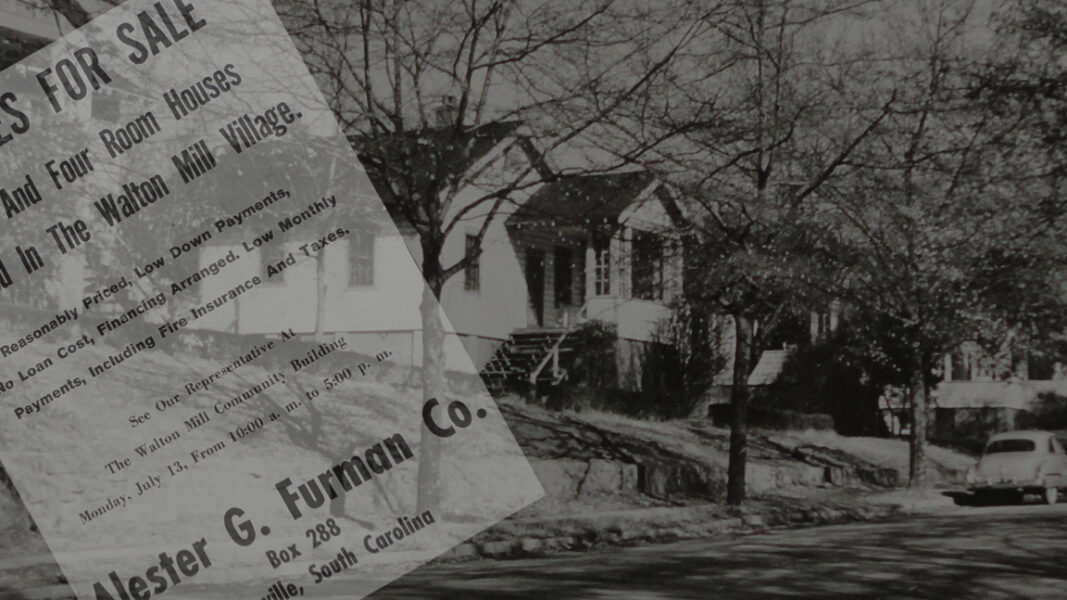
The Furman Company brokered with local financial institutions to offer mortgages with affordable down payments at rates tied to mill workers’ salaries so no one would be priced out of the house they already occupied. If a tenant chose not to purchase the house they rented, the property would then be offered to other company workers first before placing it on the market for a public sale. In many mills, workers were allowed to make weekly mortgage payments through payroll deduction.[3]
By 1954, when the sales were at their height, The Furman Company employed 5 full-time employees working on mill village sales, headed by Alester Furman, III. Each sales process took several months of work. The company would set up an office in the mill village to field workers’ questions and arrange for appraisals, necessary repairs, liaising with the local municipality, and seeing to any other utility or infrastructure work to prepare for the transfer of property. The process would then conclude with one or two days of closings, six or more per hour.[4]
_
“[T]he printed residential sale form created by The Furman Company for each mill contains a clause that states, ‘That the premises shall not be sold, leased or released to any negro or person of negro blood’…”

Racially-Restrictive Covenants in Housing Sales Contracts
_
The Furman Company would draw up a suggested sales contract for each village and then negotiate with the mill owner on its specific details before the formal, printed contract forms were drawn up. Some local zoning restrictions were added that were specific to each municipality, or as desired by the mill owners. The Furman Company representative often sent sales contracts used in other villages as samples and advised owners on specific language detailing such things as town easements and the obligations of the mill owners at each sale.
Even though the Supreme Court in 1948 declared racially-restrictive covenants in housing “unenforceable,” racially-restrictive language exists in some of the residential sales contracts brokered by The Furman Corporation in Greenville County and in South Carolina from the 1940s, and as late as 1952.[5] In these instances, the printed residential sale form created by The Furman Company for each mill contains a clause that states, “That the premises shall not be sold, leased or released to any negro or person of negro blood,” or a variant of this statement. Recent research projects have discovered at least 1,238 residential sales contracts using this language in Greenville County alone.[6]
In one instance occurring as late as 1959, the lawyers for the Abney Mills in Greenwood, South Carolina attempted to include racially-restrictive language in the sales contracts, and Alester Furman III replied, “We agree that the restriction section should be as simple as possible and should be specific rather than general. We are doubtful about the racial restriction, but there is no objection unless it clouds the title.”[7] After further negotiations, racial restrictions were not added to the final sales contracts for Abney.
Issues of race in mill village housing were mostly moot by 1960. In the sale of the Bemis Company mill in Bemis, Tennessee in 1967, the sales procedure document noted that “Steps must be taken to assure credit to Negro applicants.”[8] In a letter of June 13, 1968, it was noted that one Mr. Bass chose not to purchase the house he was living in and instead chose another one, and subsequently integrated the mill village proper. In other instances, steps were taken by The Furman Company to ensure that residential appraisals of Black workers’ housing would be tied to their salaries to allow for a purchase. The company tried hard to match monthly mortgage payments to be slightly less than current rents. At the Bibb Mill in Macon, Georgia, the company extended its mortgage contracts for Black borrowers out to 145 months to allow their monthly payments to approach what the residents were already paying in rent, though it still amounted to slightly more than their monthly rents.[9]
Local Financing for Black and White Workers
_
As part of the sales, the company would work with local banks and savings and loans to arrange for local mortgage financing. Wherever possible, the Federal Housing Authority (FHA) was involved to federally underwrite mortgages. This process involved site inspections by the FHA and often substantial improvements before approval, including streetscaping, lighting, and utility work. In many instances, The Furman Company negotiated on behalf of the mills to pay for the installation of electrical and water meters at each house and to make all the necessary sewer and street improvements necessary for the municipality to agree to annexation of the mill villages. Mortgages at the Aragon-Baldwin Mill in Rock Hill, South Carolina in 1951, for example, were all FHA-backed loans, so by default, they were white-only mortgages, as the Federal Housing Authority, even after the Supreme Court decision in 1948, into and through the early 1960s, still only took on white-owned mortgages.[10]
_
“In 1949, local banks refused to offer mortgages for a group of 13 Black-occupied rental houses…they were underwritten by The Furman Company.”
Occasionally, when local banks refused to assume mill village mortgages, The Furman Company used its own subsidiary firm, The General Mortgage Company (GMC), also located in Greenville. In 1949, local banks refused to offer mortgages for a group of 13 Black-occupied rental houses at the Aragon-Baldwin Mills in Whitmire, South Carolina. To complete the total mill village sale process, Greenville’s GMC offered mortgages to these workers and they were underwritten by The Furman Company. By 1956, GMC was responsible for over $18 million in residential and commercial mortgages in South Carolina. A similar situation occurred in the Industrial Cotton Mills complexes in Rock Hill, South Carolina in 1950, J. P. Stevens-owned properties.
Stevens agreed that Black purchasers of housing at the Piedmont and Whitmire mills should proceed along the same terms as white sales, and that the Furman Company’s subsidiary, GMC, should offer them loans on the same terms as the FHA-approved loans being offered to white mill workers.[11]
In some cases, the company persuaded mill owners to themselves underwrite loans to tenants whose credit history or family situations resulted in their not being accepted for conventional mortgages.[12] Other circumstances gave rise to more complex negotiations to complete the sales process. Several Erwin Mill houses in Selma, North Carolina, in 1951 were occupied by women who were separated from their husbands. The company worked with local law firms to arrange for formal divorce proceedings to take place before the house was purchased to ensure a clear title in the women’s names alone.
In one instance, the husband of a mill worker was serving in the Army in the Korean conflict, and several documents had to be sent and signed, over several months, to complete the sale, extending the work and sales time that the company put into the sales. On another occasion, at the Piedmont Manufacturing Company in Piedmont, South Carolina, an issue arose with banks questioning the viability of loans to older tenants who were near retirement. In this case, the company secured all the necessary arrangements to make those sales go through as well.[13]
Philanthropy in the Mill Villages
_
The company also arranged to convey some mill-owned land and properties to churches, nonprofit organizations such as the Boy Scouts and the American Legion, and to other community organizations. At the Alice Mill in Easley, South Carolina, the company negotiated the gift of a $3,750 property on two lots to the local YMCA. Some mill-owned properties that were used as churches were sold to their congregations. In 1957 in Selma, North Carolina, a church, land, and pastor’s house were appraised together at $8,750.
_
“In 1947 at the Piedmont Plant, the company arranged for the gift of a “Negro School Building” valued at $4,675 to the Piedmont School District as part of the village sales.”
The Furman Company suggested to the mill owners that the church be offered all of the properties for $3,750 and the mill could then make a donation of $5,000 for the rest of the balance, “to maintain the maximum tax advantage. While it may be possible to get more from the church, we think it would help the village sales to have the church established,” especially as the cost of converting the church to residential use would be prohibitive.[14] In 1947 at the Piedmont Plant, the company arranged for the gift of a “Negro School Building” valued at $4,675 to the Piedmont School District as part of the village sales.
All of these instances show that The Furman Company’s first priority was to handle all of the housing and property sales at each mill for the owner, and to make sure that all the necessary conditions for each sale be met to complete the whole village transfer as efficiently as possible. Their success with each successive textile mill village allowed them to be the broker of choice as textile mills throughout the South sold off their residential properties one by one.
Once convinced that their workforce would benefit from home ownership and that revenues could be raised from the sale of depreciating property, mill owners were happy to allow The Furman Company to complete these sales. Workers benefited from owning their own homes and building generational wealth, and The Furman Company continued to grow and prosper though this work.

ENDNOTES
_
[1] Judith T. Bainbridge. The Furman Co.: Community & Commerce, Influence & Leadership Since 1888. Greenville: The Furman Company, 2008. This company-commissioned history also documents the deep connections between Furman Company executives and the development of Greenville’s civic infrastructure throughout the twentieth century.
[2] The Furman family’s influence extended deeply into the greater Greenville area. Furman Company executives served on numerous corporate and civic boards within Greenville and Greenville County. Their work as a company was deeply tied to the growth and development of the city of Greenville and many of its civic amenities and infrastructure in the twentieth century, from military bases and hotels to highways and hospitals, as well as other philanthropic work within the community.
[3] While initially skeptical, mill owners quickly came around to the idea of selling their residential properties, as it increased worker loyalty and proved financially advantageous: “…it is generally conceded that ownership [by the mill] actually involves an out-of-pocket economic loss, in addition to the loss of depreciation, interest on present market value, time of supervisory personnel on village problems, etc. Consequently, the mill with a village has a competitive cost disadvantage. After the sale…the employees are more stable, better citizens and less likely to be absent; and, since they take a pride in home ownership, they have more incentive to work more efficiently….One superintendent said that he was glad to see his friends and co-workers given the opportunity to own their homes so that they could actually create an estate which otherwise would never be possible.” Alester Garden Furman, III to F. E. Grier, President, Abney Mills, Greenwood, SC, November 14, 1958. Alester Furman Company Records, Box 1, Folder 6, Clemson University Libraries, Special Collections and Archives (hereafter AFC Records, Clemson.)
[4] The bulk of the company’s work selling mill housing to workers took place from the mid-1940s through the end of the 1960s, with some sales of smaller pieces of mill-owned properties and land taking place as late as 1985.
[5] Richard T. Rothstein. The Color of Law: A Forgotten History of How Our Government Segregated America. New York: Liveright Publishing Corporation, 2017: 77. In addition to several mills in Greenville (discussed in Kenneth Kolb’s companion essay for this project), racially-restrictive covenants brokered by The Furman Company have been identified in sales contracts for housing at the Textron Mill in Williamston, South Carolina (1949) and the J. P. Stevens-owned Watts Mill in Laurens, South Carolina (1952).
[6] Kenneth Kolb. “How We Know That 1238 Racially-Restrictive Covenants Are Connected to Alester G. Furman, Jr.” Working paper, Placing Furman Project Website, 2024.
[7] Alester Garden Furman, III to J. E. McDonald, February 10, 1959. Box 1, Folder 6, AFC Records, Clemson.
[8] Box 3, Folder 25, AFC Records, Clemson.
[9] Alester Garden Furman, Jr. to B. B. Snow, June 26, 1964. Box 3, Folder 26, AFC Records, Clemson.
[10] The Company initially took a 5% commission on each residential sale. By 1954, TFC took a 3% commission, with an additional 1-2% if financing was arranged by them. Through agreements with insurance companies, they also negotiated commissions on life insurance policies offered to new homeowners, receiving a 10% commission on premiums the first year, and 6% in the second year, during the 1960s. When brokered this way, the mill paid the first year’s home insurance premium and property taxes for its employees.
[11] “It is believed that the company will go along on the idea of offering the Negroes a loan similar to that offered to the employees at Jonesville.” In “Memo to file,” August 28, 1950. Box 10, Folder 89, AFC Records, Clemson.
[12] For example, in 1965, 10 applicants for houses at the Siluria Mills in Siluria, Alabama were rejected by the local savings and loan, a percentage Alester Furman III noted to mill owners as “unusually good,” and then recommended they underwrite the loans themselves. Box 13, folder 121, AFC Records, Clemson.
[13] Alester Garden Furman, Jr. to R. E. Henry, February 17, 1950. Box 11, Folder 106, AFC Records, Clemson.
[14] Alester Garden Furman III to Don E. Hamilton, Barrell Company, May 9, 1957. Box 3, folder 24, AFC Records, Clemson.
How we know that 1238 Racially Restrictive Covenants are connected to Alester G. Furman, Jr.
by KEN KOLB, Ph.D.
SOCIOLOGY

