
BY KEN KOLB, Ph.D.
Sociology

_
What were the consequences of racially restrictive covenants (RRCs)? Who suffered and who benefited? Well, it depends on what point in time you measure their effects. To walk you through the economic and demographic changes over time, and how they were shaped by RRCs, let’s examine one community in particular where we discovered the most RRCs: Judson Mill.
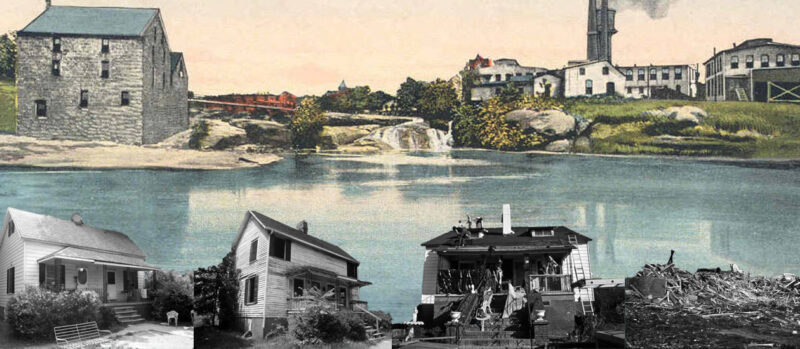
In the 1930s, Judson Mill, while still one of the largest textile mills in Greenville County, was in a state of economic transition. Like many other textile mills, it was slowly transitioning away from the mill village rental model upon which it had relied since its founding. While extracting rents from employees had been a profitable proposition up until this time, the housing stock itself was depreciating in value over time. Selling those properties would bring in a one time infusion of cash that the mill could use to modernize equipment.

Who benefited between 1939 and 1948? Mill owners and the firms that brokered the sale of those properties.
_
Starting with the first documented sale in 1939, the inclusion of racially restrictive covenants into the deeds to the first time buyers benefited the owners of Judson Mill (in this instance, the Deering-Milliken company, as represented on the deed by Alan B. Sibley, its treasurer of Judson Mill at the time [see page 10] and the brokers of those home sales (in this instance: The Furman Company, see page 36). As explained in the essay “What are RRCs and why do they matter,” RRCs increase value through exclusivity. Appeasing the racial fears of potential white homebuyers was a value proposition. For those who desired living in an all white community, the idea of buying a home in the Judson Mill community became more attractive.
Who benefited between 1948 and 1968? White homeowners in Judson.
_
For the decades that followed, RRCs helped grow home values of the white families living in the Judson Mill Community. So long as there were potential white homebuyers willing to pay more to live in an all white community, there would be demand for their property. Also, homeownership allows families to accrue equity over time as they pay off their mortgage.
Those shut out of the home buying market are resigned to renting. While renting comes with fewer short term risks, it builds wealth for the landlord, not the renter.
After RRCs became unenforceable in 1948 and later illegal in 1968, demand for housing in Judson Mill Community would slightly increase for a short time. Between 1970 and 1980, population density slightly increased.
This increase in population density occurred despite the warning signs that the textile industry would soon decline. Although Greenville advertised itself as the “Textile Capital of the World” in the 1940s, the forces of automation and globalization would eventually bring that reign to an end.
By the 1970s, the textile industry in South Carolina would begin to falter. White families began to leave Judson community and Black households began to move in at a rapid rate. Combined, these two demographic trends showed that the end of RRCs actually increased demand for housing in Judson.
Removing racial restrictions opened up the opportunity to buy or rent in the neighborhood allowing the percentage of the Black population to steadily rise.
Who benefited between 1968 and 1980? Black families looking for new housing options found them in Judson community when white families fled for the suburbs, but continuing decline of job prospects made the area less desirable over time.
_
After its brief uptick in population density between 1970 and 1980, the area would quickly depopulate after 1980. The loss of textile jobs combined with significant roadway and infrastructural investment in suburban communities created the push and pull factors that led thousands of white households to leave Judson.

When white residents were faced with declining job prospects in Judson compared to the new and inviting suburban opportunities elsewhere, they fled. As an example, new highway construction combined with a new public utility service (water) enabled the populations of Mauldin, Simpsonville, and Fountain Inn to grow what is is locally known as the “Golden Strip”.
The “white flight” that Judson experienced was not unique, it had occurred in the city of Greenville a decade earlier. The city would also suffer, but not as much as Judson would. The reason: RRCs.
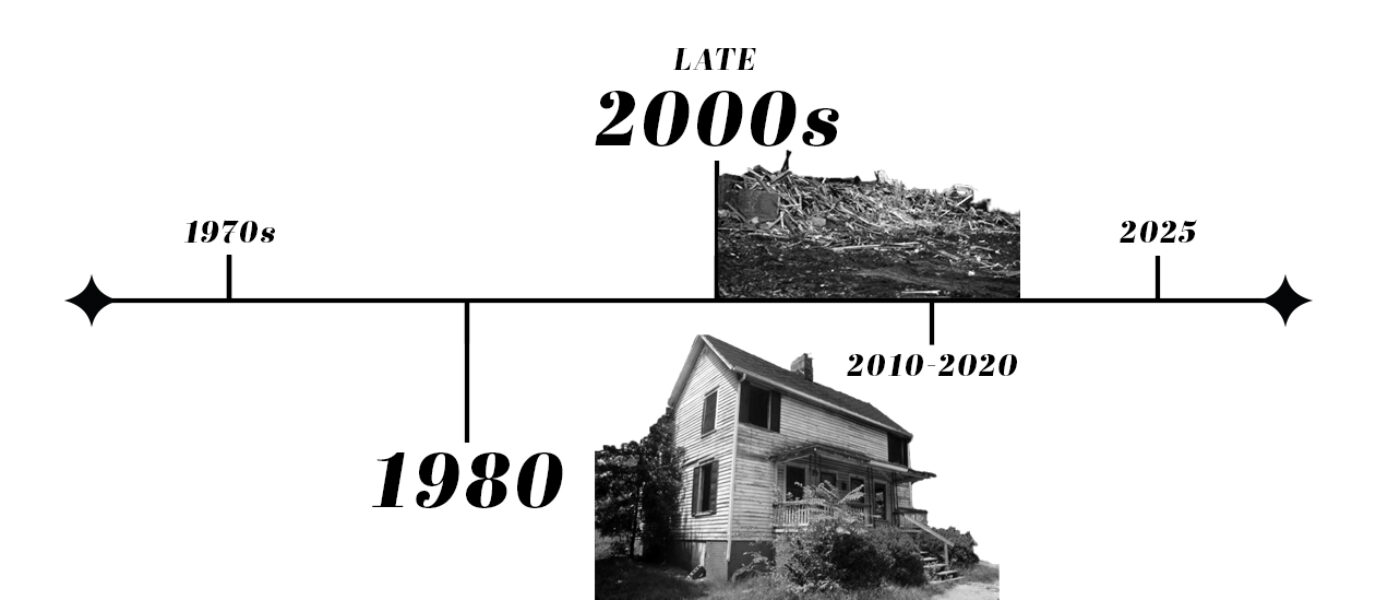
Who benefited between 1980 and 2010? No one.
_
The irony of RRCs in Judson is that while they increased demand for property in the 1930s and 1940s, they ultimately made the community less resilient when it experienced “white flight” three decades later.
This depopulation of Judson starting in 1980 had a devastating effect on the housing stock. Decreasing density meant increasing vacancies and an overall drop in demand for housing. As a result, property values plummeted.
When homes lose value, the financial incentive for owners and landlords to renovate them fades. Without sufficient upkeep, blight and dilapidation follows. Other urban areas across the United States had gone through similar downward transitions, but Judson was more vulnerable.
The reason: the legacy of RRCs had kept the percentage of white residents artificially higher. The city of Greenville suffered from the depopulating effects of white flight as well, however, because it had a higher proportion of Black population beforehand, it did not experience the level and speed of population loss that Judson did.
By the 1980s, the city of Greenville had already begun revitalization effort, but Judson’s collapse was just beginning. This continued decrease in population density would continue for the next two and a half decades until property values would hit rock bottom during the Great Recession of the late 2000’s.
Who has benefited from 2010 to today? Real estate speculators.
_
As housing prices hit a rock bottom in the aftermath of the Great Recession, those with capital were able to enter the market and rehabilitate existing structures or construct new ones on vacant lots.
Between 2010 and 2020, population density increased rapidly alongside this new investment. However, new residents have begun to dilute the percentage of the Black population that entered the Judson housing market in the 1970s.
Today, the Judson Mill has been redeveloped into condos currently priced at over $2000 per month for a 2 bedroom apartment, unaffordable to the vast majority of the Black population in the surrounding community. Gentrification is underway and if Judson follows the same trends as the nearby city of Greenville, racial displacement will continue for the foreseeable future.
This is how RRCs of the past are connected to the gentrification occurring in Judson today. RRCs of the 1930s and 40s delayed racial integration and artificially propped up the percentage of the white population for longer than occurred in neighboring city of Greenville.
When the textile industry collapsed, Judson was left less resilient to the effects of white flight as white households fled for the suburbs.
The subsequent depopulation of Judson had a negative effect on property values, but in a strange twist of fate opened up new rental opportunities for Black families that were once prohibited from living there. However, this surge of racial integration will prove to be short lived as wealthier white families and real estate speculators are returning to live closer to the city limits of Greenville.
Put simply, Judson is now a target of gentrification. Today, the percentage of the Black population in Judson is dropping rapidly and if trends continue, it will experience the same rate of racial displacement that the city of Greenville has been experiencing for the past decade as well.
_
_