Welcome Back and Preserving Play Post- Spring Break!
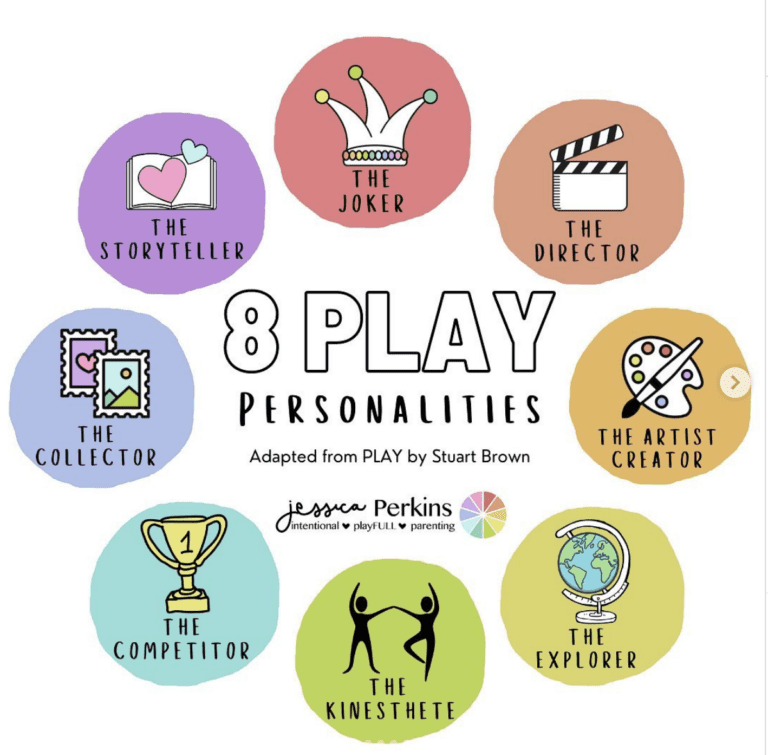
According to psychologist Stuart Brown, we each have a play personality — one of eight archetypes that shapes how we naturally seek joy, connection, and creative energy. (This quiz can help you find yours.) Brown argues that awareness of our play personality, and a genuine willingness to infuse our lives with some form of play, acts as a mental health safeguard and can improve creativity and innovation (yes, please!)
But here’s the teaching question: how and when does your play personality shine in the classroom? Enter “play pedagogy” — a praxis that helps us reconnect to joy, supports relationships, and amplifies belonging and excitement for learning (Forbes, 2021). Improv’s first principle — “Make your partner look good” — begins in attunement, the awareness of others critical to positive emotional connection (Brown, 2009). In the improv of learning, our students are our partners. In what ways do you make your partners look good?
If you have a few more moments to revel in this topic consider: In what ways does your play personality already show up in your teaching — and how might you double down on that in these last few weeks of the semester, for yourself and for your students?
If you’d like to learn and/or play more, check out this Play Pedagogy Learning By Design video on play pedagogy or join me online for a synchronous workshop entitled “Make your Partner Look Good: Improv Activities to Spark Student Engagement” during the *free* University of Tennessee Innovative Teaching and Learning Conference on March 26th.
Some simple, customizable ways to add play to your day on demand:
AI Play — “Yes, And… with AI.” Try a low-stakes improv-style exchange with an AI tool: give it an absurd constraint for a lesson plan, ask it to pitch your course with a silly name, or use it to generate five ridiculous “Yes, and” responses to a real syllabus policy. And yes, we do have two drop in and play opportunities of the same name upcoming on March 25th and 26th. Stop by anytime for however long you like in the 2:30-4:30 PM timeframe in LIB 042.
R & R (Roam and Reflect) — We have three more R & R opportunities this semester (March 12, 18, and 25th at 2:30 PM; Meet up on the library porch). Create your own R & R: park in a different spot and/or walk a new to you way to your office or classroom. What do you notice on this new route? Bonus if you show out with a fun walk, Ministry of Silly Walks style. (I recently attempted this with students in our FYW in Furman Hall and it wasn’t a complete disaster!) This begs the question: What would I do differently in my teaching if I weren’t afraid of looking silly?”
Recess — A literal 10-minute unstructured break mid-class, mid-meeting, mid-day. Invite students (your colleagues, yourself!) to step outside, doodle, or just sit quietly. A 2021 study found that taking breaks from learning new tasks may improve our capacity for consolidating memories that result in improved learning. Modeling taking breaks in class can help your students see the value of a well-timed brief pause and increases the likelihood that they will add it to their study strategies repertoire. Just in time for prepping for Furman Engaged or studying for final exams!
We’ll close with a call to (play) action: Help us co-create a future learning play opportunity! Nominate your current (or future) favorite read to be the star of a summer reading circle. Email us at [email protected] with the book title and one-sentence rationale explaining why you’d like to read it community with others in May and/or June.
Let the wild rumpus begin!