Unlock Student Achievement (and good vibes) with Mid-Semester Semester Feedback
 Gathering mid-semester feedback – and transparently acting on it – is one of the most value-added teaching strategies available, improving end-of-term evaluations and student engagement while the course is still in progress (McGowan & Osguthorpe, 2011, Hurney et al., 2014). A powerful way to grow together in learning is to guide students to students to give specific, actionable, and kind feedback and communicate small teaching changes with them while there’s still time to enact them can be a powerful way to grow together in learning.
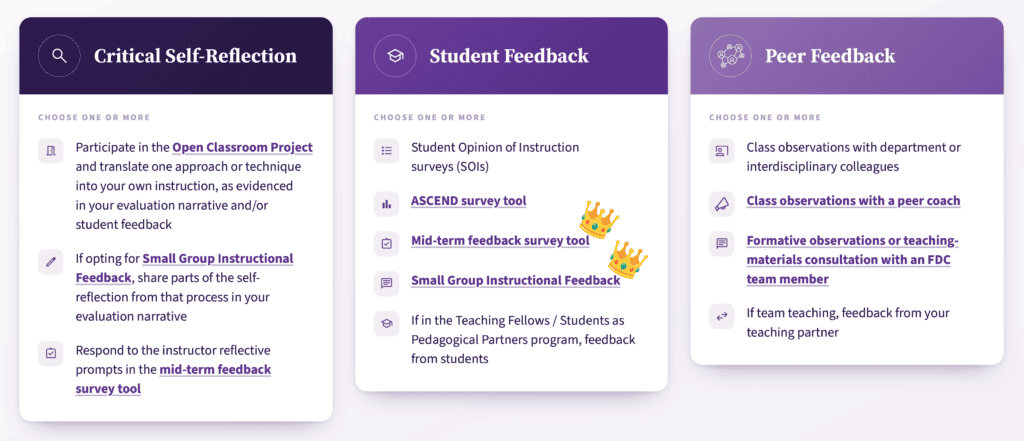
Fortunately, we have several mechanisms in addition to end-of-term student opinions of instructions surveys with which to collect student feedback data. These, ranging from least to more complex, include:
- A simple “Start, Stop, Continue” exercise: students provide feedback anonymously on index cards, paper, or a 3-item survey based on these questions:
- What would you like to START doing in our class?
- What would you like to STOP doing in our class?
- What would you like to CONTINUE doing in our class?
- A self-administered Mid-semester Feedback survey: developed in fall 2022 by a faculty task force, these surveys (and the guides for discussing findings with students and peers) support your teaching development.
- Small Group Instructional Feedback (SGIF): this mid-term feedback structure involves committing 30 minutes of class time for an FDC team member or peer coach to conduct a small group discussion on students’ experience of the course and their learning.
- ASCEND pilot: recently 8 faculty have begun piloting a brief class climate survey. Faculty can choose to include up to 7 evidence-based learning conditions on the anonymous survey and choose when to share the survey with students to track changes across time (we recommend at start of term, midterm, and before end of term). ASCEND provides you with private results and tailored recommendations for improvement, linking to evidence-based research.
As you decide if and how you’d like to collect and respond to feedback from your students, these coaching questions might help you reflect on the benefits and drawbacks of this evidence-based practice:
- What appeals to you about gathering mid-term formative feedback from students?
- What limiting beliefs keep you from requesting mid-term formative feedback from students?
- In what ways can you coach students to provide specific, actionable, and kind feedback?
- What’s the most helpful piece of formative feedback you’ve received from students? What did you modify as a result of this helpful feedback?