Blog
Stormwater Management: Can you spot it?
Here, you can (if you squint) see me waist-deep in one of the most interesting parts of my fellowship with the City of Greenville’s Environmental Engineering department: stream walks. While this sounds like a leisurely way to spend one’s day, don’t be fooled. Even a guy like me that loves rivers, streams, and all things in between gets as tired as anybody else would walking in hot, heavy waders in the constant sun during the great heatwave of Summer 2026. And this is not to mention that not all streams are exactly made to be walked through – we have to follow the streams even if they’re covered in thick brush or layered with spiderwebs, barely a trickle of water or as deep as I am tall.
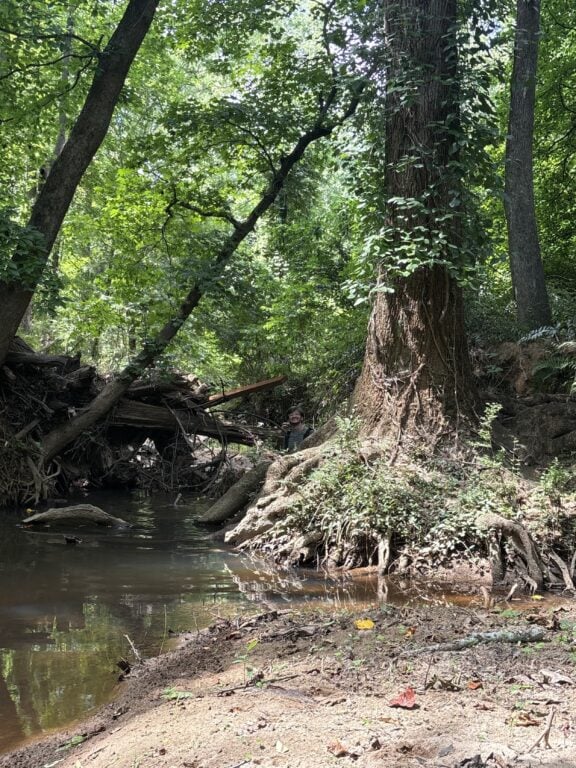
Can you spot Michael in this photo?
Despite all this, I quite enjoy stream walks. Being outside and in water is a treat, and every once in a while, I find myself in a location that feels more out of a Lord of the Rings movie than the brush beneath the power lines Greenville, South Carolina. But we don’t walk streams because I enjoy them.
We do stream walks to check these often-overlooked patches of the city for signs of erosion or potential erosion. While spotting erosion is fairly straightforward, being able to tell if a stream is likely to erode is less so. Typically, a stream with high bank angles, low root density, and a large difference between the bankfull height (the height of the water when the flow of the river or stream is at the level where channel maintenance is most effective) and the bank height is prone to erosion. Too much erosion in streams can affect both the natural environment by disrupting habitats and city infrastructure by redirecting the flow of water in a way that our built infrastructure isn’t prepared to handle. For this reason, it’s critical that the environmental engineering department keeps tabs on streams in the city limits.
Many of the streams that we have to look at aren’t flashy or big like the Reedy River. The first stream I walked, for example, was tucked between an auto shop and an empty parking lot on Woodruff Road. On any other day, I don’t even think I would have registered that this relatively small plot of land covered in thick trees and greenery existed, much less that it was home to a stream.
This experience reflected a common theme in my time with the Environmental Engineering Department. Most of our work is with water. This might seem like a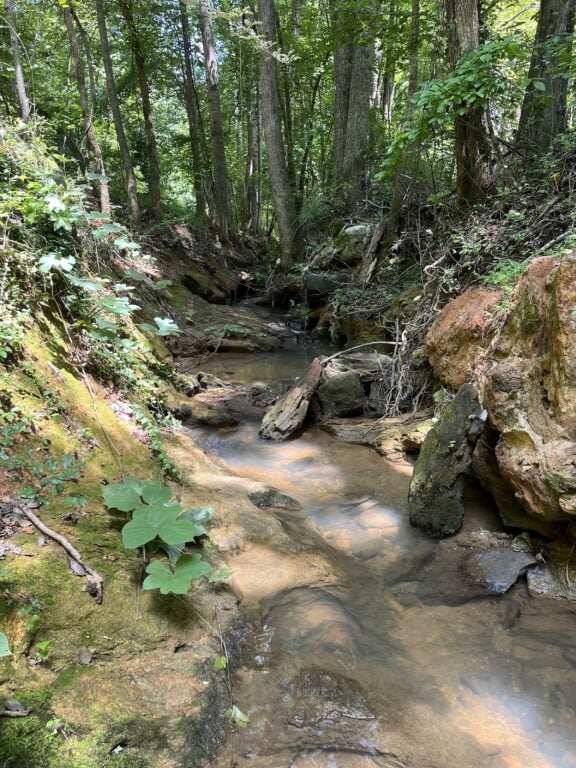 simple focus, but water is actually the root of so many problems ranging from the strictly practical to the deeply philosophical, since water and its movement is like a trickster that always finds a way to circumvent our basic desire to build something constant. We want roads and houses to stay as they are, but water constantly changes its behavior regardless of where our houses and roads are. If water moves in ways we don’t expect, things we build are subject to erosion. Because of this, we need to build ways to manage water into our infrastructure in order to minimize erosion and the damage it can do to our built infrastructure. But as big and dramatic as this war against erosion is, the battles can be hard to spot.
I remember the first Municipal Separate Storm Sewer System (MS4) inspection that I did with another intern working for the city’s environmental engineering department. These inspections ensure that the facility’s stormwater management is up to code. When walking through the facility, I observed the other intern so that I could learn myself how to do these inspections. And I proceeded to see the other intern stop and note down things that I initially thought were completely unremarkable. A mark of dirt on the pavement? Vehicle storage? An actual pile of dirt? Fuel containers? Lots of storm drains, which made sense, but I have never had any reason to pay much attention to them. Having to inspect them made me realize how many there are and how intentional their placement is.
Like a good murder mystery, all the scattered clues quickly came together, creating coherent narrative about the facility’s stormwater management practices. The mark of dirt on the pavement showed that erosion was happening — water was carrying dirt down the slope of the pavement, and this water inevitably ended up in the storm drains placed intentionally at the bottom of the slope where stormwater would accumulate. These storm drains would carry the eroded sediments to the river, creating problems both for the river and the drain. The culprit, in this case, really had no chance of getting away with the crime – it was the huge pile of dirt further up the hill. The fuel containers and vehicle were exonerated, since they both had dedicated storage areas that were protected from stormwater with a roof, preventing the runoff of dangerous chemicals into the water.
This is a smaller example, but it reveals that stormwater management and environmental engineering as a whole is happening everywhere. Every small thing on or by the road, whether it’s a sewer manhole, sewer cleanout, stormwater drain, or a curb cut, is there intentionally, and each one has to be working well for the city to function properly. I would say blink and you’ll miss it, but I feel like a lot of us miss them even when they’re right in front of us. Next time you’re driving down the road, try to find some of these examples storm and wastewater infrastructure. Can you spot them?
About the author: Michael Ross, ’26, from Memphis Tennessee, graduated from Furman in May with a Bachelors of Science in Sustainability Sciences and a minor in Data Analytics. He took the City of Greenville Environmental Fellowship with the Shi Institute because he wanted to have experience in public sector work that combines sustainability with data analytics. In addition to working his fellowship, this summer Michael will be recording his second album with his band “Normal People.”