Blog
How Food Connects Us All
Food is something that we all take for granted. In the modern United States, we have constant convenient access to food which is beneficial to everyone’s busy schedules. However, through this cultural shift over the past century, we have lost our connection to how our food is provided to us through our land, our farmers, and even restaurant staff. In recent years, there has been a shift back towards organic foods and sustainable agriculture. Farm-to-table restaurants have worked to bridge the gap between consumers and farmers by emphasizing local and ethical sourcing.
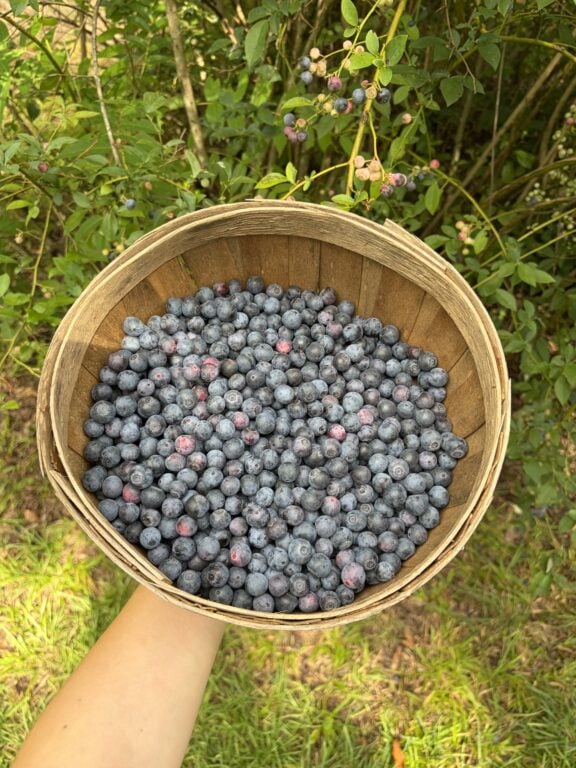
Harvested blueberries from Topsoil’s farm
This summer, I’ve had the opportunity to experience this connection firsthand through my fellowship at Topsoil Restaurant in Travelers Rest. As part of my role as the Farm Administration and Restaurant Management Fellow, I work in Topsoil’s brand-new garden and on their farm harvesting and planting, as well as within the restaurant as a host. Additionally, I’ve had the opportunity to shadow both the restaurant manager and owner, helping with data collection, analysis, and organization. As an Environmental & Conservation Biology and Anthropology double major, I was initially drawn to this internship because it combines my interests in agriculture, environmental systems, and cultural relationships between people, food, and the environment. Although, as my internship comes to an end, I find that it has taught me more than I ever expected about myself, the environment, and the culture of upscale dining in the local community of Travelers Rest.
While I hoped that this internship would provide insight into how food brings people together, I never expected my internship to be a way to reconnect with my own family. My time on Topsoil’s farm and garden has allowed me to reflect on my time spent as a kid in my late grandmother’s garden and exploring my grandparents’ farm land. As a kid, I enjoyed running around my grandparents’ land, exploring abandoned farm houses and dark broiler houses, and playing hide-and-seek in the never ending rows of trees, but I never fully understood what the land symbolized. This internship has inspired me to look into my family’s history, and I discovered that my grandfather served on the Agricultural Stabilization Committee of his small county in central North Carolina. I also learned that my grandmother’s family’s farm endured the Great Depression and WWII through its self-sustaining nature. Recognizing these connections between my internship and my family history has affirmed that I am on the right career path while strengthening my appreciation for agriculture and its role in shaping communities and culture.
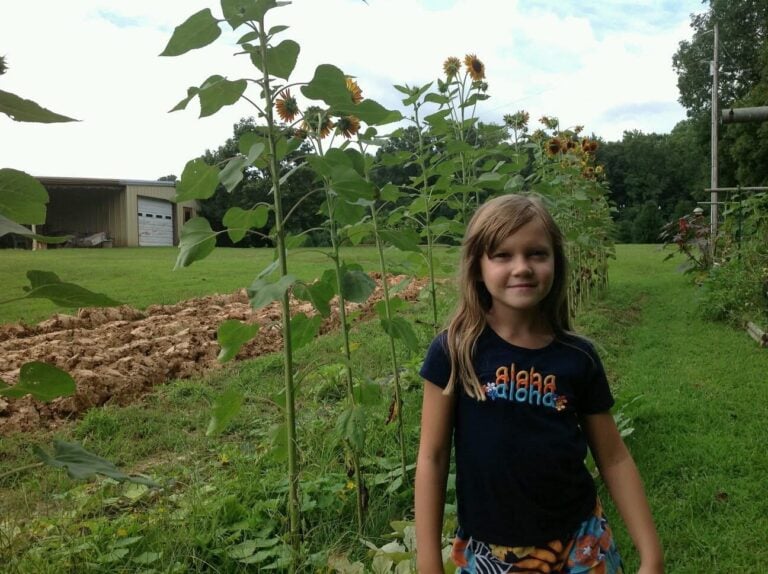
Erin in her grandmother’s garden (2013)
In addition to a personal connection with my own familial history, I’ve grown more connected with the environment. Working alongside the garden manager, Chris Miller, also known as “That Garden Guy,” I’ve learned firsthand about organic farming techniques and the careful balance required to maintain healthy soil and ecosystems. I’ve had the opportunity to grow my biological knowledge as well, learning and applying information about the nitrogen cycle to growing techniques and soil monitoring. I’ve learned that successful farming does not solely depend on growing crops, but also on cultivating biodiversity. One of my favorite aspects of the garden is the wildflowers planted to create shade for crops and to attract pollinators. Seeing academic concepts be applied first-hand has strengthened my understanding of how science directly influences sustainable food production.
This internship has reinforced my passion for environmental conservation while connecting agriculture with culture, history, and community. The next time you sit down for a meal, consider all of the effort that went into producing your food. Support local restaurants, connect with your loved ones, and keep the environment that provides us nourishment healthy and clean. Come visit Topsoil Restaurant for a meal that is guaranteed to connect you with the local community and environment!
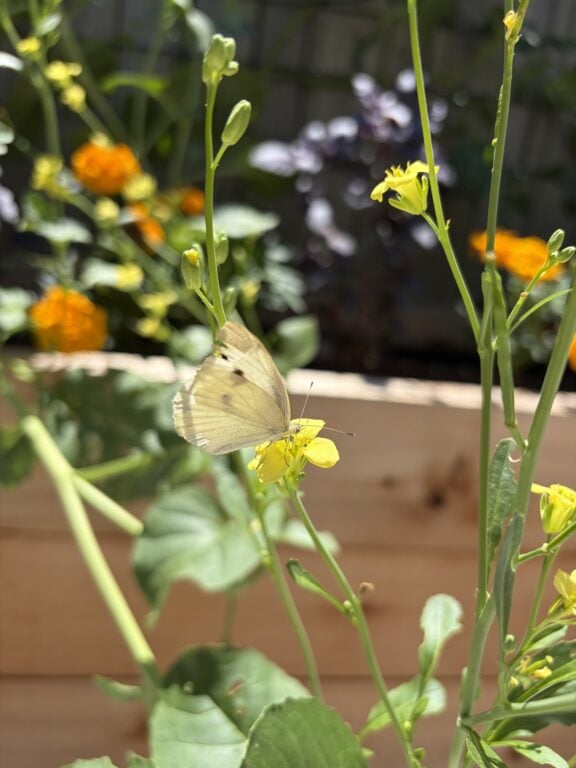
Pollinator in the garden
About the Author: Erin Faulkner ‘28 is an Environmental & Conservation Biology and Anthropology double major from North Charleston, South Carolina. She is serving as the Topsoil Farm Administration and Restaurant Management Fellow this year. Erin was interested in this fellowship as it provides an opportunity to engage in organic food production and gives insight into how sustainable cuisine intersects with culture, business economics, and the local environment. In her free time, Erin enjoys reading, scrapbooking, and spending time with her cat.